
Why Garage Door Safety Tips for Homeowners Can Prevent Serious Injuries
Garage door safety tips for homeowners are something every Maryland household needs to take seriously. Your garage door is the largest moving part of your home — weighing anywhere from 150 to 500 pounds — and it moves up and down roughly 1,500 times a year. That adds up to a lot of opportunities for something to go wrong.
Here are the most important garage door safety tips to know:
- Test your auto-reverse feature monthly using a 2×4 board or roll of paper towels placed under the door
- Check photo-eye sensors to make sure they are aligned and no more than 6 inches off the ground
- Inspect springs, cables, and rollers visually each month for signs of wear or damage
- Keep remotes and wall controls out of children’s reach — mount wall buttons at least 5 feet high
- Never walk under a moving garage door or place fingers between door sections
- Leave spring and cable repairs to professionals — these parts are under extreme tension
- Use rolling code technology on your opener to prevent unauthorized access
- Know how to use the emergency release cord in case of a power outage
- Install carbon monoxide detectors if your garage is attached to your home
- Schedule annual professional maintenance to catch problems before they become dangerous
The numbers make the risk hard to ignore. According to the U.S. Consumer Product Safety Commission, garage doors cause an estimated 20,000 to 30,000 injuries every year in the United States. Separate estimates put that figure closer to 35,000 annually. And it is not just adults at risk — at least 85 child fatalities or permanent brain injuries have been linked to automatic garage doors since 1974, with nearly three child deaths per year tied to doors that failed to automatically reverse.
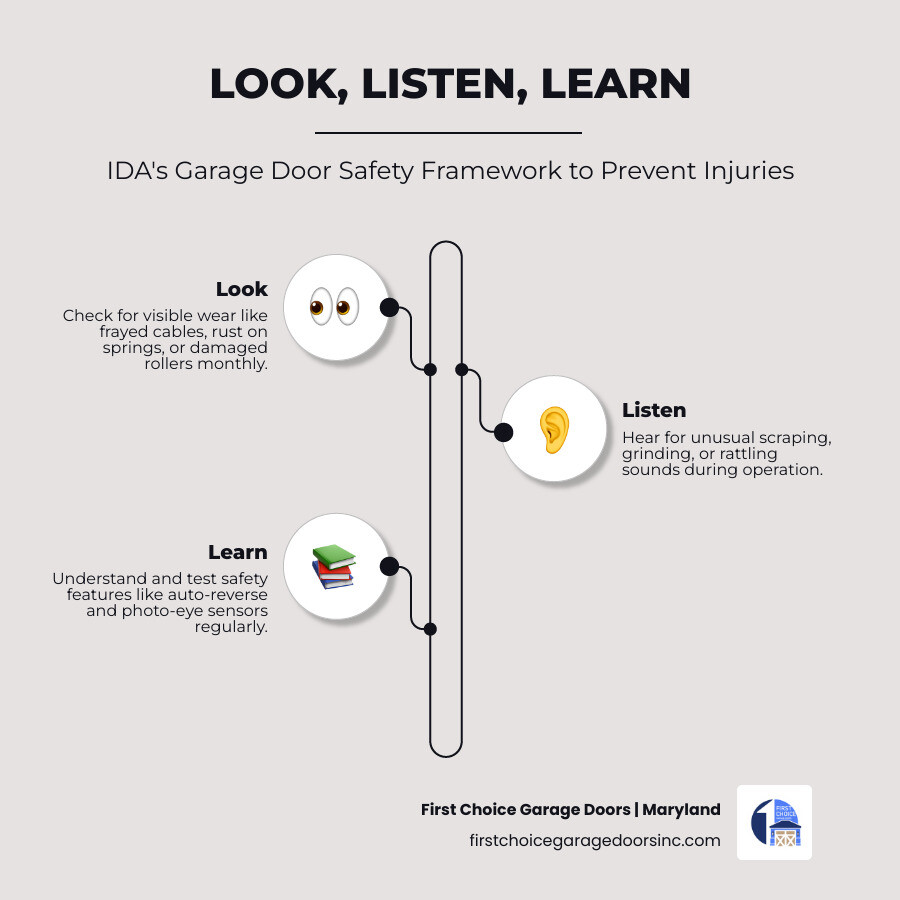
The International Door Association (IDA) created National Garage Door Safety Month around a simple framework worth remembering: Look, Listen, and Learn. Look for visible signs of wear. Listen for scraping or grinding sounds. Learn how your system’s safety features work — and test them regularly.
The good news is that most garage door accidents are preventable. A few consistent habits and routine checks can make a real difference for your family’s safety.
Understanding the Risks: Why Garage Door Safety Matters
When we think about home safety, we often focus on smoke detectors or security cameras. However, the garage door is a massive mechanical system that functions under incredible physical stress. Understanding the specific dangers is the first step toward prevention.
One of the most significant hazards involves the high-tension springs. Whether your system uses torsion springs (located above the door) or extension springs (on the sides), these components store enough energy to lift a 400-pound door. If a spring snaps due to rust or wear, or if an untrained person tries to adjust it, the resulting force can cause catastrophic injury or even death. Similarly, frayed cables are a ticking time bomb; they act as the “muscles” of the door, and a snap can cause the door to crash down unexpectedly.
Beyond mechanical failures, there are physical “pinch points.” These are areas between door sections where fingers can easily be caught, leading to severe crushing injuries. Then there is the “silent killer”—carbon monoxide. In attached garages in Columbia or Frederick, running a vehicle even briefly with the garage door closed can lead to a buildup of toxic gas that seeps into your living spaces. Implementing Safety Measures To Take With An Automated Garage Door is essential to mitigate these physical and environmental risks.
Essential Garage Door Safety Tips for Homeowners to Prevent Injuries
We recommend a “hands-on, eyes-on” approach to your garage door. You don’t need to be a technician to perform a basic monthly visual inspection. Start by looking at the rollers and tracks. The tracks should be free of debris, and the rollers should move smoothly without wobbling. If you see fallen metal pieces or notice the door is “jerking” as it moves, it’s time to stop using the door and call for help.
Regularly checking these components helps you catch small issues before they spiral into a “garage door disaster.” For instance, a simple lubrication of squeaky springs with a specialized garage door lubricant can prevent premature wear. However, always remember that looking is safe, but “fiddling” with high-tension parts is not. We’ve gathered more detailed advice in our guides on 3 Garage Door Safety Tips and 5 Garage Door Safety Tips to help you stay ahead of potential malfunctions.
Maintaining Security with Modern Garage Door Safety Tips for Homeowners
Safety isn’t just about preventing injuries; it’s also about securing your home from intruders. Older garage door openers often used fixed codes, which tech-savvy burglars could “grab” using radio scanners. Modern systems use rolling codes, which change the access code every single time the remote is pressed.
If you are still using an opener manufactured before 1993, we strongly suggest an upgrade. Not only do newer models offer better security, but many also feature smart technology. This allows you to manage your door via a smartphone app, sending you alerts if the door is left open or allowing you to close it from your office in Easton. Check out our 4 Garage Security Tips for more ways to keep your home locked down tight.
Testing Your System’s Critical Safety Features
Since 1993, federal law has required garage door openers to have safety reversal features. But a safety feature that doesn’t work is just a false sense of security. You should perform two specific tests every month.
- The Mechanical Auto-Reverse Test: Place a 2×4 board or a roll of paper towels flat on the ground in the center of the door’s path. Close the door. When the door strikes the object, it should immediately stop and reverse direction. If it tries to crush the object, the “down force” settings need professional adjustment.
- The Photo-Eye Sensor Test: These are the small sensors located about 6 inches off the floor on either side of the door. While the door is closing, wave a broomstick through the invisible beam. The door should reverse instantly. If the lights on the sensors are flickering, they may be misaligned or dirty.
| Feature | How it Works | How to Test |
|---|---|---|
| Mechanical Reversal | Detects physical resistance/obstruction | Place a 2×4 board under the door |
| Photoelectric Sensors | Detects a break in an infrared beam | Wave an object through the beam while closing |
Learning How To Get A Garage Door Safety Test Done correctly is one of the best investments of time you can make for your family’s protection.
Child and Pet Safety: Creating a Secure Environment
Children often view a moving garage door as a game, trying to “race” under it before it closes. This is incredibly dangerous. To prevent accidents, ensure that the wall-mounted control button is at least 5 feet from the floor—well out of reach of curious toddlers.
Education is just as important as hardware. Teach your children that the garage door is not a toy and that they should never stand or play near it while it is in motion. For pet owners, be aware that smaller animals might not always trigger the photo-eye sensors if they are positioned too high. Ensuring the sensors are no more than 6 inches off the ground is vital for protecting your furry friends. We have specialized guides for Garage Door Safety Tips To Teach Your Kids, Garage Door Safety Tips For Pet Owners, and Keeping Pets Safe Around Your Garage Door to help you create a “no-go zone” around the moving door.
Daily Habits and Garage Door Safety Tips for Homeowners
Safety is built on daily habits. One of the simplest garage door safety tips for homeowners is to always keep the door in sight until it is completely closed. It’s tempting to hit the button and drive away, but if the door hits an obstruction and reverses, you’ve just left your home wide open.
You should also familiarize yourself with the emergency release cord (usually a red handle). This allows you to operate the door manually during a power outage. However, a word of caution: never pull the release cord while the door is open, as a broken spring could cause the door to come crashing down. Following these Garage Door Safety Tips To Follow every day will significantly reduce the risk of a “disaster” in your driveway.
When to Call a Professional for Maryland Garage Door Repairs
While checking your sensors and lubricating tracks are great DIY tasks, some things are strictly for the pros. If you see a gap in your torsion spring, hear a loud “bang” from the garage, or notice that your cables are fraying, do not attempt to fix it yourself.
At First Choice Garage Doors, we see the results of “DIY gone wrong” all too often. Our technicians in Columbia, Easton, and Frederick are equipped with specialized tools to manage high-tension components safely. A professional tune-up typically takes about an hour and involves checking the door’s balance, tightening all hardware, and ensuring all safety settings are calibrated to industry standards. If your door is closing unevenly or making a grinding noise, it’s a sign that the system is under strain and needs expert attention.
Frequently Asked Questions about Garage Door Safety
How often should I test my garage door sensors?
We recommend testing your photo-eye sensors and the auto-reverse mechanism at least once a month. It only takes a minute and ensures that the system will react correctly if a child or pet wanders into the path of the door.
Can I repair a broken garage door spring myself?
No. Garage door springs are under extreme tension and can cause severe injury if they snap or are released improperly. This is one of the most dangerous home repairs possible. Always call a licensed professional to handle spring replacements.
What should I do if my garage door reverses for no reason?
First, check the photo-eye sensors for dirt, cobwebs, or misalignment. Even a small “stinkbug” on the lens can trigger a reversal! If the sensors are clear and aligned, the “down force” settings on your opener might need adjustment, or the door might be out of balance.
Conclusion
Your garage door is a convenience we often take for granted—until it stops working or, worse, causes an injury. By following these garage door safety tips for homeowners, you can protect your family and extend the life of your door. Remember to “Look, Listen, and Learn,” and never hesitate to call in the experts when dealing with high-tension parts.
For true peace of mind, nothing beats a professional inspection. Whether you need a quick safety check or a full system upgrade, we are here to help. Get more info about garage door maintenance and ensure your home remains a safe haven for your family. Stay safe, Maryland!