
Why Getting Your Garage Door Measurements Right Matters
How to measure for a new garage door comes down to five key numbers — and getting them wrong can mean a door that won’t fit, tracks that can’t be installed, or an opener that has no room to work.
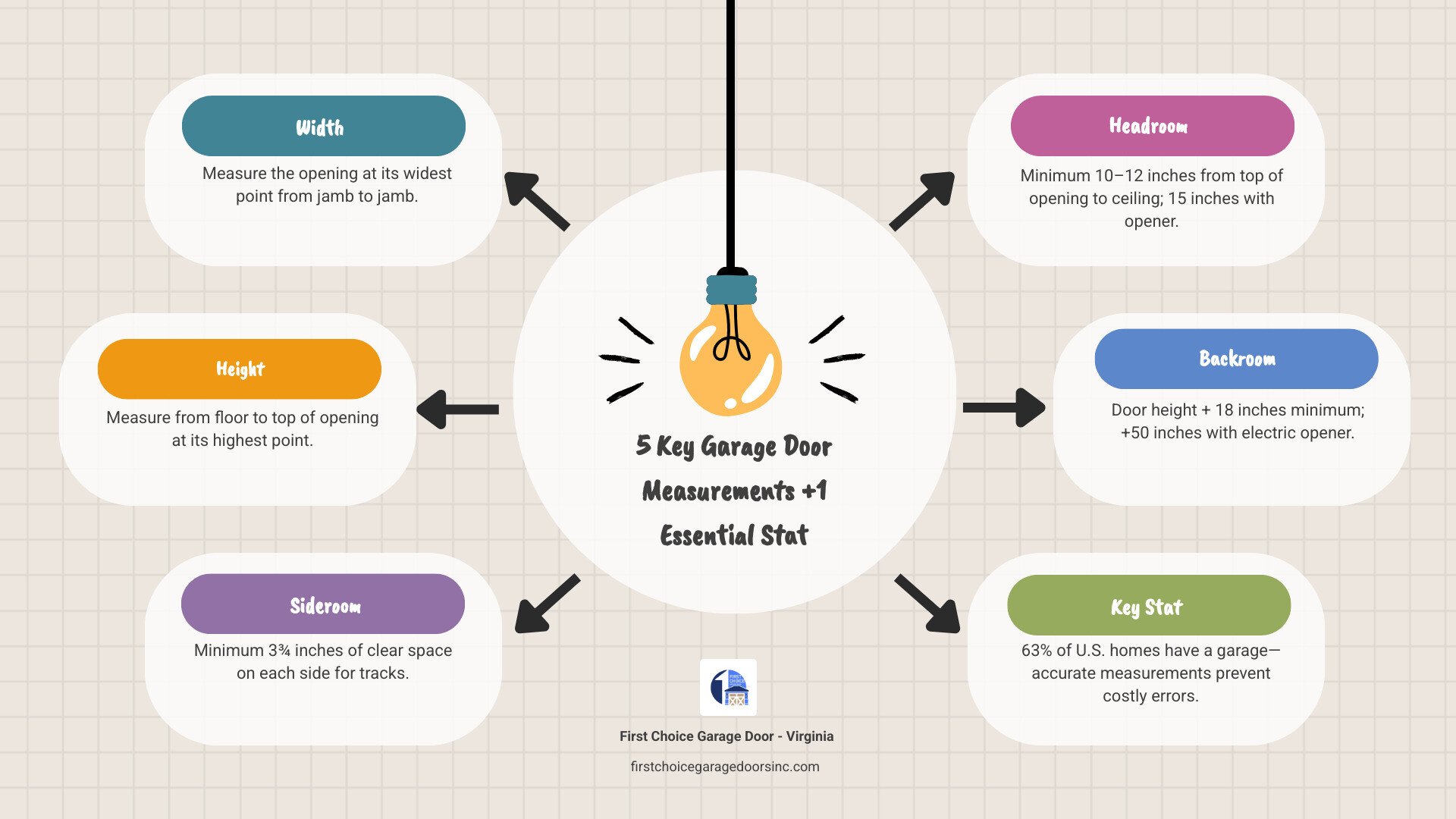
Here’s a quick overview of what you need to measure:
- Width – Measure the opening at its widest point
- Height – Measure from the floor to the top of the opening at its highest point
- Sideroom – Measure the space on each side of the opening (minimum 3¾ inches per side)
- Headroom – Measure from the top of the opening to the ceiling (minimum 10–12 inches; 15 inches if adding an opener)
- Backroom – Measure from the opening to the back wall (door height + 18 inches minimum; door height + 50 inches with an opener)
With roughly 63% of U.S. homes having a garage, replacing or upgrading a garage door is one of the most common home improvement projects out there. And in April 2026, with more homeowners in Northern Virginia focused on curb appeal and functionality, getting accurate measurements before you shop is the smartest first step you can take.
The opening size, the space around it, and the depth of your garage all determine what door will work — and what hardware can support it. Miss one measurement, and you could face installation delays, extra costs, or a door that simply doesn’t operate correctly.
This guide walks you through every measurement you need — clearly and step by step.
Essential Tools and Preparation
Before we start pulling tape, we need to make sure you have the right gear. You don’t need a degree in engineering, but you do need tools that provide a straight, steady reading.

Here is your “pro-kit” for accurate measuring:
- A 25-foot retractable tape measure: A stout, wide tape is better than a flimsy one because it won’t bend as easily when you’re reaching for high corners.
- A sturdy ladder: Safety first! You’ll need this to reach the ceiling for headroom and backroom checks.
- A bubble level: This helps you see if your floor is sloped or if your header is sagging.
- Notepad and pencil: Trust us, you won’t remember these numbers five minutes from now. Label them clearly as “Left Sideroom,” “Center Height,” etc.
Preparation is key. Start by clearing out the clutter. If your garage is like most in Manassas, it might be full of bikes, lawnmowers, and those boxes you haven’t opened since you moved in. You need a clear path to the walls and the ceiling.
Finally, take a good look at your frame. Are the wood jambs rotting? Is the header stable? If the “bones” of the opening are in bad shape, even the most expensive door won’t work right. For a deeper dive into prep, check out our guide on Making Measurements Before Installing a New Garage Door.
The 5 Key Steps to Measure Your Garage Opening
When we talk about how to measure for a new garage door, we aren’t just measuring the “hole” in the wall. We are measuring the entire “envelope” of space where the door and its hardware will live.
It is important to distinguish between the rough opening (the framed space before trim) and the finished opening (the space after the jambs are installed). Usually, your new door should match the size of the finished opening. If you’re wondering how these sizes translate to your home’s value, read about Determining the Best Garage Door Size.
Measuring Width and Height
Start with the basics.
- Width: Measure the distance between the right and left sides of the finished opening. Do this at three points: the bottom, the middle (eye level), and the top. Use the widest measurement.
- Height: Measure from the floor to the top of the finished opening. Again, measure at both the left and right sides and the center.
Pro Tip: If your floor is unlevel (common in older Northern Virginia homes), use the smallest height measurement to ensure the door doesn’t hit the header, but plan for a thicker bottom seal to gap the floor.
| Door Type | Standard Width | Standard Height |
|---|---|---|
| Single Car | 8 or 9 Feet | 7 or 8 Feet |
| Double Car | 16 Feet | 7 or 8 Feet |
Calculating Sideroom and Headroom
This is where many DIYers get tripped up. The door needs “elbow room” to slide up those tracks.
- Sideroom: This is the horizontal space on each side of the opening. Most standard vertical track systems require at least 3¾ inches on each side. If you are using a more complex spring system, you might need up to 5½ inches.
- Headroom: This is the space between the top of the door opening and the ceiling (or the lowest obstruction like a light or pipe). Standard systems need 10 to 12 inches. However, if you want an electric opener, we recommend at least 15 to 18 inches for a smooth install.
For a local perspective on these dimensions, see our Sizing Up Fayetteville: Single and Double Car Garage Door Installation Guide.
Determining Backroom Depth
The backroom is the distance from the garage door opening to the rear of the garage.
- Manual Lift: You need the door height plus 18 inches.
- Electric Opener: You need the door height plus 50 inches (that’s 4 feet 2 inches) to accommodate the rail and motor.
Also, check for a power outlet! Most electric openers come with a 4-foot power cord, so having a ceiling outlet within that range is essential. Before you commit to a style, Before Your Garage Door Installation, Consider the Following to ensure your garage can handle the depth.
Avoiding Pitfalls: How to Measure for a New Garage Door
Measuring a garage is rarely a “perfect square” experience. Obstructions are the enemy of a successful installation.
When you look up, don’t just see the ceiling. Look for:
- Pipes and ductwork
- Light fixtures
- Ceiling fans or heaters
- Structural beams (rafters)
The lowest obstruction is your actual ceiling height for measurement purposes. Also, consider the door’s insulation thickness. A well-insulated door with 1½ inches of foam sandwiched between steel panels is heavier and thicker than a single-sheet door, which might affect the track clearance you need. To avoid a headache, read How to Get a New Home Garage Door Without Losing Your Mind.
Common Mistakes When You Measure for a New Garage Door
- Measuring the old door: Don’t do it! Your house may have settled, or the old door might have been a “best fit” that was never quite right. Always measure the opening.
- Ignoring the “Side-Room” Obstructions: We’ve seen many folks forget about a side-entry door or a built-in workbench that prevents the track from going up.
- Forgetting the Opener: If you plan on adding an opener later, measure for it now. It’s much harder to retrofit a motor into a space with zero headroom.
If this sounds overwhelming, there’s no shame in calling in the pros. Why Let a Professional Handle Your Garage Door Installation? because we catch the small details that DIYers often miss.
Pro-Tips for How to Measure for a New Garage Door
- Measure Twice: It sounds cliché, but it’s the golden rule. If the numbers don’t match both times, find out why.
- Check the Jambs: Most residential doors are best framed with 2×6 wood. If your current framing is flimsy or rotting, it won’t hold the lag screws for the tracks safely.
- Identify Pipes Early: If a drain pipe runs right across where the track should go, you’ll need “low-headroom” hardware.
Deciding between doing it yourself or hiring us? Check out our comparison of Professional vs. DIY Garage Door Installation.
Frequently Asked Questions about How to Measure for a New Garage Door
What should I do if my garage floor is uneven?
This is very common in Northern Virginia. You should never install a garage door at an angle to match a sloped floor. Instead, we install the door level and use adjustable retainers, wider bottom seals, or even plastic lumber wedges to close the gap at the bottom. This keeps the door working smoothly without putting weird tension on the springs. For more on this, see Considerations Before a Garage Door Installation.
How much extra space is needed for a roll-up door?
Roll-up doors (often used in commercial settings or very tight garages) don’t slide back on tracks; they roll into a “barrel” above the header. You’ll generally need 4 to 6 inches of sideroom. If you want a side-mounted opener, you might need up to 24 inches on one side. The “barrel” diameter increases as the door gets taller, so headroom is critical here. Learn more in The Homeowners Guide to Installing a New Door.
When should I consider custom-sized garage doors?
If you have an RV, a large lifted truck, or an older home with a very strange opening size, standard doors won’t cut it. Custom doors can be built to 10 feet high or more. If your measurements don’t match the “standard” table above, it’s time to talk custom. Ask yourself 5 Questions to Ask Yourself Before Your Garage Door Installation to see if a custom solution is right for you.
Conclusion
At First Choice Garage Doors, we know that a new garage door is a big investment for your Northern Virginia home. Whether you are in Manassas or anywhere across the region, getting the measurements right is the foundation of a safe, beautiful, and long-lasting installation.
We pride ourselves on unmatched expertise and quality. If you’ve pulled the tape measure and feel unsure about the numbers—or if you simply want the peace of mind that comes with a professional touch—we are here to help. From checking your wood jambs to ensuring your new electric opener has the perfect amount of backroom, our team ensures a stress-free experience.
Ready to upgrade your home’s look and security? Contact our experts for your residential garage door needs and let’s get that perfect fit!