
Why North Carolina’s Climate Is One of the Biggest Threats to Your Garage Door
Understanding how North Carolina’s climate affects your garage door is the first step to protecting one of your home’s hardest-working features. Here’s a quick overview:
How NC’s Climate Damages Garage Doors — At a Glance:
- High humidity (avg. 71%) causes rust on metal hardware, swelling in wood panels, and corrosion in electronic components
- Summer heat drives surface temperatures on dark doors above 140°F, warping panels and fading finishes
- Winter cold snaps make springs brittle, thicken lubricants, and can freeze the bottom seal to your concrete floor
- Temperature swings of 30–40°F in a single day stress metal through repeated expansion and contraction
- Coastal and Piedmont moisture accelerates wear on tracks, rollers, springs, and opener electronics
- Storm and wind events can push doors off-track and damage panels
North Carolina sits in a humid subtropical climate zone, which means your garage door faces a near-constant cycle of moisture, heat, UV exposure, and occasional freezes — a combination that quietly chips away at every component, from the springs down to the bottom seal. In Fayetteville and across the state, this isn’t a seasonal problem. It’s a year-round one. Over 60% of garage door failures are tied directly to environmental factors like moisture, corrosion, and temperature change — and NC’s climate checks nearly every box on that list.
I’m Tony Aguilar, founder of First Choice Garage Doors, and with over 30 years of hands-on experience in the garage door industry, I’ve seen how North Carolina’s climate affects garage doors in ways most homeowners don’t notice until a spring snaps or a panel warps beyond repair. In the sections ahead, we’ll break down exactly what’s happening to your door — and what you can do about it.
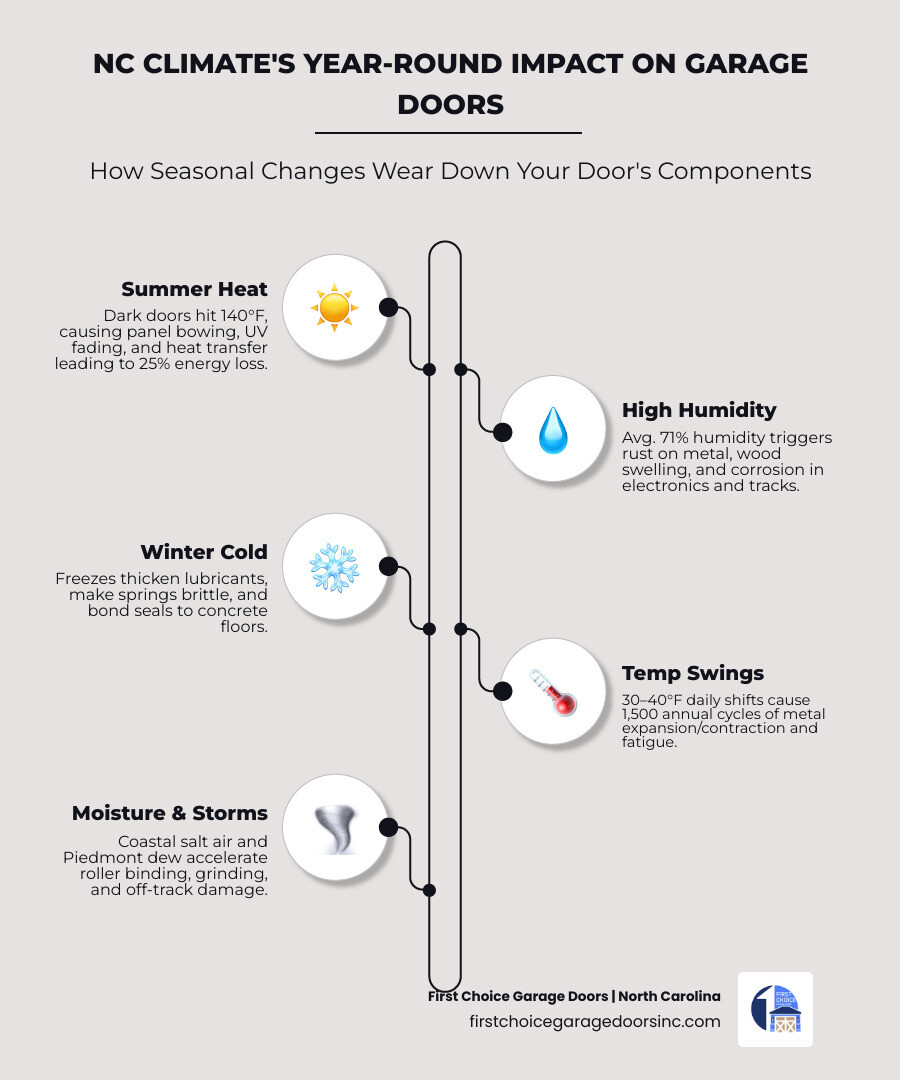
How North Carolina Climate Affects Your Garage Door Components

The average residential garage door cycles between 1,000 and 1,500 times per year. In the North Carolina Piedmont, those cycles aren’t happening in a vacuum. They are occurring amidst some of the most variable temperature swings in the country. We often see days where a chilly 35°F morning transforms into a 75°F afternoon.
These rapid shifts cause a phenomenon known as thermal expansion and contraction. When the sun hits your door, the metal tracks, hinges, and panels expand. As the sun sets and the temperature drops, they contract. Over time, this constant “breathing” of the metal leads to hardware loosening and metal fatigue. It’s one of the primary reasons how weather can impact your garage door and how to prepare it for the cold is such a critical topic for Fayetteville residents.
Furthermore, how the cold can impact your garage door involves more than just the panels. The internal components of your opener—the circuit boards and plastic gears—are also subject to these temperature-driven stresses. When metal parts contract in the cold, they create tighter clearances, which increases friction and forces your motor to work harder than it was designed to.
The Humidity Factor: Why Moisture is Your Door’s Silent Enemy
In North Carolina, humidity is a constant companion. With average annual humidity levels hovering around 71% and summer peaks reaching 78%, your garage door is essentially living in a steam room for four to five months of the year.
This moisture load is particularly devastating for different materials:
- Wood Doors: Natural wood is porous. High humidity causes the fibers to swell, leading to heavy, warped panels that can bind in the tracks.
- Metal Hardware: Moisture leads to oxidation. If you notice a “chalky” or orange residue on your hinges or springs, rust has already begun its work.
- Electronics: High humidity can lead to condensation on the circuit boards of your opener, causing “ghost” openings or complete system failure.
Selecting the best garage door material for where you live is vital because some materials handle this moisture better than others. For example, selecting a garage door material for the weather might lead you toward composite or aluminum options that are naturally resistant to the rot and corrosion that plague traditional wood and steel in our region.
How North Carolina climate affects your garage door tracks and rollers
When humidity meets the dust and pollen common in Fayetteville, it creates a “grinding paste.” This sludge settles into your tracks and rollers, turning what should be a smooth movement into a loud, vibrating mess.
You might hear grinding or popping noises as the rollers struggle to glide through the debris. Additionally, heat causes standard lubricants to thin and drip away, leaving the metal-on-metal contact points dry and vulnerable. This accelerated wear is a prime example of garage door damage caused by extreme weather conditions that can eventually lead to the door coming off its tracks entirely.
Winter Challenges: From Brittle Springs to Frozen Seals
While North Carolina winters are milder than those in the North, we still face significant “freeze-thaw” cycles. One of the most common calls we receive on cold Fayetteville mornings involves a door that simply won’t budge. Often, this is because the bottom weather seal has frozen directly to the concrete driveway.
If you hit the opener button while the door is frozen shut, you risk burning out the motor or tearing the bottom seal off the door. This is just one of the many garage door problems you might encounter in winter. Moreover, cold weather causes the grease inside your tracks and opener to thicken, turning it into a sticky substance that adds immense strain to the motor. Taking the time for getting your garage door prepared for the holiday season by applying the right lubricants can save you from a major headache during the coldest months.
How North Carolina climate affects your garage door springs in winter
The springs are the “muscles” of your door, holding up to 200 pounds of force under extreme tension. Steel becomes more brittle as temperatures drop. In the winter, the metal in your torsion springs contracts, making it less flexible and more prone to snapping.
When you combine this brittle state with the extra weight of a moisture-laden or frozen door, you have the perfect recipe for a spring failure. This is why choosing a garage door for your climate often means opting for high-cycle, powder-coated springs that offer an extra layer of protection against both the cold and the rust-inducing humidity of the Piedmont.
Summer Heat and Temperature Fluctuations in the Piedmont
If you have a south-facing, dark-colored garage door in North Carolina, it can easily reach surface temperatures of 140°F in July. This intense heat causes the panels to bow outward—a phenomenon known as “thermal bowing.” When the door bows, it can rub against the jambs or even get stuck mid-cycle.
Furthermore, the NC sun is relentless. UV rays break down the finish on your door, leading to fading, peeling, and cracking. Beyond aesthetics, a poorly insulated door acts like a giant radiator, transferring that 140°F heat directly into your garage. If your garage is attached to your home, this can account for 10–25% of your home’s conditioned air loss.
Learning how to retrofit your Fayetteville garage door like a pro often involves adding insulation to combat this heat transfer. Additionally, since summer in NC also brings hurricane season, it’s important to consider getting your garage door ready for hurricanes by ensuring your tracks and panels are reinforced against the high winds that often accompany our summer storms.
Proactive Solutions: Maintenance and Material Selection
The best way to combat how North Carolina’s climate affects your garage door is through proactive, seasonal care. We recommend a two-pronged approach: choosing the right materials and sticking to a maintenance schedule.
Material Performance in NC
| Material | Humidity Resistance | Heat/UV Resistance | Maintenance Level |
|---|---|---|---|
| Steel | Moderate (can rust) | High | Low |
| Wood | Low (swells/warps) | Moderate | High (sealing needed) |
| Composite | Very High | High | Very Low |
| Aluminum | High (corrosion resistant) | High | Low |
Your NC Seasonal Maintenance Checklist
- Lubricate Quarterly: Use a silicone-based or lithium-based spray on hinges, rollers, and springs. Avoid heavy grease, which traps NC dust and pollen.
- Inspect Weatherstripping: Check the perimeter seals for cracks. If you can see light around the edges of the door when it’s closed, you’re losing money on energy bills.
- Test the Balance: Disconnect the opener and lift the door halfway. If it doesn’t stay in place, your springs are losing tension due to metal fatigue.
- Clean the Surface: Rinse away salt (especially near the coast) and pollen with a mild detergent twice a year to protect the finish.
- Dehumidify: If your garage feels like a swamp, consider installing ridge vents or a dehumidifier to keep moisture levels below 50%.
Selecting the best garage door material for where you live is often the difference between a door that lasts 15 years and one that fails in five. In Fayetteville, we often recommend polyurethane-insulated steel or composite doors for their superior R-value and resistance to moisture.
Frequently Asked Questions about NC Garage Door Care
Why does my garage door stick only on humid mornings?
This is usually caused by a combination of two things: moisture swelling and lubricant viscosity. If you have a wood door, the panels may have absorbed morning dew, making them just wide enough to rub against the tracks. Alternatively, high humidity can make old, dirty lubricant “gummy,” creating friction that the motor struggles to overcome until the air dries out later in the day.
How often should I lubricate my garage door in North Carolina?
In our humid subtropical climate, we recommend a quarterly schedule. Because of the high moisture and pollen counts in Fayetteville, lubricants break down faster here than in drier states. A quick spray of silicone every three months keeps the metal protected from rust and ensures the rollers move freely.
Are insulated garage doors worth it for Fayetteville summers?
Absolutely. Upgrading to an insulated door can reduce heat transfer by over 70%. In the middle of a 95°F August afternoon, an uninsulated garage can reach 110°F or more. An insulated door keeps that heat out, protecting your car’s battery, your stored belongings, and reducing the load on your home’s HVAC system. Plus, garage door replacements deliver an ROI of 90-97%, making it one of the smartest home upgrades you can make.
Conclusion
The numbers don’t lie: over 60% of garage door failures are caused by environmental factors. In North Carolina, those factors are working against you every single day. From the 71% average humidity that eats away at your springs to the 140°F surface temperatures that warp your panels, your door is under constant siege.
However, you don’t have to let the climate kill your curb appeal or your budget. With a 97% return on investment, a new, weather-resistant garage door is one of the best ways to protect your home. Regular professional inspections can catch a brittle spring or a rusted roller before it turns into an emergency repair.
At First Choice Garage Doors, we’ve spent decades helping Fayetteville homeowners navigate these exact challenges. We know the local weather patterns because we live in them, too. Don’t wait for the next humidity spike or cold snap to find the weak point in your system.
Contact our Fayetteville experts for a professional garage door evaluation today and let us ensure your door is ready for whatever the North Carolina sky throws at it next.