
I’m looking for ways to silence my garage door in Manassas: How to Quiet a Noisy Garage Door
Knowing how to quiet a noisy garage door can save you from sleepless nights, frustrated family members, and expensive repairs down the road.
Here’s a quick overview of the most effective fixes:
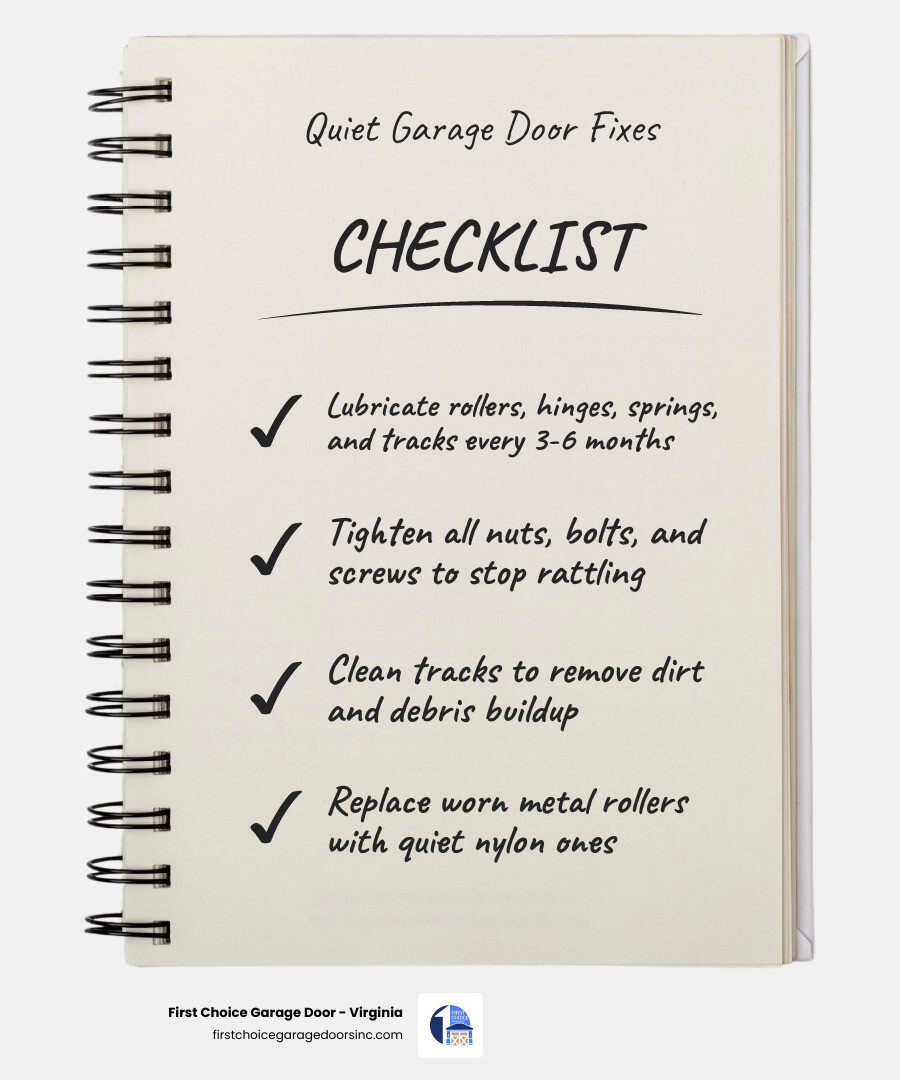
- Lubricate moving parts – Apply silicone spray or lithium grease to rollers, hinges, springs, and chains every 3-6 months
- Tighten loose hardware – Check and snug all nuts, bolts, and screws (a garage door can have over 100 of them)
- Clean the tracks – Remove dirt and debris before lubricating
- Replace worn rollers – Swap metal rollers for quieter nylon ones
- Adjust the opener chain or belt – Eliminate slack that causes banging
- Install a vibration isolator kit – Reduces noise transfer from the opener motor to your home’s structure
- Call a professional – For springs, cables, or anything that doesn’t improve with basic maintenance
Most garage door noise comes from one of two places: the door itself or the opener. And in most cases, the fix is simpler than you’d expect.
A garage door is a complex system of rollers, hinges, springs, and tracks that all have to work together. When one part wears out, dries up, or comes loose, the whole system gets loud. That grinding screech or rattling clank isn’t just annoying — it’s your door telling you something needs attention.
The good news? Regular maintenance fixes most noise problems before they become serious. Lubricating your door once or twice a year is the single most effective step you can take for quiet, smooth operation.
Read on for a full breakdown of causes, fixes, and when to bring in a pro.
If you live in Northern Virginia, you know that the changing seasons can take a toll on your home. It’s April 2026, and as the weather shifts, you might notice your garage door starting to protest with every cycle. When we talk about how to quiet a noisy garage door, we first have to look at why it’s making a racket in the first place.
Often, the culprit is simple physics. A standard garage door system contains over 100 nuts, bolts, and screws. Over time, the constant vibration of the door opening and closing causes these fasteners to back out just a tiny bit. When hardware is loose, the metal parts rattle against each other, creating a clattering sound that echoes through the garage.
Another major factor is vibration transfer. If your garage is attached to your home, the opener motor is likely bolted directly to the ceiling joists. Without proper dampening, the motor’s hum turns into a structural resonance that can be heard in the bedrooms above. Understanding More Reasons a Garage Door Could Become Noisy is the first step toward reclaiming your peace and quiet. For those of us in the local area, learning How to Keep Your Manassas Garage Door Moving Quietly is essential for maintaining home comfort and curb appeal.
How to quiet a noisy garage door by lubricating moving parts
Lubrication is the “secret sauce” of garage door maintenance. Most homeowners reach for a can of WD-40, but as experts, we have to stop you right there. Standard WD-40 is a degreaser and cleaner, not a long-term lubricant. It might stop a squeak for an hour, but it will eventually strip away the existing grease and make the problem worse.
Instead, you should use a high-quality silicone spray or a lithium-based grease. These are specifically designed for metal-on-metal contact and won’t attract as much dust and grime. When performing Lubrication and Adjustments for a Happier Annapolis Garage, focus on these key areas:
- Roller Bearings: If you have metal rollers, apply a small amount of lubricant directly into the bearing at the center of the wheel.
- Hinge Pivots: Spray the points where the hinges bend as the door moves.
- Spring Coils: Lightly coat the entire length of the torsion or extension springs to prevent the “binding” sound they make as they expand and contract.
- The Opener Rail: If you have a chain or screw drive, apply a thin layer of lithium grease along the top of the rail where the trolley travels.
Essential maintenance schedules for April 2026
Consistency is what separates a quiet door from a clunker. Now that it’s April 2026, it’s the perfect time to set a recurring schedule. We recommend the following cadence:
- Monthly: Do a visual inspection. Look for loose bolts or frayed cables. Listen for new sounds.
- Every 3 to 6 Months: This is the “sweet spot” for lubrication. By following these Garage Maintenance Tips, you can prevent rust and friction from ever taking hold.
- Annually: Perform a balance check. Disconnect the opener and lift the door halfway by hand. If it stays in place, it’s balanced. If it crashes down or shoots up, the springs need adjustment.
- Every 2 Years: Schedule a professional tune-up. A technician can spot deep-seated issues like internal motor wear or rail misalignment that a DIY check might miss.
Identifying Common Garage Door Noises and Their Causes
To fix the noise, you have to “decode” what your door is trying to tell you. Different sounds point to different mechanical failures. If you’ve been wondering Why Your Garage Door Is Noisy, start by standing in the center of the garage and operating the door while you listen carefully. You can also browse our Tag: Noisy Garage Door for more specific troubleshooting guides.
Diagnosing specific mechanical sounds
Use the table below to help identify the likely source of your garage door’s “musical” performance:
| Sound Type | Potential Cause | What to Check |
|---|---|---|
| Squeaking/Screeching | Friction in rollers or hinges | Needs lubrication or rollers are worn out. |
| Grinding/Scraping | Metal-on-metal contact | Misaligned tracks or worn-out opener gears. |
| Banging/Clunking | Loose hardware or spring issues | Check for loose bolts or a broken spring coil. |
| Rattling | Loose fasteners or chain slack | Tighten all nuts and bolts; check opener chain tension. |
| Popping | Torsion spring binding | Lubricate the springs; if it persists, call a pro. |
| Vibrating Hum | Motor vibration transfer | Motor mounting brackets or lack of vibration isolators. |
If you are Diagnosing Common Garage Door Issues in Easton or Northern Virginia, a “scraping” sound often means the door is rubbing against the weatherstripping or the track is slightly bent, forcing the rollers to work harder than they should.
Step-by-Step Guide to Cleaning and Tightening Hardware
Before you start spraying lubricant everywhere, you need a clean slate. Applying grease over a layer of dirt and hair just creates a “grinding paste” that wears down your parts faster.
- Clean the Tracks: Use a damp cloth to wipe out the inside of the tracks. Do not grease the inside of the tracks! Rollers need friction to roll; if the tracks are greasy, the rollers will slide, causing “flat spots” and even more noise.
- Clear the Sensors: Check the photo-eye sensors at the bottom of the tracks. Spider webs or dust can cause the door to jerk or reverse, creating unnecessary noise.
- Tighten the Hardware: Take a socket wrench and check the nuts on every hinge and mounting bracket. You want them “snug,” not “crushed.” Over-tightening can strip the threads or warp the metal.
- Inspect the Rollers: If the rollers look lopsided or the bearings are visible and wobbly, cleaning won’t help—they need replacement.
Every door Why Your Annapolis Garage Door Deserves a Tune-Up and Some TLC occasionally needs a deep clean to stay functional. If you find hardware that is stripped or brackets that won’t stay put, it may be time to look into professional Garage Door Repair Services.
Upgrading Components for a Whisper-Quiet Operation
If you’ve cleaned, tightened, and lubed your door and it’s still waking up the neighbors, it might be time for some strategic upgrades. Modern garage door technology has come a long way in noise reduction.
Nylon Rollers vs. Steel Rollers Most standard garage doors come with basic steel rollers. These are essentially metal wheels on metal tracks—it’s a recipe for noise. Upgrading to high-quality nylon rollers with sealed ball bearings can reduce noise by 50% to 80%. Nylon absorbs the vibrations that steel reflects.
Belt-Drive vs. Chain-Drive Openers
If your opener uses a bike-style chain, it’s always going to have some level of “clink and clatter.” A belt-drive opener uses a steel-reinforced rubber belt. It’s significantly quieter and provides a much smoother start and stop.
Vibration Isolation and Insulation An “isolator kit” is a simple set of rubber bushings that sit between the opener’s mounting straps and the ceiling. These act as shock absorbers, preventing the motor’s vibration from traveling into the house’s framing. Additionally, adding polyurethane insulation panels to a thin steel door can stop the “drum effect,” where the door panels vibrate and amplify sound like a giant speaker.
How to quiet a noisy garage door with professional upgrades
Some upgrades are best left to the experts. For example, converting an old, noisy extension spring system (the ones that run along the tracks) to a torsion spring system (the one that sits above the door) can make a world of difference. Torsion springs provide more controlled movement and less “chatter.”
Similarly, The Northern Virginia Guide to Opener and Spring Maintenance emphasizes that sealed bearing hinges and high-cycle springs are worth the investment for long-term silence. Replacing old, brittle weatherstripping also helps by creating a soft cushion for the door to rest against when closed, preventing wind-related rattling.
When to Call a Professional for Safety and Repairs
We love a good DIY project, but garage doors can be dangerous. The springs are under enough tension to cause serious injury or even death if they snap or are released improperly.
You should put down the wrench and call us for Garage Door Repair Services if:
- The Springs are Broken: If you see a gap in the coils of your torsion spring, do not touch it.
- Cables are Frayed: If the steel cables on the sides of the door look like they’re “unraveling,” they could snap at any moment.
- The Door is Unbalanced: If the door feels heavy or won’t stay open halfway, the springs need professional adjustment.
- The Motor is Smelling or Smoking: This indicates an electrical failure or a burnt-out capacitor.
- Sudden Loud Bangs: If your door makes a sound like a gunshot, a spring has likely snapped.
Attempting to fix these issues yourself can lead to the door falling off the tracks or the springs causing bodily harm. Our team at First Choice Garage Doors has the specialized tools and training to handle these high-tension components safely.
Frequently Asked Questions about Noisy Garage Doors
What is the best lubricant for a garage door?
The gold standard is a silicone-based spray or a white lithium grease. Silicone is excellent for getting into tight spaces like roller bearings and won’t attract dust. Lithium grease is thicker and better for the opener rail and screw drives. Avoid oil-based products (like motor oil) or degreasers (like standard WD-40).
Can I replace my own garage door rollers?
In many cases, yes, you can replace the rollers on the middle hinges yourself by unscrewing the hinge, swapping the roller, and screwing it back in. However, never attempt to replace the bottom rollers. These are attached to the bottom brackets, which are under extreme tension from the springs. Removing them without proper equipment can cause the door to fall or the cable to snap.
Why is my garage door opener making a loud humming noise?
A loud hum usually means the motor is trying to work but can’t move the door. This could be due to a broken spring (making the door too heavy for the motor), a seized bearing, or a burnt-out capacitor in the motor itself. If the motor hums but the chain doesn’t move, it’s time for a professional inspection.
Conclusion
A noisy garage door isn’t just a nuisance; it’s a sign that your home’s largest moving part is struggling. By following a regular maintenance schedule—cleaning the tracks, tightening the hardware, and applying the right lubricant—you can extend the life of your system and enjoy a much quieter home.
At First Choice Garage Doors, we pride ourselves on providing Northern Virginia with unmatched expertise and stress-free service. Whether you need a simple tune-up to stop a squeak or a full belt-drive upgrade for whisper-quiet operation, our team in Manassas is ready to help. Don’t let a noisy door disrupt your peace of mind any longer.
Schedule your professional garage door repair today and give your home the silent treatment it deserves!