
So, Can I Replace Just One Panel on My Garage Door? Here’s the Short Answer
Can I replace just one panel on my garage door? Yes — in many cases you can, but it depends on a few key factors.
Here’s a quick answer to help you decide:
| Factor | Replace One Panel | Replace Full Door |
|---|---|---|
| Damage is isolated to one section | Yes | No |
| Door is under 12-15 years old | Yes | No |
| Manufacturer still makes your model | Yes | No |
| Three or more panels are damaged | No | Yes |
| Door has structural or frame damage | No | Yes |
| Matching panels are discontinued | No | Yes |
Most residential garage doors in Northern Virginia are sectional doors — meaning they’re built from several horizontal panels stacked on top of each other. That design makes individual section replacement possible, when the right conditions are met.
But here’s the catch: not every damaged door is a good candidate for a single-panel swap. The door’s age, the availability of matching parts, and the overall condition of the hardware all matter. A repair that looks simple on the surface can sometimes hide deeper problems.
This guide walks you through everything you need to know — from figuring out whether your door qualifies, to what the replacement process actually looks like, to when it makes more sense to start fresh with a new door entirely.
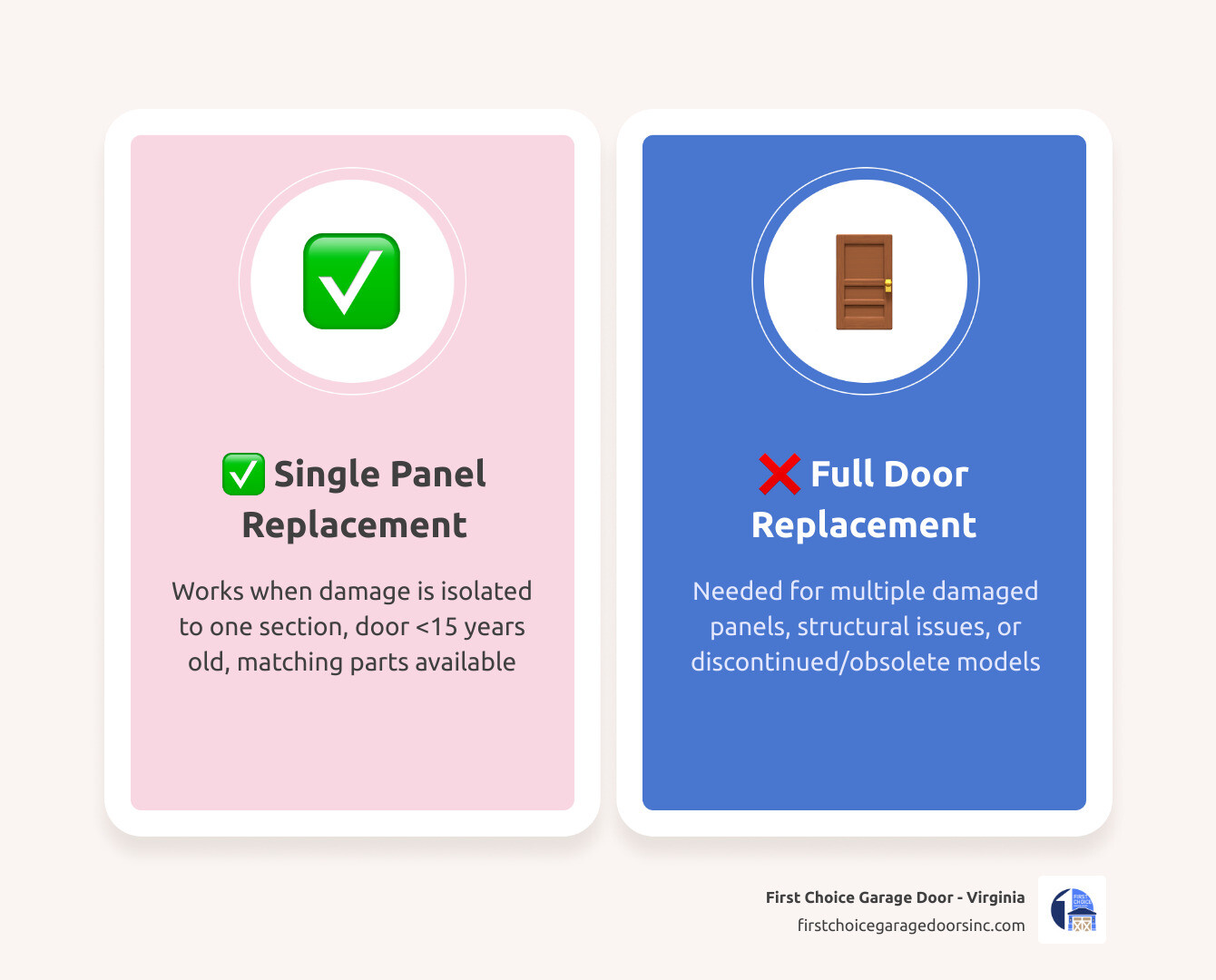
Can I replace just one panel on my garage door?
Technically speaking, the answer is a resounding yes. Because most homes in Northern Virginia utilize sectional garage doors, the system is modular. These doors consist of several horizontal sections—usually four or five—connected by hinges and guided by rollers along a track. This design is a lifesaver when a “rookie driver” in the family accidentally backs into the bottom section while it’s still opening.
However, determining if you should replace just one section requires a professional eye. We often look for signs you need a garage door repair that go beyond the surface dent. If the impact was forceful enough to bend the tracks or damage the hinges, simply swapping the “skin” of the door won’t fix the underlying mechanical issues.
There are significant risks that come with having a damaged garage door. A compromised panel can throw the entire system out of balance, putting immense strain on the opener and the springs. If the manufacturer still produces your specific model, we can often source an identical section, making the repair virtually invisible.
When single panel replacement is the right move
Replacing a single panel is often the “Lone Ranger” of home repairs—it rides in to save the day (and your budget) when the rest of the door is in pristine condition. This is the ideal route for minor cosmetic issues like small dents from a basketball or a stray branch.
You might wonder, “should you use a dented garage door?” If the dent is purely aesthetic and the door still travels smoothly, you can—but we don’t recommend leaving it for long. Small cracks or deep creases can eventually lead to metal fatigue or rust.
This option is most feasible if:
- The door is relatively new: Generally, doors under 12 years old have a higher chance of having replacement parts readily available.
- The damage is isolated: If only one panel took the hit and the tracks, rollers, and springs are still healthy.
- Model availability: Your door is a common style from a major manufacturer. For example, if you’ve previously noted that reasons a vinyl garage door is a good investment include durability, you’ll find that these modern materials often have great part support.
Identifying your specific garage door model
Before we can order a “new limb” for your garage door, we have to know exactly what we’re looking for. Garage door panels are not universal; they are manufacturer-specific and model-specific. Even a quarter-inch difference in thickness or a slight variation in the tongue-and-groove joint can make a panel incompatible.
When choosing between garage door repair or replacement, the first step is locating the “birth certificate” of your door. Look for a manufacturer’s sticker or a metal stamp, usually found on the interior side of the panels or on the end stiles (the vertical metal pieces on the edges of the sections). This label typically contains:
- The manufacturer’s name
- The model number
- The serial number
- The color code and manufacturing date
That even with the exact color code, “UV fading” is a real factor in Northern Virginia. A brand-new panel might look slightly brighter than the sections that have been sitting in the sun for a decade. In these cases, we might suggest a fresh coat of paint for the entire door to ensure aesthetic uniformity.
When to choose a full door replacement instead
Sometimes, trying to save one panel is like putting a new tire on a car with a blown engine. It looks better, but it’s not going to get you very far. If your door has reached the end of its functional life, a full system replacement is the smarter long-term investment.
| Feature | Single Panel Replacement | Full Door Replacement |
|---|---|---|
| Best For | Minor, isolated cosmetic damage | Aged doors, multiple damaged panels |
| Longevity | Depends on the remaining old parts | 15–30 years of new service life |
| Curb Appeal | Restores existing look | Complete home exterior upgrade |
| Safety | Relies on old springs/cables | All new safety components & tracks |
| Technology | Keeps old opener/hardware | Opportunity for smart-home upgrades |
We often have to have an honest conversation with homeowners about when to repair vs replace your garage door. If three or more sections are damaged, the cost of parts and labor for multiple panels often creeps very close to the cost of a brand-new, basic insulated door.
Structural issues are another deal-breaker. If you notice what is garage door warping and what should you do if it happens, a single panel won’t fix the problem. Warping often affects the entire frame and track alignment. Understanding what can cause a warped garage door—like extreme temperature shifts or moisture—can help you realize that the damage is often systemic rather than localized.
The risks of DIY garage door panel replacement
In the era of YouTube tutorials, it’s tempting to think you can handle a panel swap on a Saturday afternoon. We strongly advise against this. Your garage door is likely the largest and heaviest moving object in your home, and it is powered by components that can be incredibly dangerous.
The primary “villains” in a DIY scenario are the springs. Knowing when your garage door springs are broken is one thing, but handling them is another entirely. Torsion springs are under extreme tension—enough to lift a 200-pound door with ease. If they snap or are released improperly during a panel removal, they can cause severe injury or even be fatal.
Beyond the physical danger, there is the issue of “weight balance.” Garage door systems are finely tuned. The springs are “wound” to a specific tension that matches the exact weight of the door. When you remove a panel, the door becomes lighter, which can cause the springs to pull the remaining sections up violently. Conversely, installing a new, potentially heavier insulated panel without recalibrating the springs can burn out your opener motor in a matter of weeks.
Step-by-step guide to professional panel installation
When our team arrives at your home in Manassas or across Northern Virginia, we follow a rigorous process to ensure the new panel integrates perfectly with your existing system. It’s not just about bolting a new piece of steel in place; it’s about mechanical harmony.
- Safety First & Power Disconnection: We start by disconnecting the automatic opener. This prevents the door from moving unexpectedly while we are working between the sections.
- Tension Management: We carefully “pin” the springs or use specialized tools to hold the tension. This is the most critical step to prevent the door from crashing down or flying up during the swap.
- Panel Removal: We unbolt the hinges and rollers from the damaged section. We use clamps to keep the sections above the damaged area securely in the tracks.
- Hinge and Roller Transfer: We inspect the existing hardware. If the hinges or rollers show wear, we replace them. We then transfer the hardware to the new panel, ensuring every screw is tightened to factory specifications.
- Alignment & Insertion: The new panel is slid into the tracks. We check for a perfect “weather-tight” seal between the new section and the old ones. This is vital for insulation and preventing when you might need a garage door repair due to moisture infiltration.
- Recalibration & Testing: Once the door is reassembled, we don’t just walk away. We test the balance. A properly balanced door should be easy to lift by hand and stay in place halfway up. We then reconnect the opener and test the safety sensors and auto-reverse features.
Frequently Asked Questions
Can I replace just one panel on my garage door if it is over 15 years old?
It becomes significantly more difficult once a door passes the 15-year mark. Most manufacturers update their designs every few years, and once a model is discontinued, finding a matching section is like “hunting for a unicorn.” Even if we find a “generic” panel that fits the width, the thickness or the way the panels interlock usually won’t match.
At this age, the other hardware—the rollers, tracks, and springs—are likely nearing the end of their life cycle anyway. When choosing between garage door repair or replacement for a 15-year-old door, we almost always recommend a full replacement. It’s more cost-effective than paying for a panel today and a spring repair six months from now.
How do I ensure the new section matches my existing door?
The best way is to use the manufacturer’s color code found on the door’s ID sticker. However, as we mentioned, Northern Virginia sun can be tough on paint. If your door has faded, the new panel will likely be a shade or two darker.
If the mismatch is distracting, you have two options:
- Paint the door: Steel doors can be painted with high-quality exterior latex paint.
- Wait for the “Fade”: Over a year or two, the new panel will begin to weather and may blend in better, though it rarely becomes a perfect match on its own.
Is it safe to replace just one panel on my garage door without a professional?
In short: No. While it might look like a simple mechanical puzzle, the physics involved are unforgiving. Between the weight of the panels and the high-tension springs, the potential for injury is high. Furthermore, a DIY job often voids the manufacturer’s warranty. Knowing when your garage door springs are broken is a job for a pro, and so is replacing the panels they help lift.
Conclusion: Trust the Experts at First Choice Garage Doors
A damaged garage door panel doesn’t have to mean a total overhaul, but it does require an expert assessment to ensure your home remains safe and secure. At First Choice Garage Doors, we’ve spent years helping homeowners in Manassas and throughout Northern Virginia navigate these exact decisions.
We pride ourselves on honesty. If we can save you money by replacing a single panel and the rest of your door is in great shape, we’ll tell you. If your door is a “safety hazard” waiting to happen, we’ll walk you through the best replacement options for your home’s style and your budget.
Don’t let a dented panel compromise your home’s curb appeal or your family’s safety. Whether you need a quick section swap or a brand-new installation, we are here to provide prompt, professional, and stress-free service.