
That Grinding, Squeaking, or Banging Sound Is Trying to Tell You Something
Why is my garage door making noise is one of the most common questions homeowners ask — and the answer matters more than you might think. That sound isn’t just annoying. It’s often an early warning sign that something needs attention before a small problem becomes a costly repair.
Here are the most common reasons your garage door is making noise:
| Noise Type | Most Likely Cause |
|---|---|
| Squeaking / Creaking | Dry hinges, worn rollers, lack of lubrication |
| Grinding | Misaligned tracks, worn roller bearings, opener gear wear |
| Rattling | Loose bolts, nuts, or brackets (accounts for ~80% of rattles) |
| Banging / Popping | Broken or failing springs, door imbalance |
| Tink-tink (at start) | Torsion spring tension issues |
| Groaning | Dry or worn hinges, metal fatigue |
Your garage door is one of the most-used moving parts in your home. The average household opens and closes it multiple times every single day. All that motion adds up — and over time, parts wear out, lubricant dries up, and hardware loosens from vibration.
The good news? Most garage door noises have a clear cause and a straightforward fix. This guide walks you through how to diagnose what you’re hearing, what’s safe to handle yourself, and when it’s time to call a professional.
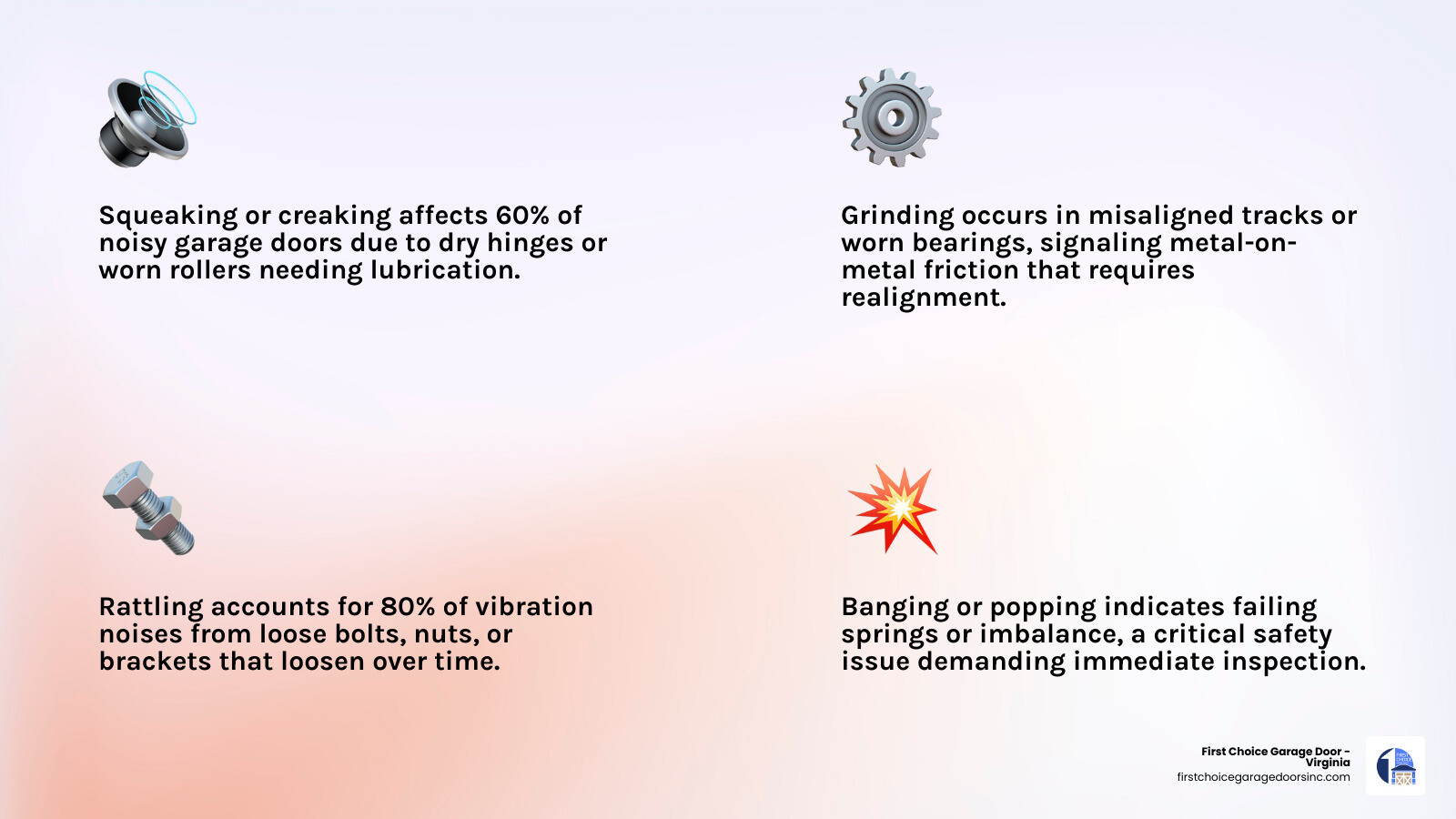
Why Is My Garage Door Making Noise? Decoding the Sounds
When it comes to garage doors, we like to think of ourselves as “garage door whisperers.” Every sound is a form of communication. A healthy door should operate with a smooth, rhythmic hum. When that hum turns into a “protest,” it’s time to investigate Why Your Garage Door Is Noisy.
Different sounds point to different mechanical failures. For instance, a high-pitched squeak usually sounds like nails on a chalkboard and is the door’s way of begging for oil. Grinding is more serious, often indicating that metal is rubbing against metal because a part has shifted or worn down completely. Rattling often sounds like a ghost shaking chains in your garage, while a sudden bang can sound like a car backfiring or a gunshot — a classic sign of a snapped spring.
Identifying why is my garage door making noise when opening
If you notice the noise is most aggressive during the opening cycle, the culprit is likely under the most strain at that moment. Worn-out rollers are a primary suspect. Rollers have internal ball bearings that can seize up over time. When they stop rolling and start sliding, they create a screeching or grinding sound against the metal tracks.
Track friction is another major player. If your tracks are slightly bent or filled with hardened grease and dirt, the rollers will “fight” their way up, leading to a labored sound. Furthermore, dry hinges that haven’t seen a drop of oil in years will groan as they pivot during the door’s travel. There are More Reasons a Garage Door Could Become Noisy, including uninsulated panels that act like giant drums, amplifying every tiny vibration into a house-shaking roar.
Why is my garage door making noise even after lubrication?
It’s frustrating when you spend a Saturday morning with a spray can only to have the door still scream at you. If lubrication doesn’t fix the squeak, you might be dealing with metal fatigue. Over thousands of cycles, the metal in your springs and hinges actually changes on a molecular level, becoming brittle and noisy.
Misaligned tracks are another reason lubrication fails. No amount of oil can stop the sound of a roller being forced into a track that is out of plumb. Additionally, if your door is unbalanced, the motor has to work twice as hard, leading to a grinding sound from the opener’s internal gears. Understanding Why Your Garage Door Is Acting Up and How Manassas Pros Can Help is key here, as these structural issues require more than just a quick spray.
The Science of Silence: Lubrication and Hardware Maintenance
Proper maintenance is the secret to a door that lasts 30 years instead of 15. The most important rule of garage door “first aid” is this: Put the WD-40 away. While it’s great for a squeaky door hinge inside the house, WD-40 is a solvent, not a long-term lubricant. It actually strips away protective oils and attracts dust, eventually turning into a sticky sludge that makes the noise worse.
Instead, we recommend using a high-quality silicone-based spray or white lithium grease. These products stay on the metal and provide a “cushion” that reduces friction. For more specific tips, check out our guide on Lubrication and Adjustments for a Happier Annapolis Garage.
Roller Comparison Table
| Feature | Metal Rollers | Nylon Rollers (Premium) |
|---|---|---|
| Noise Level | Loud (Metal-on-metal) | Quiet (50% Noise Reduction) |
| Lubrication Need | High (Bearings must be oiled) | Low (Often sealed bearings) |
| Durability | High, but prone to rust | High, resistant to corrosion |
| Operation | Can be jerky | Ultra-smooth gliding |
Hardware Tightening and Vibration Reduction
Did you know that loose bolts account for about 80% of common garage door rattles? Your door is a giant vibrating machine. Every time it moves, the nuts and bolts that hold the tracks, hinges, and brackets together can wiggle just a tiny bit. Over a year, those tiny wiggles become loose hardware.
Using a simple socket wrench or a screwdriver, you can go through and snug up these fasteners. Be careful not to overtighten, as you don’t want to strip the holes in the thin metal panels. Addressing these Garage Door Problems That Are Frustrating to Experience early can reduce your overall noise levels by up to 70%.
Critical Safety Risks: When Noise Indicates a Failing System
While a squeak is a nuisance, some noises are red alerts. Garage door springs — whether torsion (above the door) or extension (along the tracks) — are under extreme tension. Torsion springs are typically rated for about 10,000 cycles, which for most Northern Virginia families lasts about 7 to 12 years.
If you hear a “tink-tink” sound or a heavy straining groan, your springs may be reaching the end of their lifespan. When a spring fails, it doesn’t just stop working; it snaps with enough force to cause serious injury or property damage. Knowing When to Get Your Garage Door Repaired is vital for your family’s safety.
Signs of Imbalance and Spring Fatigue
A noisy door is often an unbalanced door. You can perform a simple “Half-Mast Test” to check this. Disconnect your opener and lift the door halfway by hand. If it stays in place, it’s balanced. If it slams shut or shoots upward, your springs are either too weak or too tight.
Ignoring an unbalanced door puts immense strain on your opener, leading to stripped gears and a motor that sounds like it’s grinding rocks. These are clear Signs That a Garage Door Repair Service Will Be Needed. Never attempt to adjust torsion springs yourself — the energy stored in those coils is dangerous.
Step-by-Step DIY Fixes for a Quieter Home
Before you call in the pros, there are several safe, effective steps you can take to quiet your door in April 2026.
- Clean the Tracks: Use a damp cloth to wipe out the inside of the tracks. Do not lubricate the tracks themselves! Lubricant in the tracks just collects hair and dirt, creating a “speed bump” for your rollers.
- Visual Inspection: Look for flat spots on your rollers. If a roller isn’t round anymore, it will “thump” every time it rotates.
- Tighten the Hinges: Check the hinges between the door panels. If they are loose, the panels will “slap” against each other during the curve of the track.
- Clear Debris: Check the photo-eye sensors and the bottom weatherstripping for cobwebs or debris that might be causing the door to hesitate or jitter.
Following these Garage Door Maintenance Tips to Ensure a Long-Lasting Door can extend the life of your system significantly.
Seasonal Maintenance for Northern Virginia Homes
In Northern Virginia, our garage doors have to deal with everything from humid summers to freezing winters. These temperature fluctuations cause the metal parts to expand and contract, which is why a “tune-up” is so important.
As of April 2026, we recommend a spring cleaning for your garage door. Check the weatherstripping to ensure it hasn’t become brittle. If the rubber is hard, the door will bang against the floor rather than sealing quietly. Understand Why Your Manassas Garage Door Needs a Tune-Up Before the Seasons Change to stay ahead of the weather.
Upgrading for Peace and Quiet in Northern Virginia
Sometimes, the best way to fix a noisy door is to upgrade the components that are causing the racket. If you have an old chain-drive opener, it’s naturally going to be loud — that’s just the nature of metal links pulling a heavy door.
Upgrading to a belt-drive opener is like trading in a tractor for a luxury sedan. These openers use a steel-reinforced rubber belt, which eliminates the “clinking” of the chain. When combined with a modern DC motor, the operation is nearly silent. Learn How to Keep Your Manassas Garage Door Moving Quietly by choosing the right hardware.
Long-Term Benefits of Component Upgrades
Swapping out old steel rollers for premium nylon rollers with ball bearings can reduce noise by 50% immediately. Nylon doesn’t transmit vibration the way steel does, and the sealed bearings mean you don’t have to worry about rust or lubrication as often.
Additionally, consider insulated door panels. While they are great for energy efficiency, the “sandwich” construction of an insulated door makes it much more rigid. This rigidity prevents the panels from rattling and vibrating in the wind or during operation. In the long run, Why Your Annapolis Garage Door Deserves a Tune-Up and Some TLC often comes down to investing in parts that work with you, not against you.
Frequently Asked Questions about Garage Door Noises
What is the most common cause of a rattling garage door?
The most common cause is loose hardware. Because the door vibrates every time it opens, nuts and bolts naturally loosen over time. About 80% of rattles can be cured by simply tightening the hinge and track bolts. If you’re Stuck in the Driveway? Diagnosing Common Garage Door Issues in Easton can help you find the specific loose part.
Is it safe to adjust my own garage door springs?
No. We strongly advise against DIY spring adjustments. Torsion springs store an incredible amount of energy. If a winding bar slips or a bolt breaks while you are working on it, the result can be life-altering injuries. Always call a professional for spring-related issues.
How often should I lubricate my garage door parts?
We recommend a biannual schedule — once in the spring (like right now in April 2026) and once in the fall. If you live in a particularly dusty area or near a high-traffic road, you might want to do a quick inspection and lubrication every four months to keep everything moving smoothly.
Conclusion
At First Choice Garage Doors, we know that a noisy garage door is more than just a minor headache — it’s a sign that your home’s largest moving part is struggling. Whether you are in Manassas, VA, or anywhere else in Northern Virginia, our team is dedicated to providing the expert diagnosis and repair you need to keep your home safe and quiet.
From simple tune-ups to full system replacements, we bring unmatched expertise and a commitment to safety to every job. Don’t wait for that squeak to become a snap. If you’re tired of the racket, contact us for a professional Garage Door Repair and get back the peace and quiet you deserve.