
What That Grinding Sound From Your Garage Door Is Telling You
Garage door grinding noise causes and fixes are something every homeowner in Northern Virginia should understand — because that rough, scraping sound isn’t just annoying. It’s a warning.
Think of it like a check engine light. Your door is telling you something is wrong right now, and ignoring it usually makes things worse.
Here’s a quick overview of the most common causes and what to do about them:
| Cause | Quick Fix | DIY or Pro? |
|---|---|---|
| Lack of lubrication | Apply silicone spray or white lithium grease | DIY |
| Worn or damaged rollers | Inspect and replace rollers | Pro recommended |
| Misaligned or dirty tracks | Clean tracks; minor adjustments with rubber mallet | DIY for minor; Pro for major |
| Loose hardware (bolts, brackets) | Tighten with wrench and socket set | DIY |
| Stripped opener gears | Replace internal gear kit | Pro |
| Broken or failing springs | Do not touch — call a professional immediately | Pro only |
| Unbalanced door | Disconnect opener and test manually; call pro | Pro |
The good news? Many grinding noises are caused by simple, fixable issues — like dry rollers or a loose bolt. A few minutes of basic maintenance can often silence the noise and prevent a much bigger repair bill down the road.
But not all grinding sounds are equal. Some — like a broken torsion spring or a stripped motor gear — are serious mechanical failures that need professional attention right away.
In this guide, we walk through every major cause of garage door grinding, show you what you can safely fix yourself, and tell you exactly when it’s time to call in an expert.
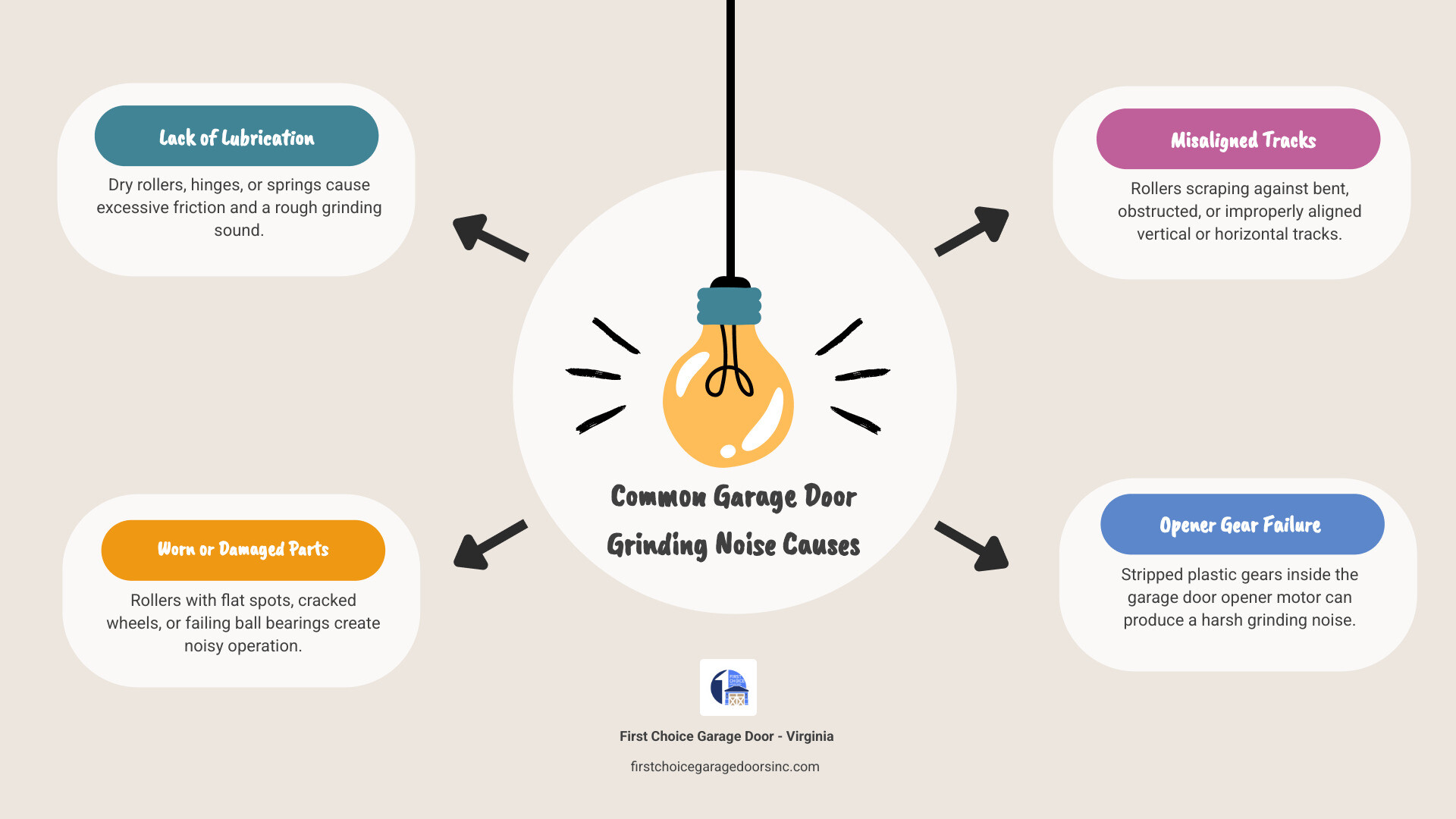
Identifying Garage Door Grinding Noise Causes and Fixes
When your garage door starts sounding like a blender full of gravel, it’s easy to panic. However, becoming a “garage door whisperer” starts with understanding that your door is the largest moving object in your home. It relies on a complex dance of metal parts moving under heavy tension. When that dance gets out of sync, you get noise.
Typically, a grinding noise indicates metal-on-metal friction or a mechanical component that is reaching its expiration date. In our experience serving Manassas and the surrounding Northern Virginia area, we’ve found that Why Your Garage Door Is Noisy usually boils down to three main culprits: friction, misalignment, or component failure.
If you hear a steady, rhythmic grinding as the door moves, it often points to the hardware. If the noise is a high-pitched shriek followed by a struggle to lift, the opener might be the victim. There are More Reasons A Garage Door Could Become Noisy, such as seasonal changes. In Northern Virginia, the humidity can cause metal to expand or lubricants to gum up with dust, leading to that dreaded “daily grind.”
Worn Rollers as Garage Door Grinding Noise Causes and Fixes
Rollers are often the first parts to wear out because they bear the brunt of the door’s movement. They are the “tires” of your garage door system. When they fail, they don’t just get loud; they can actually damage your tracks, turning a simple fix into a major overhaul.
We recommend inspecting your rollers at least every six months. Look for flat spots on the wheels, cracks in the plastic, or excessive “play” (wobbling) in the stem. If the roller is frozen and sliding rather than rolling, it will create a horrific scraping sound.
| Feature | Steel Rollers | Nylon Rollers |
|---|---|---|
| Noise Level | Loud, metal-on-metal clanging | Quiet, smooth operation |
| Lubrication | Requires frequent oiling | Ball bearings are often sealed |
| Lifespan | Long, but prone to rust | Long-lasting and rust-resistant |
| Best For | Heavy industrial doors | Residential homes (quietest) |
Upgrading to nylon rollers with ball bearings is one of the most effective ways to Keep Your Rollers Rolling With Local Easton Garage Door Care. They are naturally quieter and require much less maintenance than traditional steel versions.

Misaligned or Obstructed Tracks
Your garage door tracks must be perfectly parallel and vertical to operate quietly. Even a minor shift — sometimes less than 1/4 inch — can cause the door to rub against the track or the molding.
Common signs of track issues include:
- Gaps: Visible space between the rollers and the track.
- Rubbing Marks: Shiny metal spots on the inside of the track where the door is scraping.
- Debris: Dirt, leaves, or even spider webs can build up. In Virginia, we often find that “stinkbugs” or small pebbles get lodged in the curved section of the track, causing a “pop” or “grind” every time the door passes that spot.
Knowing When Your Garage Door Has Come Off Track is vital. If the track is bent or severely misaligned, the door could bind and fall, which is a major safety hazard.
DIY Maintenance to Silence the Grind
A little TLC goes a long way. Most homeowners can handle basic maintenance that prevents grinding from starting in the first place. Think of it like an oil change for your car; you wouldn’t drive 50,000 miles without one, so don’t let your garage door run for years without a tune-up.
Proper Lubrication Techniques
The number one rule of garage door maintenance: Skip the WD-40. While many people reach for that blue and yellow can, WD-40 is actually a degreaser and solvent, not a long-term lubricant. It can actually strip away the existing grease and attract dust, making the grinding worse over time.
Instead, use a high-quality silicone-based spray or white lithium grease. These stay “wet” longer and won’t attract the grit and grime common in Virginia garages.
Where to lubricate:
- Hinges: Spray the pivot points where the metal meets.
- Rollers: Focus on the ball bearings inside the roller, not the outside of the wheel (if they are nylon).
- Springs: A light coat on the torsion spring helps prevent “coil bind” and rust.
- Tracks: Do not lubricate the inside of the tracks. This can cause the rollers to slip. Instead, just keep them clean.
For a deeper dive, check out our guide on Lubrication And Adjustments For A Happier Annapolis Garage or browse our tag/lubrication section. Consistent care is the secret to How To Keep Your Manassas Garage Door Moving Quietly.
Cleaning and Inspecting Hardware
Garage doors vibrate. Over time, that vibration acts like a tiny jackhammer, loosening the nuts and bolts that hold your system together.
Once a month, do a “look and listen” test. While the door is closed, use a wrench to snug up any loose bolts on the hinges and the mounting brackets that hold the tracks to the wall. Be careful not to overtighten, as you could strip the metal.
Also, take a damp cloth and wipe out the inside of the tracks. Removing the “sludge” of old grease and North Virginia dust can immediately reduce the rumbling sound. For more tips on hardware, see The Easton Guide To Fixing Garage Door Sensors And Tracks.
Troubleshooting the Garage Door Opener vs. Hardware
Is the noise coming from the door or the motor? This is the most important question to answer before you start buying parts. We use a simple “Disconnect Test” to find out.
- Close the garage door completely.
- Pull the red emergency release cord to disconnect the door from the opener.
- Test the Door: Lift the door manually. It should move smoothly and stay in place when opened halfway. If it grinds or feels heavy while moving it by hand, the problem is in the rollers, tracks, or springs.
- Test the Opener: Press your remote button. The opener carriage will move along the rail. If you hear the grinding noise now, even though the door isn’t attached, the problem is internal to the motor unit.
This is one of the 5 Reasons Your Garage Door Wont Open Or Close correctly.
Opener-Specific Garage Door Grinding Noise Causes and Fixes
If the grinding is coming from the motor unit, the most common culprit is a stripped “sacrificial” gear. Most modern openers use internal gears made of high-strength nylon. They are designed to fail (strip) if the door becomes too heavy or hits an obstruction, which protects the much more expensive motor from burning out.
The Smoking Gun: If you see fine white or black plastic shavings (sometimes called “plastic snow”) on the floor under the motor or inside the light cover, your gears are toast. You might also notice a warm plastic smell.
Another common opener issue is a loose chain or belt. If the chain is sagging like a wet noodle, it can slap against the rail or skip teeth on the sprocket, creating a rhythmic clacking or grinding sound. You can find more about this in our Tag/Noisy Garage Door resources.
Identifying Internal Motor Failure
Sometimes the issue is deeper. If you hear a loud humming noise but the door doesn’t move, the motor capacitor might have failed, or the worm drive gear might be seized.
If your opener is 10 to 15 years old, parts for these internal repairs can be difficult to find. A good rule of thumb: if the repair costs more than half the price of a brand-new, high-performance unit, it’s usually time to upgrade to a modern, quieter belt-drive system.
When to Call a Professional for Noisy Garage Doors
We love a good DIY project, but garage doors are dangerous. They operate under extreme tension. Every year, thousands of people are injured attempting repairs they aren’t equipped for.
If you see any of these “Red Flags,” stop what you are doing and call us:
- Frayed Cables: If the steel cables look like a “bad hair day,” they are about to snap.
- Gaps in the Spring: If you see a 2-inch gap in your torsion spring, it’s broken.
- The Door is Crooked: This indicates a cable has jumped or a spring has lost tension.
- Loud Bangs: A sound like a gunshot or a car backfire usually means a spring has snapped.
Knowing the Signs That A Garage Door Repair Service Will Be Needed can save you from a dangerous situation.
Safety Risks of DIY Spring Repair
We cannot stress this enough: Never attempt to adjust or remove garage door springs yourself. Torsion and extension springs hold enough energy to cause catastrophic injury or even death if they release unexpectedly.
Professional technicians use specialized winding bars and safety equipment to manage this tension. Your safety is worth far more than the cost of a service call. For a complete safety checklist, refer to our Garage Door Maintenance Guide Annapolis Md.
Major Structural and Alignment Issues
If your tracks are bent from a car bump or if the door panels themselves are sagging, these are structural issues. Trying to “hammer out” a bent track often results in the door binding even worse.
A professional can check the structural integrity of the entire system, ensuring that the tracks are not just “straight-ish” but perfectly aligned to the 1/16th of an inch. This precision is what makes the difference between a door that lasts 20 years and one that fails in five.
Frequently Asked Questions about Garage Door Noises
What does a grinding noise typically indicate?
A grinding noise is almost always a sign of friction. It means two parts that should be moving smoothly are instead rubbing together. This is usually caused by worn-out rollers, a lack of lubrication, or the internal gears of the opener wearing down. It’s essentially your garage door’s “check engine light.”
Is it safe to operate a grinding garage door?
Generally, no. If you hear grinding, it means parts are experiencing accelerated wear. If the noise is coming from a failing spring or a stripped gear, the door could become stuck halfway or, worse, drop suddenly. It is best to disconnect the opener and perform a visual inspection before using the door again.
Should I repair or replace an old grinding opener?
If your opener is over 15 years old and makes a loud screeching or grinding noise, replacement is often the better investment. Modern openers are significantly quieter (especially belt-drive models), more secure, and come with smart features that older units lack. If the repair involves the main motor or logic board on an old unit, it’s time for an upgrade.
Conclusion
A quiet garage door isn’t just a luxury; it’s a sign of a healthy, safe system. By staying on top of garage door grinding noise causes and fixes, you can extend the life of your door and keep your home secure.
Remember to:
- Lubricate every 3 to 6 months with silicone or lithium spray.
- Inspect your rollers and tracks for wear and debris.
- Tighten loose hardware to stop vibrations.
- Listen for changes in the sound of your door.
Ignoring a small grind today can lead to a total failure tomorrow, often resulting in repair bills ranging from $300 to $800. Preventive maintenance is the best way to save money and ensure your door is always ready when you are.
If the noise persists or you suspect a problem with your springs or motor, don’t take risks. First Choice Garage Doors is here to provide expert, stress-free service throughout Northern Virginia. For More info about garage door repair services, or to schedule a professional tune-up, reach out to our team in Manassas today. We’ll get your door running so quietly, you’ll forget it’s even there!