
The Real Pros and Cons of Wood Garage Doors (Quick Answer)
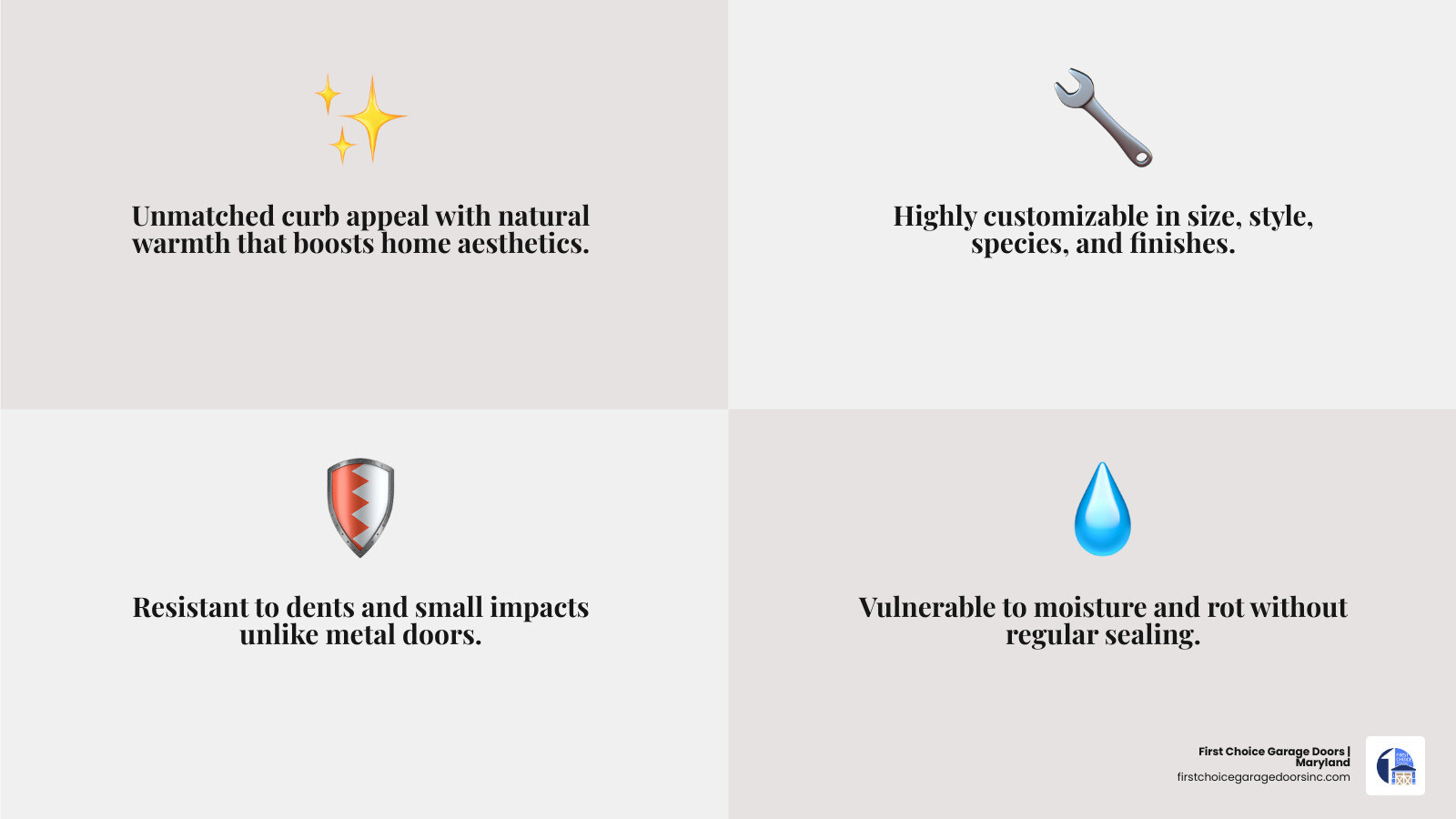
The pros and cons of wood garage doors come down to a simple trade-off: stunning natural beauty and strong customization options on one side, and higher maintenance demands and weather sensitivity on the other.
Here’s a quick breakdown:
Pros:
- Unmatched curb appeal and natural warmth
- Highly customizable in size, style, wood species, and finish
- Natural insulation properties
- Resistant to dents and small impacts
- Sustainable and eco-friendly when responsibly sourced
- Easy to repair individual panels or refinish
Cons:
- Requires regular staining, sealing, or painting every 1 to 5 years
- More vulnerable to moisture, humidity, and temperature changes
- Heavier than steel or aluminum, which can stress springs and openers
- Generally more expensive upfront than steel alternatives
- Susceptible to rot, warping, and pest damage if neglected
Wood garage doors have been a go-to choice for homeowners since the earliest days of the automobile. They bring a warmth and character to a home’s exterior that no other material quite matches. But they’re also a living material — one that breathes, expands, and contracts with the seasons. That means they reward homeowners who are willing to care for them, and they can struggle for those who aren’t.
For Maryland homeowners especially, where humid summers and cold winters put real stress on exterior materials, understanding these trade-offs before you buy is essential.
The Main Pros and Cons of Wood Garage Doors

When we talk about the pros and cons of wood garage doors, we are looking at a material that has survived the test of time. While metal doors became popular in the 1970s for their low price point, wood remains the “gold standard” for high-end curb appeal.
One of the biggest advantages is Installing A Wooden Garage Door Pros And Cons involves looking at the material’s natural resilience. Unlike steel, which can dent and stay dented from a stray basketball or a minor bumper tap, wood is naturally flexible. It absorbs impacts well, and if a gouge does occur, it can often be sanded out or filled with wood putty—something you simply can’t do with a thin sheet of metal.
However, we must also consider the weight. Wood is significantly heavier than its counterparts. This isn’t just a matter of “heavy lifting” during installation; it affects the entire ecosystem of your garage. A heavier door requires heavy-duty springs and a high-torque opener to function safely and smoothly over the long term.
Understanding the Pros and Cons of Wood Garage Doors in Maryland
Living in Maryland means our homes are subjected to a specific set of environmental stressors. From the humid summers in Columbia to the frosty winters in Frederick, wood doors are constantly “working.” Because wood is a porous, organic material, it reacts to moisture.
When discussing The Good And Bad Of Installing A Wooden Garage Door, we often highlight that wood “breathes.” In high humidity, the fibers can swell, and in dry winter air, they contract. If the door isn’t properly sealed, this seasonal expansion can lead to sticking in the tracks or even warping. For our local clients, this means that the choice of finish and the quality of the initial seal are the most important factors in ensuring the door operates correctly year-round.
Aesthetic Versatility and Home Value
If you are looking to truly transform the look of your home, Benefits And Drawbacks Of Getting A Wood Garage Door usually starts with the “wow” factor. A well-crafted wood door can account for up to 45% of a building’s facade, meaning it has a massive impact on resale value.
Whether your home is a traditional colonial in Annapolis or a rustic retreat near Easton, wood can be tailored to match perfectly. You aren’t limited to factory-set colors; you can choose custom stains that highlight the natural grain or paints that provide a crisp, classic look. This architectural harmony is often what drives homeowners to choose wood despite the higher maintenance requirements.
Popular Wood Species and Customization Options
Not all wood is created equal. The species you choose will dictate how the door looks, how it ages, and how much work it will be to maintain. There are many Reasons To Get A Wood Garage Door, but selecting the right species for the Maryland climate is step number one.
- Western Red Cedar: This is perhaps the most popular choice. It is naturally resistant to rot and insects thanks to its organic oils. It’s also relatively lightweight for a wood species and takes stain beautifully.
- African Mahogany: If you want a showstopper, mahogany is it. It features a deep, rich color and a very tight grain pattern that screams luxury. It is incredibly dense and durable but does require a dedicated sealing schedule to keep that deep luster from fading.
- Redwood: Known for its stunning red tones, redwood is highly resistant to warping and shrinking, making it a stable choice for areas with fluctuating temperatures.
- Hemlock: Often used for “paint-grade” doors, hemlock is a sturdy, economical choice if you plan on painting your door a solid color rather than staining it.
Tailoring Your Door to Your Home’s Style
The beauty of wood is its malleability. When reviewing Wood Garage Door Pros And Cons, customization is a massive “pro.” We can help you design a door that features:
- Carriage House Designs: These mimic the look of old-fashioned swing-out doors but operate with modern overhead convenience.
- Modern Flush Panels: For contemporary homes, smooth wood panels provide a sleek, minimalist aesthetic.
- Decorative Hardware: From hammered iron hinges to vintage handles, these “jewelry” pieces for your door add the finishing touch.
- Window Inserts: You can choose custom glass types—frosted, seeded, or clear—to bring natural light into your garage space.
Comparing Real Wood to Steel and Faux Wood Alternatives
Many homeowners find themselves torn between the authenticity of real wood and the convenience of modern alternatives.
| Feature | Real Wood | Steel | Faux Wood (Composite) |
|---|---|---|---|
| Aesthetics | Unmatched authenticity | Modern/Industrial | Very close to real wood |
| Maintenance | High (1-5 years) | Low (cleaning/waxing) | Low to Moderate |
| Durability | High (impact resistant) | Moderate (dents easily) | High (weather resistant) |
| Insulation | Natural (High) | Requires Inserts | Excellent |
| Price | Premium | Economical | Mid-range |
The debate over Steel Vs Wood Garage Door Installation often centers on how much time you want to spend on a ladder. Steel is great for busy families who want a “set it and forget it” solution. However, steel can rust if the paint is chipped, especially in coastal Maryland areas.
Faux wood or composite doors are a fantastic middle ground. These often feature a steel core for strength and insulation, topped with a moisture-resistant composite overlay that is molded from real wood pieces. When looking at Wood Vs Steel Garage Doors, faux wood offers the look of cedar or mahogany without the risk of rotting or warping.
Performance and Durability Differences
In a side-by-side Comparing Wood With Steel Garage Doors, wood often wins on sound dampening. Because wood is dense and thick, it acts as a natural sound barrier. If you live on a busy street in Baltimore or use your garage as a workshop, you’ll notice that a wood door keeps the interior much quieter than a thin steel door would.
Essential Maintenance and Longevity
To get the most out of your investment, maintenance isn’t optional—it’s essential. We always provide our customers with Wood Garage Door Maintenance Tips because a little prevention goes a long way.
Ideally, you should clean your door every six months with mild soap and water. Every 1 to 5 years, depending on how much direct sun and rain the door gets, you will need to reseal or restain it. If you notice the finish looks dull or water no longer beads on the surface, it’s time for a refresh.
Long-term Care and the Pros and Cons of Wood Garage Doors
When you stay on top of a How To Maintain Your Wood Garage Door schedule, you are actively Protecting Your Wood Garage Door Against Rot. Rot usually starts at the bottom of the door where water splashes up or snow sits against the panels.
You also need to keep an eye out for uninvited guests. In Maryland, wood-boring insects can be a concern. Knowing the Signs That Your Wood Garage Door Has Termites—such as small holes, discarded wings, or a hollow sound when tapping the wood—can save you from a full door replacement.
By Keeping Wood Garage Door Rot From Happening through regular inspections and high-quality moisture barriers, you can ensure your door stays as strong as the day it was installed.
Frequently Asked Questions about Wood Garage Doors
How long do wood garage doors typically last?
With proper care, a high-quality wood garage door can last 20 to 30 years or even longer. The lifespan is entirely dependent on the maintenance. A neglected door might show signs of failure within a decade, while a well-maintained mahogany or cedar door can last as long as the house itself. Knowing When To Replace Your Wood Garage Door usually comes down to structural integrity; if the frame is rotting or the panels are severely warped, it may be time for a new installation.
Are wood garage doors energy efficient?
Yes! Wood is a natural insulator. Unlike metal, which conducts heat and cold, wood fibers contain millions of tiny air pockets that slow down thermal transfer. This provides a natural R-value that helps keep your garage cooler in the summer and warmer in the winter. For even better performance, many modern wood doors are built in layers with a core of polystyrene insulation, giving you the best of both worlds. There are many Reasons To Get A Wood Garage Door 2, and energy savings is a big one.
Can I install a wood garage door myself?
We strongly recommend against DIY installation for wood doors. Because of their extreme weight, the spring tension required to balance them is immense and can be dangerous if handled incorrectly. Furthermore, wood doors often require precise “on-site” adjustments to ensure the panels align perfectly as they move through the tracks. There are many Reasons To Let A Pro Repair Your Wood Garage Door or install it, but safety and long-term performance are at the top of the list.
Conclusion
Choosing a garage door is a big decision that impacts your home’s safety, efficiency, and beauty for decades. While the pros and cons of wood garage doors show that they require a bit more “TLC” than other materials, the payoff in curb appeal and natural durability is often worth the effort.
At First Choice Garage Doors, we specialize in helping Maryland homeowners in Columbia, Frederick, Easton, and beyond find the perfect balance between style and substance. Whether you are looking for a brand-new custom installation or need expert maintenance to protect your existing wood door, our team is here to help with the prompt, professional service we’ve built our reputation on.
Ready to see how a natural wood door can transform your home? Contact us for professional garage door installation and service today, and let’s find the perfect fit for your property!