
Do I Need a Wind Rated Garage Door in North Carolina? Here’s the Quick Answer
Do I need a wind rated garage door in North Carolina — and the short answer is: it depends on where you live, but for many NC homeowners, the answer is yes, and it may be required by law.
Here is a fast reference to help you decide:
| Your Location | Wind Zone | Wind-Rated Door Required? |
|---|---|---|
| Coastal counties (e.g., Wilmington, Brunswick) | 140–150 mph | Yes — code-mandated |
| Near-coastal / Outer Banks adjacent | 130–140 mph | Yes — code-mandated |
| Piedmont / Charlotte / Fayetteville | 115–130 mph | Often required; check local code |
| Inland / Mountain West NC | Below 115 mph | Recommended, may not be mandated |
Key factors that determine your requirement:
- Your county’s ultimate design wind speed (130, 140, or 150 mph)
- Your exposure category (B = suburban, C = open terrain, D = near water)
- Your home’s mean roof height
- Whether you are in a coastal flood zone
If you are in a high wind zone and your current door is not rated, you may be out of code compliance — and one bad storm away from serious structural damage.
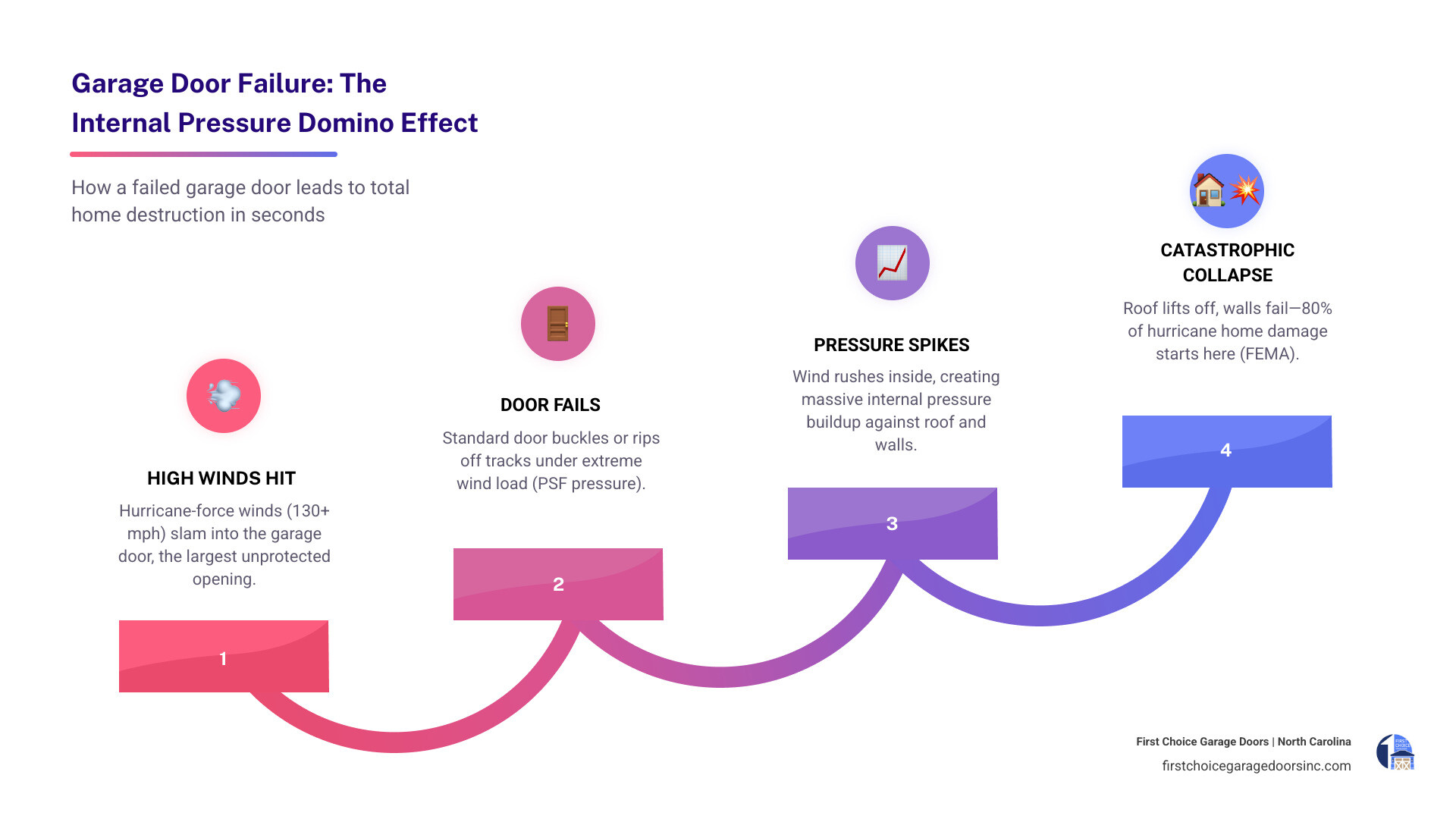
North Carolina is no stranger to violent weather. The state has been struck by more than 80 hurricanes since records began, and its coastal geography puts thousands of homes directly in the path of hurricane-force winds each season. What most homeowners do not realize is that the garage door — the single largest opening in most homes — is typically the first thing to fail when those winds arrive. According to FEMA, garage door failure is one of the primary contributors to hurricane storm damage in residential structures. Once a door gives way, wind rushes inside, internal air pressure spikes, and the forces acting on your roof and walls can become catastrophic — fast.
This is not a distant worst-case scenario. It is a well-documented chain of events that plays out every hurricane season up and down the Carolina coast.
I’m Tony Aguilar, founder of First Choice Garage Doors with over 30 years of hands-on experience in the garage door industry, and questions about do I need a wind rated garage door in North Carolina are among the most important ones I help homeowners answer — especially here in Fayetteville, where wind exposure and building code requirements vary more than most people expect. In this guide, I’ll walk you through exactly what the code requires, what makes a door truly storm-ready, and what’s at stake if yours isn’t up to the task.
Understanding Wind Load: Do I Need a Wind Rated Garage Door in North Carolina?

When we talk about “wind load,” we aren’t just talking about how fast the wind is blowing. We are talking about the actual physical force, measured in Pounds per Square Foot (PSF), that the wind exerts on your garage door. Think of it like this: your garage door is a giant sail. During a storm, that sail has to hold back thousands of pounds of pressure without buckling, bowing, or being ripped off its tracks.
The North Carolina Residential Code Chapter 45 specifically addresses high wind zones. If you live in an area with ultimate design wind speeds of 130, 140, or 150 mph, you are legally required to have a door that meets specific PSF ratings.
It is important to understand that there are two types of pressure at play:
- Positive Pressure: This is the wind blowing directly against the door, trying to push it into your garage.
- Negative Pressure: This is the “suction” effect that occurs as wind whips around the corners of your house, trying to pull the door out of the opening.
In many cases, the negative pressure is actually stronger than the positive pressure. If your door isn’t rated for both, it can “rack” like a playing card in winds as low as 60 mph. For more professional guidance, you can check out more info about garage door installation to see how we ensure structural integrity.
North Carolina Building Codes and High Wind Zones
North Carolina’s geography creates a “wind gradient.” The closer you are to the coast, the higher the wind speed requirements. However, wind speed is only one piece of the puzzle. The state code also looks at:
- Exposure Categories:
- Exposure B: Urban and suburban areas with lots of trees and buildings to break up the wind.
- Exposure C: Open terrain with scattered obstructions (like farmland or open fields).
- Exposure D: Flat, unobstructed areas near large bodies of water (the most extreme).
- Mean Roof Height: Taller houses catch more wind. A 40-foot tall house in a 150 mph zone faces significantly more pressure than a 15-foot ranch-style home in the same neighborhood.
As a leading garage door company in Raleigh NC, we often see homes in the Piedmont region that require doors rated for 90–110 mph, while our coastal neighbors need much more.
PSF Comparison Table: Single vs. Double Doors
Design pressures can vary, but here is a general look at requirements for a 150 mph wind zone at a 40-foot mean roof height:
| Door Size | Exposure Category | Required Positive Pressure | Required Negative Pressure |
|---|---|---|---|
| Single (8’x7′) | Exposure D | +48.0 PSF | -53.0 PSF |
| Double (16’x7′) | Exposure C | +44.0 PSF | -49.0 PSF |
Local building authorities have the final say on these requirements, often using ASCE 7 hazard maps to determine the exact needs for your specific lot.
Why a wind rated garage door in North Carolina is mandatory for coastal areas
If you are looking for a garage door company in Wilmington NC, you likely already know that the rules are different by the sea. In “Wind-Borne Debris Regions,” your door doesn’t just need to withstand pressure; it needs to survive impacts from flying objects like tree limbs or shingles.
In coastal A/V zones (flood zones), there are sometimes exceptions for “breakaway walls” designed to fail under 20 PSF of water pressure to protect the foundation. However, for most residential homes, the garage door must remain a solid barrier. Because of the salt air, we often recommend impact-rated fiberglass or high-gauge galvanized steel to prevent corrosion from eating away at your protection.
Determining if you need a wind rated garage door in North Carolina using ASCE maps
The ASCE 7-10 wind speed maps are the “gold standard” used by engineers and building inspectors. These maps categorize regions into Risk Categories. Most residential homes fall into Category II.
When you work with a garage door company in Fayetteville NC, we help you navigate these maps and local municipality amendments. For example, some towns in Cumberland County may have stricter requirements than the state minimum. Pulling a permit for a door replacement isn’t just a bureaucratic hurdle; it’s your guarantee that a professional has verified the door’s PSF rating matches your home’s specific wind exposure.
The Anatomy of a Storm-Ready Garage Door
A wind-rated door looks a lot like a standard door from the outside, but the “skeleton” is entirely different. It is a complete system, not just a reinforced panel. To meet ANSI/DASMA 108 certification, these doors include:
- Reinforcement Struts: Also known as U-bars, these are long metal braces that run the full width of every panel to prevent bowing.
- High-Tensile Stiles: The vertical “ribs” of the door are made of thicker steel to tie the panels into a rigid frame.
- Reinforced Tracks and Brackets: Standard tracks are held by thin clips. Wind-rated tracks use heavy-duty jamb brackets that act as anchors, bolted deeply into the home’s framing.
- Heavy-Duty Springs: Because these doors are heavier due to the extra steel, the springs must be specially calibrated to lift the added weight safely.
- Impact-Resistant Windows: If your door has windows, the glass must be able to withstand a “large missile impact” (usually a 9-pound 2×4 shot at 50 feet per second) without shattering and breaching the home’s envelope.
We have a detailed guide on getting your garage door ready for hurricanes that covers these components in depth.
Risks of Non-Compliance and Benefits of Upgrading
The biggest risk of a non-rated door is the “Internal Pressure Domino Effect.” When 100 MPH winds hit a standard door, it can buckle and be pulled off its hinges. Once that opening is breached, wind rushes into the garage. This creates a massive spike in internal pressure that pushes up on your roof and out on your walls.
FEMA and other researchers have found that 80% of residential hurricane wind damage starts with wind entry through the garage door. If the door holds, the house usually stays standing. If the door fails, the roof is often the next thing to go.
The Benefits of Upgrading:
- Safety: Protecting your family and the structural integrity of your home.
- Insurance Discounts: Many NC insurance providers offer premium credits ranging from 5% to 20% for homes with certified wind-rated or impact-rated garage doors.
- Home Value: A storm-ready home is a major selling point in North Carolina.
- Energy Efficiency: Wind-rated doors are often thicker and better insulated (up to R-18), which can lower your utility bills by 10-15%.
If you’ve noticed your door shaking or rattling during normal thunderstorms, it might be time to look into more info about garage door repair or a full upgrade before the next major season.
Frequently Asked Questions
Can I retrofit my existing door with a reinforcement kit?
While aftermarket “hurricane kits” exist, we generally advise against them. A true wind-rated door is a factory-built system. Adding heavy metal struts to an old, standard door can overload the counterbalance springs, making the door dangerous to operate. Furthermore, your existing tracks and jambs were likely not designed to handle the massive loads of a hurricane. A professional assessment is required to see if your home’s framing can even support a retrofitted load.
What is the difference between wind-rated and impact-rated?
- Wind-Rated: This door is tested for “static pressure”—its ability to withstand the pushing and pulling force of the wind (PSF).
- Impact-Rated: This door has passed the “missile impact test.” It can withstand being hit by flying debris (like a 2×4) without a breach. In coastal “Wind-Borne Debris Regions,” impact-rated doors are often mandatory.
How do I find the wind rating on my current door?
Look for a DASMA label or a manufacturer’s sticker on the inside of the door panels. It should list the model number and the Design Pressure (DP) ratings for both positive and negative force. If there is no label, the door is almost certainly unrated. Age is also a factor; if your door is more than 15 years old, it likely does not meet modern NC wind-load standards.
Conclusion
In North Carolina, a garage door isn’t just a convenience—it’s a critical piece of your home’s armor. Whether you are in the heart of Fayetteville or along the coast, understanding do i need a wind rated garage door in north carolina is the first step toward protecting your biggest investment.
At First Choice Garage Doors, we specialize in safety-first installations that meet or exceed all local building codes. We don’t just hang doors; we fortify homes. If you’re unsure about your current door’s rating or need a professional wind load assessment, our team is here to help.
Ready to ensure your home can stand up to the next big one? Schedule a consultation with our Fayetteville NC experts today for a free estimate and peace of mind.