
Why Damaged Panels Affect Your Door’s Performance More Than You Think
How damaged panels affect your doors performance is something most Maryland homeowners underestimate — until a small dent turns into a costly system failure.
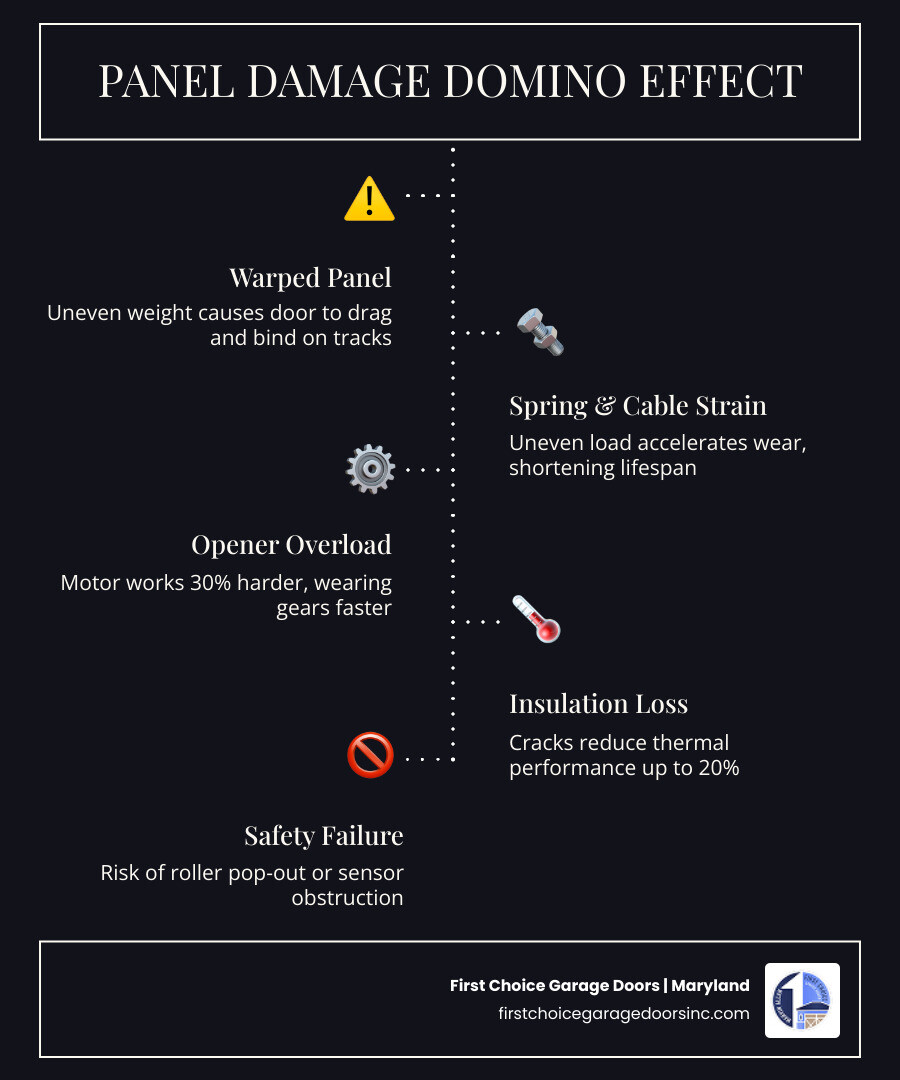
Here is a quick summary of the main ways a damaged panel impacts your garage door:
- Balance and alignment – A warped or dented panel shifts weight unevenly, causing the door to drag, bind, or travel unevenly on its tracks.
- Springs and cables – Uneven load accelerates wear on springs and cables, shortening their lifespan significantly.
- Opener strain – A door that is even slightly off-spec forces the opener motor to work harder, wearing out gears up to 30% faster.
- Insulation and energy efficiency – Cracks or delamination in insulated panels can reduce thermal performance by up to 20%.
- Safety risks – Structural panel damage can block safety sensors, cause rollers to pop off tracks, or lead to unexpected door failure.
- Curb appeal and home value – Visibly damaged panels can reduce your home’s resale value by as much as 2.7%.
Garage doors cycle roughly 1,500 times per year. Over time, that repeated movement puts enormous stress on every panel, hinge, and hardware component. When one panel is compromised, the entire system feels it — springs compensate, cables strain, and the opener works overtime just to keep things moving.
Think of it like a flat tire on a car. The car still moves, but the longer you drive on it, the more damage spreads to the axle, suspension, and alignment. A damaged garage door panel works the same way.
This guide walks Maryland homeowners through the causes of panel damage, how it affects every part of your door system, and what your repair and replacement options actually look like.
Simple how damaged panels affect your doors performance word guide:
- can i replace just one panel on my garage door
- garage door panel replacement vs full door replacement
Common Causes of Garage Door Panel Damage

To understand how a damaged panel compromises your garage door’s operation, we first need to look at why these structural issues occur in the first place. Whether you live in Columbia, Easton, or Frederick, your garage door is subjected to constant environmental stress and physical impacts.
Environmental Wear and Tear
Maryland’s climate brings a wide range of weather conditions. From humid summers to freezing winter storms, our exterior doors take a beating.
- Thermal Expansion and Contraction: Extreme shifts in temperature cause metal and wood panels to expand and contract. Over the years, this constant movement weakens the structural seams of the panels, leading to microscopic cracks and warping.
- Moisture and Humidity: In coastal areas like Easton, MD, or humid inland spots like Columbia, moisture can seep into tiny scratches in steel doors, leading to deep structural rust. For wood doors, moisture results in rot, swelling, and warping that permanently alters the door’s shape.
- UV Degradation: Intensive sunlight breaks down the protective coatings and paint on your panels. Once this barrier is gone, the underlying material is highly vulnerable to corrosion, delamination, and structural weakness.
Accidental Impacts and Daily Use
Aside from the weather, human activity is the leading cause of sudden panel damage.
- Vehicle Bumps: It happens to the best of us. Backing out of the garage a little too quickly or pulling in before the door is fully raised can cause a minor collision. Even a low-speed tap can crease a steel panel or crack a wood section.
- Yard Work and Sporting Equipment: Stray basketballs, baseballs, lawnmowers, and runaway trash bins are notorious for leaving deep dents and structural creases in garage door sections.
- Metal Fatigue from High Cycles: Because your garage door cycles about 1,500 times a year, the metal at the hinge connection points experiences continuous bending. Over 15 to 20 years, this constant flexing creates structural fatigue, leading to cracks around the hinges.
- Improper Installation: If a door was not installed with the correct strut supports or if the wrong spring tension was applied, the panels will bow and bend under their own weight during operation.
How Damaged Panels Affect Your Doors Performance
Many homeowners assume that a dented or warped panel is merely an eyesore. However, your garage door is an interconnected system of moving parts under high tension. When you change the shape, weight, or structure of one piece, you trigger a destructive chain reaction.
For a deeper look into this structural degradation, read about The Ripple Effect of a Warped Garage Door Panel.
Mechanical Strain: How Damaged Panels Affect Your Doors Performance
A garage door is engineered to be a perfectly balanced, rigid vertical wall that transitions into a horizontal ceiling piece. A dent or bend in a panel changes the door’s center of mass and weight distribution.
- Spring Fatigue: Garage door springs are calibrated to lift a very specific weight. When a panel is bent or holds water due to delamination, the door’s balance shifts. If the door is even 5 to 10 pounds off-spec, the springs are subjected to uneven tension, which can cut their expected lifespan in half.
- Cable Tension Imbalance: As the weight of the door shifts to one side due to a warped panel, the lifting cables experience unequal tension. One cable may become loose or fray, while the other is overloaded, risking a sudden, dangerous snap.
- Opener Motor Strain: Your garage door opener is designed to glide a perfectly balanced door up and down. If a bent panel causes the door to drag or bind, the opener motor must work significantly harder. This added stress can wear out the internal nylon gears up to 30% faster, leading to premature motor burnout.
Structural Alignment and Safety Risks
When a panel loses its flat, rigid shape, it physically alters how the rollers interact with the tracks.
- Track Friction and Binding: A warped panel pushes the attached rollers outward or pulls them inward. This forces the rollers to grind against the track walls rather than rolling smoothly, creating loud popping, grinding, or scraping noises.
- Roller Pop-Outs: If a panel is severely buckled, the distance between the left and right rollers changes. During operation, a roller can easily climb out of the track, causing the heavy door to hang precariously or crash down.
- Safety Sensor Obstruction: A sagging bottom or middle panel can physically bow outward or shake violently during travel. This erratic movement can break the infrared beam of your safety sensors, causing the door to randomly reverse when you try to close it.
Thermal Efficiency and Insulation Loss
For homes with conditioned or insulated garages, panel damage acts as a direct drain on your wallet.
- Thermal Bridges: Insulated garage doors rely on a solid core of polyurethane or polystyrene sandwiched between steel skins. A deep dent compresses this foam, destroying the tiny air pockets that block heat transfer. This can reduce the door’s thermal performance by up to 20%.
- Delamination: When a panel is bent, the steel skin can separate from the foam core. Once this occurs, moisture enters the gap, rendering the insulation useless and causing internal rust.
- Broken Weather Seals: Warped panels prevent the door sections from sealing tightly against one another and against the perimeter weatherstripping. This allows drafts, moisture, insects, and pests to freely enter your garage.
Repair vs. Replacement: Evaluating Your Options
| Feature / Criteria | Cosmetic Repair | Section/Panel Replacement | Full Door Replacement |
|---|---|---|---|
| Damage Severity | Minor surface dents, light scratches, minor surface rust | Deep creases, single cracked panel, localized rot | Multiple warped panels, structural frame damage |
| Door Age | Any age | Less than 10–15 years (parts must be available) | 15+ years or obsolete models |
| Visual Match | Excellent (with touch-up paint) | Good (may require matching aged paint) | Perfect (brand new uniform look) |
| System Lifespan Impact | Low | High (restores balance to a newer door) | Maximum (completely resets the system clock) |
Deciding whether to repair a damaged section or replace your entire door depends on several factors, including the age of your system, the extent of the damage, and parts availability. To weigh these choices in detail, refer to our guide on Garage Door Panel Replacement vs Full Door Replacement: Compare Repair vs Replace.
Long-Term System Impact: How Damaged Panels Affect Your Doors Performance
Ignoring panel damage because the door “still opens” is a recipe for a much larger bill down the road. What starts as a minor dent can quickly warp your tracks, burn out your opener motor, and break your torsion springs.
If your door is relatively new, addressing panel damage promptly protects your investment. For step-by-step insights into this process, check out The Ultimate Guide to Replacing Just One Garage Door Panel.
Six Main Solutions for Damaged Panels
When we inspect a garage door in Frederick or Columbia, we evaluate which of these six industry-standard solutions fits best:
- Cosmetic Touch-Up: For shallow dents and surface scratches that do not affect the door’s balance or structural integrity. We can often pull minor dents and apply matching paint.
- Panel Realignment: If a panel is slightly out of alignment but structurally sound, we can adjust the hinges and rollers to restore smooth travel.
- Section Replacement: Replacing only the damaged horizontal section. This is highly effective if the door model is still in production and the rest of the hardware is in great shape. You can read more about this in Don’t Replace the Whole Door Yet: A Guide to Single Panel Fixes.
- Panel Reinforcement: Installing a heavy-duty steel strut across the damaged panel to restore rigidity. This is a common solution for minor sagging, though care must be taken not to add too much unbalanced weight.
- Door Reskinning: Replacing the exterior skins of the panels while keeping the internal structure and insulation. This is typically limited to specific high-end composite or wood overlay doors.
- Full Door Replacement: When multiple panels are damaged, the door is over 15 years old, or matching parts are no longer manufactured, replacing the entire system is the safest and most cost-effective long-term choice. Check out Signs You Need a Garage Door Replacement and 7 Red Flags That Your Garage Door Is Reaching the End for more help making this decision.
To compare the long-term value of these options, take a look at The Cost of a Facelift: Panel Replacement vs New Door Comparison and our general guide on When to Repair vs Replace Your Garage Door.
Frequently Asked Questions about Garage Door Panel Damage
Can I replace just one damaged garage door panel?
Yes, in many cases you can replace a single panel rather than buying a whole new door. However, this depends on whether the manufacturer still produces your specific door model, as panels are not universal.
Additionally, we must evaluate the age and color fading of your existing door. To learn how we match new panels to older systems, read Mastering the Makeover: How to Blend New Garage Panels with Old Ones and The Lone Ranger: Can You Really Replace Just One Garage Door Section?.
Will a dented panel cause my garage door to go off track?
It absolutely can. A deep dent or bend changes the spacing between your door rollers and the track. As the door travels through the curved portion of the track, the warped section can cause a roller to bind, twist, and eventually pop out of the track entirely, creating a severe safety hazard.
How does panel damage affect my home’s energy efficiency?
When a panel is creased or warped, it breaks the airtight seal between the door sections. This allows conditioned air to escape and outside air to rush in. Furthermore, compressed or waterlogged insulation inside a damaged panel loses its thermal resistance, which can increase your home’s heating and cooling costs.
Conclusion
A damaged garage door panel is rarely just a cosmetic issue. Because your garage door functions as an interconnected system, even a single warped section can throw off the door’s balance, strain your opener, accelerate wear on your springs, and compromise your home’s energy efficiency and security.
If you have noticed your garage door shaking, making unusual grinding noises, or showing visible signs of warping, do not wait for a minor dent to turn into a complete system failure. Regular maintenance and timely professional inspections are key to extending the life of your door.
Our experienced team at First Choice Garage Doors provides prompt, professional garage door solutions across Columbia, Easton, and Frederick, MD. We bring unmatched expertise and a commitment to safety to every job, ensuring your home’s largest moving part operates smoothly and reliably.
Ready to restore your door’s safety, efficiency, and curb appeal? Contact us today to schedule a professional evaluation and experience the quality service your Maryland home deserves through our First Choice Garage Doors Repair Services.