
Is Your Garage Door Trying to Tell You Something?
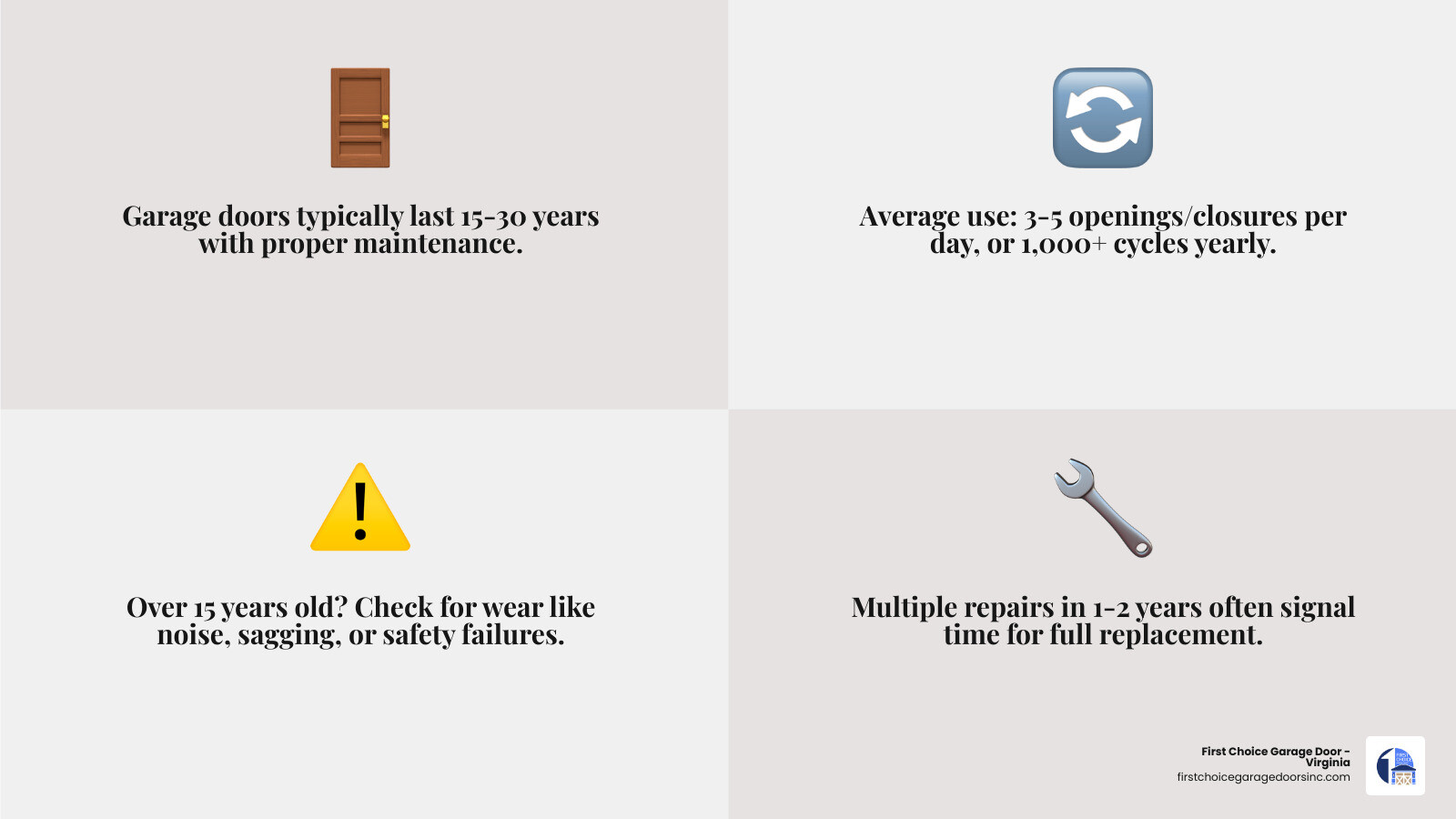
When should you replace your garage door is one of the most common questions Virginia homeowners ask — and for good reason. Your garage door is one of the hardest-working parts of your home, opening and closing three to five times a day on average. That adds up fast.
Most garage doors last 15 to 30 years with proper care. But age is just one piece of the puzzle. Damage, safety failures, and rising repair costs can all push a door toward the end of its useful life well before that window closes.
Here’s a quick answer if you’re trying to decide right now:
You should replace your garage door if:
- It is 15+ years old and showing signs of wear
- You’ve needed repairs multiple times in the past year or two
- There is visible structural damage — warped panels, spreading rust, or sagging sections
- The door lacks modern safety features like auto-reverse or photo-eye sensors
- Repair costs are approaching half the price of a new door
- The door is noisy, slow, or unresponsive despite recent servicing
- You are preparing to sell your home and want stronger curb appeal
If one or more of those applies to you, keep reading. The sections below walk through each red flag in detail — so you can make a confident, informed decision for your Northern Virginia home.
7 Signs You Need a Garage Door Replacement
Identifying the signs you need a garage door replacement early can save you from a major headache (and a potentially stuck car) down the road. In our years of serving Northern Virginia, we’ve seen that garage doors rarely fail all at once; they usually give off a series of “cries for help” first.
1. Excessive Noise and Grinding Sounds
While no garage door is silent, it shouldn’t sound like a freight train passing through your driveway. If you hear persistent grinding, screeching, or banging, it’s a sign that the mechanical components are under extreme stress. While a single squeak might just need some lubricant, a symphony of metal-on-metal sounds often indicates that the tracks are misaligned or the panels themselves are beginning to warp and strain the system.
2. Slow or Unresponsive Performance
When you press your remote, the door should respond immediately and move at a steady, controlled pace. If there is a significant delay, or if the door moves at a snail’s pace, your opener or the door’s balance is likely failing. Do you need a garage door replacement? Check for these signs to find out if your door is struggling to keep up with your daily schedule.
3. Sagging Panels and Misalignment
Disconnect your garage door from the opener and pull it halfway up manually. Does it stay in place? If it sags or snaps shut, the balance is gone. Visually, if you notice the door looks “crooked” when closed or has a visible dip in the center, you are looking at structural fatigue. This isn’t just an aesthetic issue; a sagging door puts uneven weight on the springs, which can lead to a dangerous snap.
4. Frequent Breakdowns and “The Money Pit”
If you feel like you have our number on speed dial because something breaks every three months, it’s time to look at the bigger picture. Constant signs that a garage door repair service will be needed—such as replacing a roller one month and a hinge the next—usually mean the entire system has reached its “fatigue limit.”
5. Visible Rot or Rusted Steel
In Northern Virginia, our doors face everything from humid summers to icy winters. For wood doors, look for soft spots, peeling paint, or “checking” (small cracks). This indicates moisture has compromised the wood. For steel doors, look for rust, especially at the bottom where road salt and slush accumulate. Once rust eats through the metal, the structural integrity of the panel is gone.
6. Outdated Safety Features
Safety standards have changed drastically over the last few decades. If your door lacks photo-eye sensors (the little “eyes” at the bottom of the tracks) or an auto-reverse mechanism, it is a liability. Modern doors are designed to prevent the 35,000 annual injuries associated with garage doors. If your door is a “relic,” replacing it is a matter of family safety.
7. High Energy Bills
If your garage feels like an icebox in the winter and a sauna in the summer, your door is likely the culprit. Older doors often have brittle weatherstripping and zero insulation. Upgrading to a modern, insulated door can significantly lower the energy load on your home’s HVAC system, especially if you have a finished room above the garage.
When should you replace your garage door vs. repair it?
Deciding between choosing between garage door repair or replacement often comes down to a mix of math and safety. We recommend using the “50% Rule”: if the cost of the repair is more than half the price of a brand-new door, the smarter long-term investment is replacement.
| Factor | Lean Toward Repair | Lean Toward Replacement |
|---|---|---|
| Age | Under 10–15 years | Over 15–20 years |
| Issue | Single broken spring or cable | Multiple warped or rusted panels |
| Cost | Under 50% of a new door | Over 50% of a new door |
| Safety | Sensors just need alignment | No auto-reverse or sensors present |
| Reliability | First repair in several years | 3+ service calls in 24 months |
Knowing when to repair vs replace your garage door also requires looking at the availability of parts. For many older models, manufacturers no longer produce matching panels or specific hardware. If we have to “MacGyver” a fix because parts are obsolete, that repair won’t last.
Furthermore, consider the when is it time to have a garage door replacement question from a warranty perspective. A repair might come with a 30-day or 90-day labor warranty, but a new door installation often includes multi-year or even lifetime warranties on parts and finish. That peace of mind is often worth the initial investment.
The Benefits of Upgrading Your Home Exterior in 2026
It is currently April 2026, and the real estate market in Northern Virginia remains highly competitive. If you are looking for the absolute best bang for your buck in home improvement, look no further than your garage.
Massive Return on Investment (ROI)
Consistently, year after year, garage door replacement ranks as a top home improvement project for ROI. Recent data shows homeowners can recoup up to 94% to 100% of the cost upon selling. Because the garage door can make up to 30% of your home’s front facade, it is the first thing a potential buyer sees. A fresh, modern door says “this home is well-maintained.”
Modern Energy Efficiency
There are 5 reasons to have a new garage door installed, and energy savings is near the top. Modern doors use advanced polyurethane insulation, offering much higher R-values than the doors of the early 2000s. This keeps your garage (and the rooms next to it) at a stable temperature, protecting your cars, tools, and stored items from extreme temperature swings.
Smart Technology Integration
Why get a new garage door in 2026? Because the technology is incredible. Modern openers come with built-in Wi-Fi, allowing you to open or close your door from your smartphone anywhere in the world. You can get alerts if the door is left open, set schedules, and even provide temporary access codes for delivery drivers or guests.
Superior Curb Appeal
Whether you prefer the rustic look of a carriage house door or the sleek lines of a contemporary glass-and-aluminum model, a new door transforms your home’s personality. This is why spring is the season for a garage door replacement—as you start your landscaping and exterior cleaning, a new door provides the perfect “finishing touch” to your home’s curb appeal.
Professional Installation and Maintenance for Longevity
We cannot stress this enough: Garage door replacement is not a DIY project. Those springs you see above the door are under enough tension to cause severe injury or even death if they snap or are released improperly.
The Importance of Professional Expertise
Knowing when you need a garage door replacement is only half the battle; ensuring it is installed correctly is the other half. A professional technician ensures that:
- The tracks are perfectly plumb and level.
- The springs are wound to the exact tension required for the door’s weight.
- The safety sensors are aligned and the auto-reverse is tested.
- The weatherstripping creates a tight seal against the Virginia elements.
Maintenance Tips to Extend Your Door’s Life
Once your new door is in place, you want it to last another 30 years. Regular care is the secret. We recommend:
- Annual Tune-ups: Have a pro check the balance and hardware once a year.
- Lubrication: Use a high-quality silicone or lithium spray on rollers, hinges, and springs every six months.
- Balance Test: Periodically check that the door stays in place when opened halfway manually.
- Visual Inspection: Look for frayed cables or loose bolts every few months.
Understanding when a garage door replacement should be done also means knowing your climate. In Manassas and the surrounding Northern Virginia area, our seasonal shifts can cause metal to contract and expand. A professional can adjust your door’s settings to ensure it operates smoothly regardless of the temperature outside.
Frequently Asked Questions
How long does a garage door typically last?
On average, a garage door lasts between 15 and 30 years. The specific lifespan depends heavily on the material (steel typically outlasts wood), the quality of the initial installation, and how often you perform maintenance. A door that is used 10 times a day by a busy family will naturally reach the end of its “cycle life” faster than a door used only twice a day.
When should you replace your garage door for safety?
Safety should be your primary driver. If you have concerns with having an older garage door, such as failing sensors or a door that “slams” shut rather than closing gently, it’s time to replace it. With over 35,000 injuries reported annually, the risk of an outdated door failing is simply not worth it. If your cables are frayed or your springs are more than 10 years old, a full system evaluation is mandatory.
When should you replace your garage door opener?
Garage door openers typically have a shorter lifespan than the doors themselves, usually 10 to 15 years. You should consider a replacement if you hear loud screeching, if the remote works inconsistently, or if the motor struggles to lift the door. Additionally, in 2026, many homeowners are upgrading to comply with newer safety standards and to take advantage of battery backup features, which ensure you aren’t locked out during a Northern Virginia power outage.
Conclusion
Your garage door is more than just an entryway; it’s a shield for your home, a major contributor to your property value, and a critical safety component. Whether you’re dealing with the loud grinding of worn-out parts or the visible decay of old wood panels, ignoring the red flags only leads to more expensive emergencies later.
At First Choice Garage Doors, we bring unmatched expertise to every Northern Virginia home we visit. From Manassas to the furthest reaches of NoVa, our team is dedicated to ensuring your garage door is safe, beautiful, and built to last. Don’t wait for a total breakdown to address your concerns with having an older garage door. Contact us today for a professional evaluation, and let us help you find the perfect replacement that fits your style and budget.