
Why Loading Bay Safety Accessories in Northern Virginia, VA Matter for Your Facility
Loading bay safety accessories in northern virginia, va are essential for any warehouse, distribution center, or commercial facility that handles regular freight. If you need a quick overview of what’s most important, here it is:
Top loading bay safety accessories for Northern Virginia facilities:
- Dock levelers – Hydraulic, mechanical, or air-powered units that bridge the gap between dock and trailer
- Vehicle restraints and trailer locks – Prevent trailers from moving during loading/unloading
- Dock seals and shelters – Protect workers and cargo from weather while improving energy efficiency
- Impact bumpers – Absorb trailer impact and protect the dock face
- Fall protection systems – Railings, safety cages, and platforms for elevated work areas
- Communication systems – LED red/green signal lights and sensor kits to coordinate drivers and dock workers
- Floor marking tape and safety barriers – Designate hazard zones and traffic lanes inside the facility
Loading docks are genuinely dangerous workplaces. OSHA mandates fall protection at any height of 4 feet or more – and most loading docks exceed that threshold. Northern Virginia is home to hundreds of businesses across construction, manufacturing, and logistics that face these risks daily.
The region’s mix of industrial parks in Manassas, Sterling, and Fairfax means facility managers are constantly balancing high freight volume with strict safety obligations. The right accessories don’t just protect workers – they protect cargo, reduce liability, and keep operations running smoothly.
This guide covers everything you need to know about choosing, installing, and maintaining the right safety equipment for your loading bay.
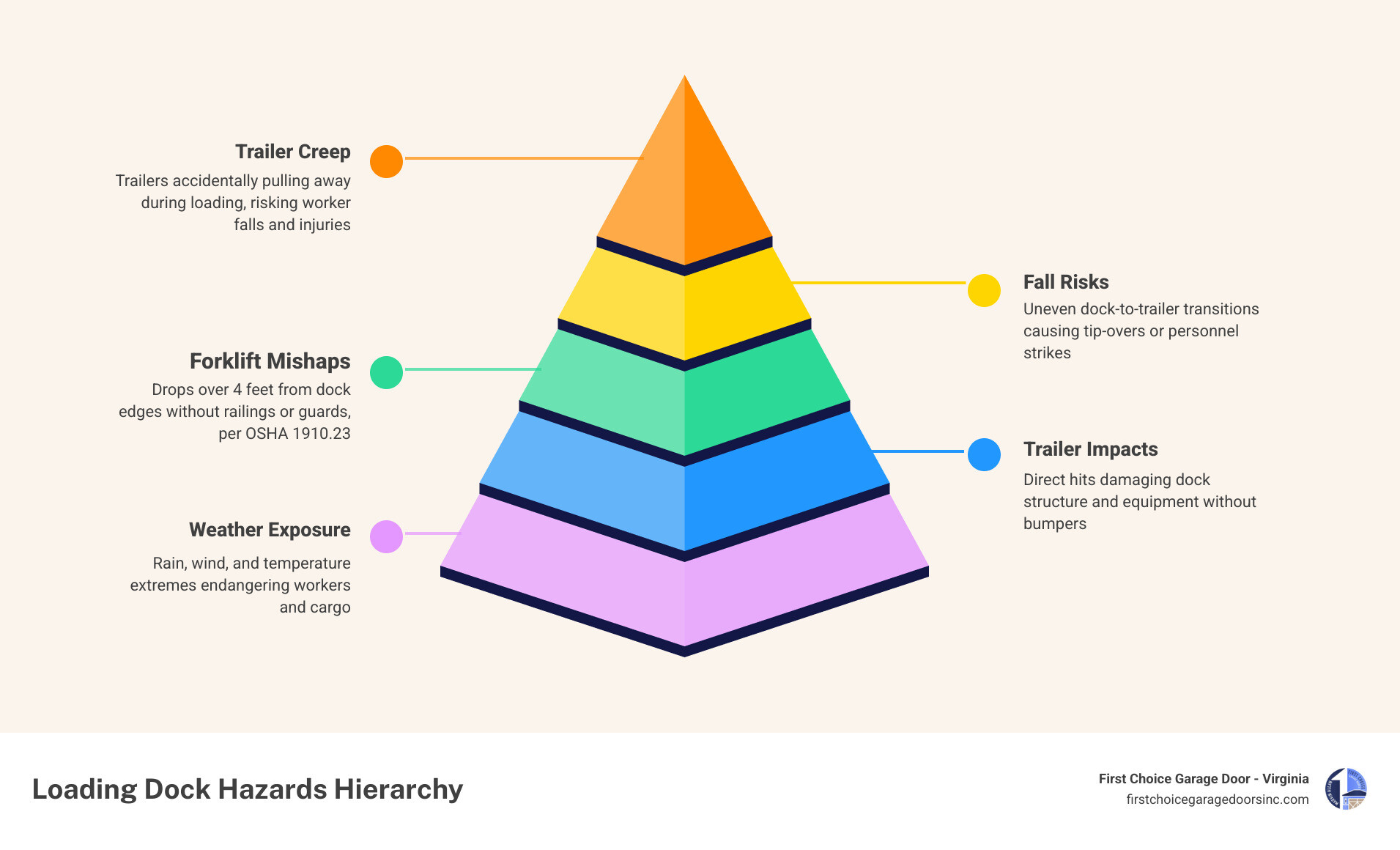
Essential Loading Bay Safety Accessories in Northern Virginia, VA
When we look at a busy loading dock in areas like Manassas or Sterling, we see a high-stakes environment where heavy machinery and personnel intersect. To manage these risks, we rely on a suite of specialized equipment. The goal is to create a seamless transition between the warehouse floor and the trailer bed while ensuring nothing—and no one—falls through the cracks.
At the heart of any dock operation are the loading dock equipment and accessories that facilitate movement. This includes dock levelers, which come in various forms such as hydraulic systems, air-powered levelers, and mechanical pits. For facilities with limited space or specific budget requirements, edge-of-dock solutions provide a reliable alternative that doesn’t require a traditional pit.
Beyond the leveler, we must consider the stability of the vehicle itself. Vehicle restraints and trailer locks are non-negotiable for modern safety. Accessories like impact bumpers and safety edges further protect the building’s structural integrity from the repeated force of backing trailers.
High-Performance Dock Levelers for Local Facilities
Choosing the right dock leveler is about more than just filling a gap; it’s about ensuring smooth transitions for forklifts and pallet jacks. In Northern Virginia’s logistics hubs, heavy-duty capacities are often required to handle high-cycle distribution.
For facilities that prioritize climate control and hygiene—such as food grade or pharmaceutical warehouses—vertical storing levelers are an excellent choice. These allow the overhead door to close directly onto the pit floor, creating a superior seal against the elements. Whether you need low-profile units for tight spaces or high-capacity hydraulic systems, selecting the right commercial door solutions is the first step toward a safer workplace.
Advanced Vehicle Restraints and Trailer Locks
One of the most terrifying accidents on a loading dock is an “unscheduled departure”—when a truck pulls away while a forklift is still inside. Advanced vehicle restraints are designed to prevent this, along with “trailer creep,” where the trailer gradually moves away from the dock due to the momentum of loading equipment.
Modern systems, such as trailer-positioned restraints, can release the Rear Impact Guard (RIG) without requiring the driver to reverse the truck first, which streamlines the process. From automated locking systems to manual restraints for specialized fleets, implementing these safety tips for commercial operations can save lives and prevent catastrophic equipment damage.
Compliance and OSHA Regulations for Virginia Facilities
In Virginia, staying compliant isn’t just about avoiding fines; it’s about following proven blueprints for worker safety. OSHA 29 CFR 1910.23 is the primary standard we look to, which dictates that fall protection is required at any height of 4 feet or higher. Since standard loading docks are typically 48 to 52 inches high, they almost always fall under this rule.
To stay on the right side of the law, we must adhere to strict inspection schedules. The following table outlines the general requirements for documented inspections:
| Equipment Type | Standard | Minimum Inspection Frequency |
|---|---|---|
| Rigging Hardware | ASME B30.26 | Every 12 Months |
| Lifting Devices | ASME B30.20 | Every 12 Months |
| Fall Protection | ANSI Z359 | Every 12 Months |
| Severe Service Gear | OSHA/ASME | Monthly to Quarterly |
Regular maintenance is key. If you aren’t sure where your facility stands, learn how to get a safety test done to identify potential vulnerabilities before they become accidents.
Selecting Compliant Loading Bay Safety Accessories in Northern Virginia, VA
Compliance extends to the physical barriers we install. Safety railings, non-slip stairs, and protective enclosures are essential for workers performing elevated tasks like hatch venting or inspections.
In Northern Virginia, we often recommend site evaluations to ensure that truck loading platforms and gangways meet OSHA General Industry Standards. These customized solutions can include safety cages that surround the top of a tanker or hopper truck, providing 360-degree fall protection for the operator.
Improving Coordination with Communication Systems
Safety is often a matter of clear communication. On a loud, busy dock, verbal instructions are easily lost. That’s why we use visual signaling systems to bridge the gap between the person in the warehouse and the driver in the cab.
Digital dock management systems and commercial garage door accessories like iDock® 2.0 or myQ Enterprise provide real-time connectivity. These systems allow facility managers to see exactly which docks are occupied, which are being loaded, and which are safe for departure. Blue light presence indicators can also alert workers inside the warehouse that a trailer is present, even if the door is closed.
Enhancing Visibility with Loading Bay Safety Accessories in Northern Virginia, VA
Visibility is a two-way street. Interior dock lights illuminate the dark interior of a trailer, helping forklift drivers spot hazards or shifting cargo. On the outside, red and green LED signal lights—often paired with sun visors to combat glare—tell the driver exactly when it is safe to back in or pull away.
Integrated interlock systems add an extra layer of protection. These systems can be configured to cut power to the overhead door or dock leveler until the vehicle restraint is fully engaged. By following these safety tips for facility managers, we ensure that human error is backed up by a mechanical fail-safe.
Protecting Assets with Seals, Shelters, and Barriers
In Northern Virginia, we deal with everything from humid summers to freezing winters. Loading bay safety accessories in northern virginia, va like dock seals and compression shelters are critical for maintaining a stable environment inside your facility. These accessories create a tight seal around the trailer, keeping out rain, snow, and pests while significantly improving energy efficiency.
Inside the warehouse, we use physical barriers like bollards and guardrails to protect expensive equipment and structural columns from forklift impacts. Floor marking tape is another vital tool, helping facilities achieve 5S compliance by clearly designating pedestrian walkways and hazardous zones. When we install high-quality commercial garage doors, we always consider how these barriers will interact with the daily flow of traffic.
Choosing Accessories Based on Traffic and Load
Not every loading dock is the same. A small retail stockroom in Fairfax has very different needs than a 24/7 distribution hub in Manassas. When we help businesses select accessories, we look at several factors:
- Dock Traffic Volume: High-traffic areas require heavy-duty, high-cycle equipment that can withstand constant use.
- Forklift Types: The weight and clearance of your forklifts determine the capacity and lip length of your dock levelers.
- Load Weights: Overloading a leveler is a major safety hazard; we always ensure the equipment is rated for your heaviest loads.
- Facility Cleanliness: In food or medical facilities, air-powered levelers are often preferred because they are cleaner and easier to maintain than hydraulic units.
By applying safety tips for high-traffic areas, we can customize a solution that balances speed with security.
Frequently Asked Questions about Loading Dock Safety
What are the OSHA requirements for loading dock fall protection?
OSHA requires fall protection equipment, such as railings or cages, for any loading dock area where workers are exposed to a drop of 4 feet or higher. This includes the open edges of the dock and any elevated platforms used for truck maintenance or inspection.
How often should loading dock equipment be inspected in Virginia?
Per ASME and ANSI standards, periodic documented inspections on rigging hardware, levelers, and fall protection systems should be conducted at least every 12 months. However, for “severe service” environments—those with high humidity, extreme temperatures, or 24/7 operation—we recommend monthly or quarterly checks.
What is the benefit of using a vehicle restraint over wheel chocks?
Vehicle restraints provide a mechanical lock to the trailer’s rear impact guard, offering significantly higher security against “trailer creep” and accidental pull-outs compared to manual wheel chocks. Chocks can slip on ice or be forgotten by a driver, whereas an integrated restraint system communicates directly with the dock’s safety lights.
Conclusion
At First Choice Garage Doors, we understand that your loading dock is the heartbeat of your business. Whether you are operating in Manassas, Sterling, or Fairfax, our goal is to provide Northern Virginia businesses with the most reliable and compliant safety solutions available. From the initial site evaluation to professional installation and 24/7 maintenance services, we are here to ensure your team stays safe and your operations stay efficient.
Don’t wait for an accident to identify a weakness in your facility. Upgrade your facility with premium loading dock equipment and accessories today and experience the peace of mind that comes with professional-grade protection.