
Why Regular Business Door Maintenance in Northern Virginia, VA Keeps Your Facility Running
Business door maintenance in northern virginia, va is one of the most overlooked — and most costly — gaps in commercial facility care.
Here’s a quick answer if you need it now:
Key business door maintenance tasks for Northern Virginia facilities:
- Lubricate tracks, rollers, and moving parts every 3-6 months
- Inspect springs, cables, and hinges for wear or damage
- Test door balance and safety sensor alignment regularly
- Check weather stripping for gaps that affect energy efficiency
- Schedule a professional inspection at least once per year
- Perform fire door drop tests per DASMA standards to stay code-compliant
A door that fails during business hours doesn’t just cause frustration — it can halt operations, create security gaps, and even fail a safety inspection. One real example: an entrance door at a Fairfax, VA business failed a safety inspection because the door closer was causing it to swing shut too fast, and the spring lacked enough tension to properly latch. A simple maintenance check would have caught it first.
Commercial doors in Northern Virginia face unique stress. Humid summers, cold winters, and heavy daily use all take a toll on springs, seals, tracks, and openers. Without regular upkeep, small problems become expensive repairs — or full replacements.
The good news? Most door failures are preventable. A consistent maintenance routine is all it takes to protect your facility, your team, and your bottom line.
Why Business Door Maintenance in Northern Virginia, VA is Critical for Your Facility
Operating a business in Northern Virginia means dealing with a climate that is anything but consistent. From the heavy humidity of a July afternoon in Alexandria to the freezing slush of a January morning in Manassas, your building’s exterior is under constant pressure. This environmental stress is a primary reason why maintenance is so important for a commercial garage door.
When temperatures fluctuate, materials expand and contract. Steel tracks can shift slightly, wooden components may swell, and lubrication can thicken or dry out. In our region, these cycles happen rapidly, leading to metal fatigue and alignment issues. Without a manassas-commercial-garage-door-maintenance-guide to follow, these small environmental shifts can lead to a door that sticks, drags, or fails to close entirely.
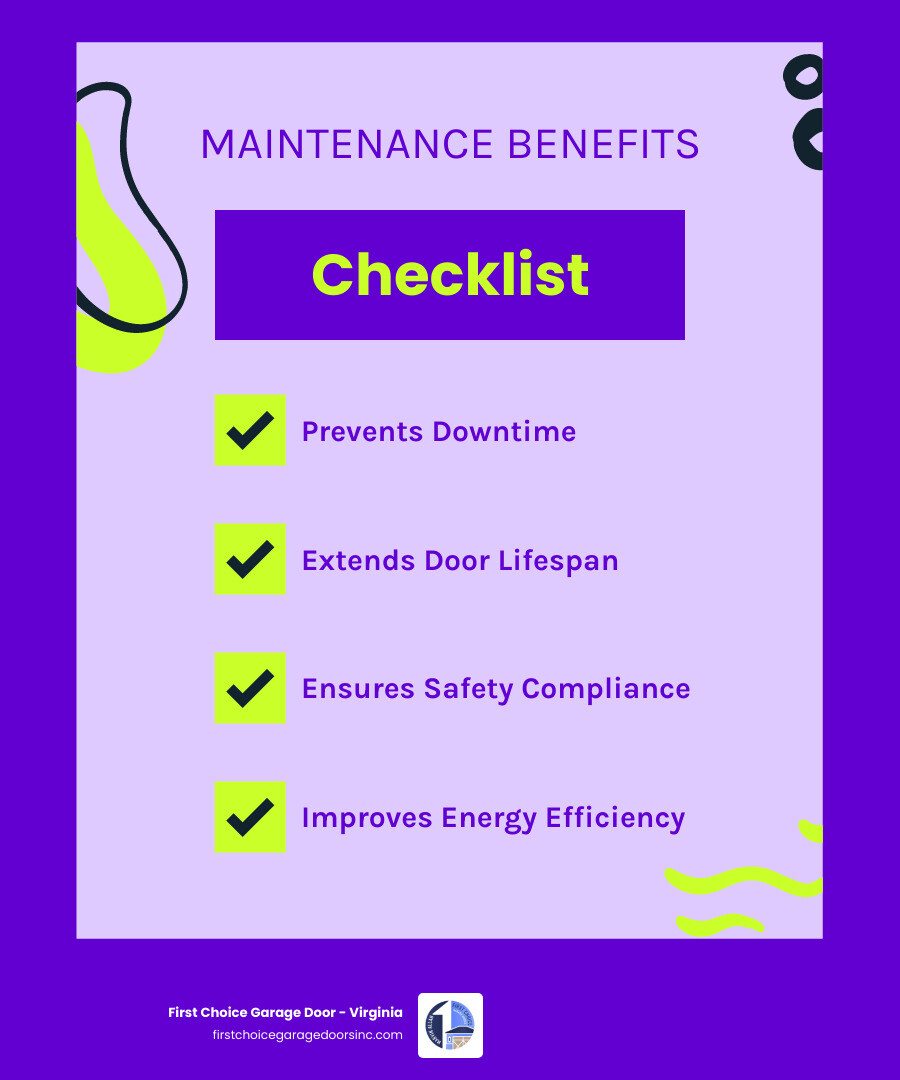
Beyond the weather, there are three “pillars” of why we emphasize regular upkeep:
- Preventing Downtime: For a warehouse or retail storefront, a broken door is a “Stop” sign for revenue. If your overhead door won’t open, shipments can’t leave. If your glass storefront door won’t lock, you can’t go home. Preventative care identifies these weak points before they snap.
- Safety Compliance: Commercial doors are heavy pieces of machinery. In Virginia, businesses must adhere to specific safety standards to protect employees and customers. This includes ensuring that sensors work and that fire doors are capable of closing automatically during an emergency.
- Energy Efficiency: A poorly maintained door often has gaps in its weather stripping or doesn’t sit flush against the floor. In NoVA, where heating and cooling costs are significant, a “leaky” door is essentially throwing money out into the parking lot. Proper maintenance keeps the seal tight and the utility bills manageable.
Essential Maintenance Tasks for Commercial Door Systems
Maintaining a commercial door isn’t just about making sure it looks good; it’s about ensuring the mechanical “heart” of the system is pumping correctly. Whether you have sectional steel doors, rolling steel shutters, or elegant aluminum glass storefronts, there are universal tasks that keep the gears turning.
We recommend following these five-tips-to-help-maintain-your-commercial-garage-door:
- Lubrication of Moving Parts: This is the easiest way to extend the life of your door. Use a high-quality lithium or silicone-based spray on the rollers, hinges, and tracks. Avoid heavy grease, which can actually attract Virginia dust and grit, creating a “grinding paste” that wears down metal.
- Hardware Tightening: Commercial doors vibrate every time they move. Over months of use, the nuts and bolts holding the tracks and brackets can vibrate loose. A quick turn of a wrench can prevent a catastrophic track misalignment.
- Sensor Calibration: Safety sensors at the base of your door are your first line of defense against accidents. If they are bumped by a forklift or a pallet, they may become misaligned. Regularly wipe the lenses clean and ensure they are “looking” at each other.
- Balance Testing: A door that is “out of balance” puts immense strain on the motor or the person opening it. You can test this by putting the door in manual mode and lifting it halfway. If it stays put, it’s balanced. If it crashes down or flies up, your springs need professional adjustment.
- Visual Inspection: Look for frayed cables, rusted hinges, or warped panels. Catching a frayed cable now is much cheaper than replacing a door that crashed because the cable snapped.
Comparison of Maintenance Needs by Door Type
| Feature | Sectional Steel Doors | Aluminum & Glass Doors | Rolling Steel Doors |
|---|---|---|---|
| Primary Focus | Spring tension & roller wear | Pivot hinges & glass seals | Slats & internal motor gears |
| Cleaning | Wipe down tracks | Glass cleaner & frame polish | Remove debris from guides |
| Common Issue | Frayed cables | Misaligned closers | “Telescoping” slats |
| Lubrication | Rollers and hinges | Pivot points | Side guides and bearings |
Routine Business Door Maintenance in Northern Virginia, VA for Overhead Systems
Overhead doors are the workhorses of the industrial world. Because they rely so heavily on a counter-balance system, the springs are the most critical component to watch. High-cycle operators in busy NoVA warehouses might open and close dozens of times a day, meaning they reach their “cycle limit” much faster than a residential door.
When looking for manassas-garage-door-maintenance-pros-you-can-trust, ensure they check the spring tension and roller integrity. Worn rollers can cause the door to “chatter” or jump in the tracks, which eventually damages the track alignment. We also suggest checking the weather stripping at the bottom of the door. In Northern Virginia, rodents often try to chew through worn rubber seals to find warmth in your warehouse during the winter. Replacing a $50 seal is much easier than dealing with a pest infestation or a frozen bottom rail.
For more detailed steps, you can refer to this how-to-maintain-your-commercial-garage-door guide which covers the specifics of high-usage industrial systems.
Best Practices for Business Door Maintenance in Northern Virginia, VA
For storefront and pedestrian doors, the hardware is where the trouble usually starts. If your customers are struggling to pull open a heavy glass door, or if the door slams shut with a bone-shaking thud, your door closer is likely failing.
- Pivot Hinges: These carry the entire weight of the door. If they become dry or rusted, the door will drag on the floor, damaging both the door and your flooring.
- Panic Bars: These are essential for fire safety. They must be tested to ensure they latch securely but release instantly with minimal pressure.
- Fire Door Drop Tests: This is a non-negotiable for many businesses. According to DASMA standards, fire doors must be tested annually. This involves “dropping” the door to ensure it closes at a speed between 6 and 24 inches per second and that all automatic reset mechanisms function correctly.
Following these commercial-garage-door-maintenance-tips ensures that you aren’t just maintaining a door, but protecting your entire business environment.
Identifying Signs Your Commercial Door Needs Immediate Repair
Sometimes, despite our best efforts at maintenance, components fail. Knowing when to call for need-help-now-same-day-247-garage-door-repair-in-manassas can be the difference between a quick fix and a total facility shutdown.
Keep an eye (and ear) out for these red flags:
- The “Noisy Neighbor”: If your door is suddenly grinding, squeaking, or banging, it’s screaming for help. These sounds usually indicate a lack of lubrication or a part that is about to snap.
- Hydraulic Leaks: If you see an oily residue dripping from the top of your storefront door, the closer has blown a seal. This is a safety hazard, as the door will no longer have a “brake” and can slam onto a customer’s hand.
- Dragging or Sticking: If the door drags on the ground, your hinges or pivots are likely broken. In many cases, we can install a continuous “piano” hinge which is much more durable than standard pivots and can actually outlast the door itself.
- Flashing Safety Lights: Most modern commercial operators have diagnostic lights. If your opener’s lights are flashing, it’s telling you there is a sensor obstruction or a mechanical error.
- Warped or Damaged Panels: Sunlight and moisture in Virginia can cause panels to warp over time. If a panel is bent, it changes the way the door sits in the track, leading to a “jam” that can burn out your motor.
If you notice any of these, it’s time to find i-need-a-company-that-specializes-in-the-repair-of-garage-doors-in-northern-va to address the root cause before the door becomes completely inoperable.
Frequently Asked Questions about Commercial Door Care
How often should business doors be professionally serviced?
For most businesses in Northern Virginia, a professional inspection should happen at least once a year. However, if your facility has “high-traffic” doors (like a busy parking garage or a distribution center), you should move to a semi-annual or even quarterly schedule. Heavy use accelerates wear on springs and rollers, and proactive servicing is always more affordable than emergency repairs.
What are the local fire safety requirements for commercial doors?
In Virginia, fire-rated doors must comply with NFPA 80 standards. This requires an annual “Drop Test” to ensure the door closes completely and automatically in the event of a fire. The closing speed must be controlled (not too fast, not too slow) to ensure people can exit safely while the fire is contained. Failing to provide documentation of these tests can lead to heavy fines from local fire marshals.
Can business owners perform any DIY door maintenance safely?
Yes, but with caution! Business owners can safely perform visual inspections, clean tracks of debris, and apply spray lubricant to hinges and rollers. However, you should never attempt to adjust commercial springs or cables yourself. These components are under extreme tension and can cause severe injury or death if they snap or are released improperly. Always leave the “heavy lifting” to certified technicians.
Conclusion
At First Choice Garage Doors, we understand that your business doesn’t have time for a door jam. Our team is dedicated to providing the professional reliability and safety standards that Northern Virginia businesses deserve. Whether you are managing a retail shop in Alexandria, a warehouse in Manassas, or an office building in Fairfax, we have the expertise to keep your entryways secure and functional.
We offer a full suite of products-and-services/commercial-garage-doors, including:
- 24/7 Emergency Repairs: Because doors don’t always break during 9-to-5 hours.
- Preventative Maintenance Plans: Custom schedules to fit your specific usage.
- Fire Door Testing: Keeping you compliant and your employees safe.
- New Installations: High-quality sectional steel, rolling steel, and glass storefront solutions.
Our Service Areas Include:
- Manassas, VA
- Fairfax, VA
- Alexandria, VA
- Arlington, VA
- Chantilly, VA
- And throughout Northern Virginia
Don’t wait for a breakdown to realize how important your doors are. Contact us today to schedule your maintenance check and ensure your business stays open for business!