
Immediate Solutions to Garage Door Issues
A malfunctioning garage door disrupts your daily routine, compromises the security of your home, and leaves your vehicle exposed to the elements. Contact us immediately to schedule a same-day repair or to discuss financing options for a new installation. First Choice Garage Doors, Inc. provides rapid, reliable installations and repairs across Wilmington, DE, and the broader Northeast region, ensuring your entry points are secure and functional without unnecessary delays.
When a garage door fails, homeowners require concrete solutions rather than vague promises. You need a technician who arrives with the correct parts, understands the mechanical intricacies of the system, and adheres to strict safety standards. Our approach prioritizes speed and technical precision to resolve the issue permanently:
- Same-day service ensures your garage door is functional without delay.
- Expert installations and repairs by certified technicians.
- Comprehensive warranties that give you peace of mind.
Fully licensed and insured, we handle all permits and offer flexible financing options to ensure your project is compliant and affordable.
Comprehensive Garage Door Services Available Today
The breakdown of a garage door system rarely happens at a convenient time. Whether it is a structural failure of the door panels or a mechanical issue within the opener, the goal is to restore full operation immediately. Services are designed to address both acute failures and long-term upgrades.
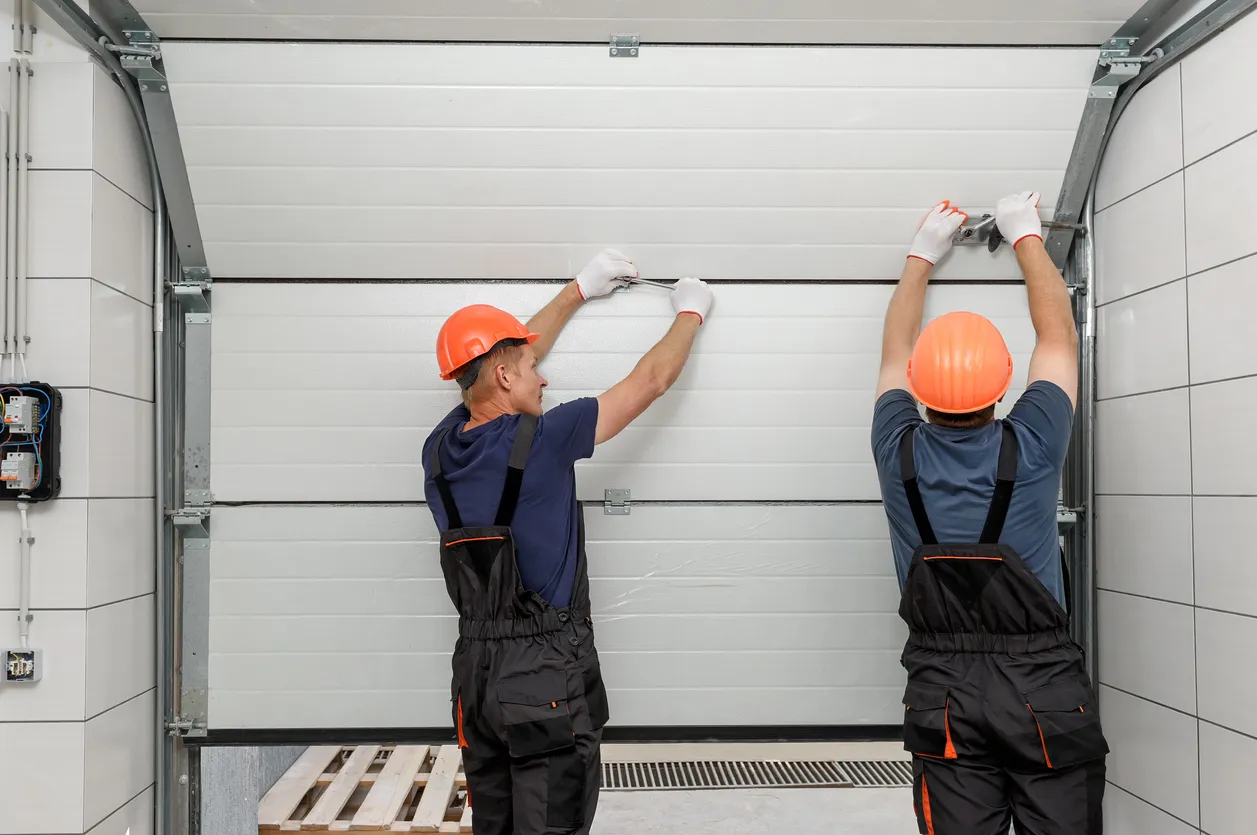
Emergency Repair Protocols
High-tension components, such as torsion springs and cables, are the most frequent points of failure. These parts operate under immense pressure to lift the heavy weight of the door. When a spring snaps or a cable frays, the door may become immovable or fall rapidly, creating a severe safety hazard.
Technicians arrive equipped to handle specific mechanical failures on the spot:
- Torsion and Extension Spring Replacement: Springs are matched specifically to the weight of your door to ensure balanced lifting and longevity.
- Cable and Drum Repair: Snapped cables or damaged drums are replaced to restore the vertical lift mechanism.
- Track Realignment: If a door has jumped its track due to an obstruction or impact, the tracks are realigned and secured to the framing.
- Opener Motor Troubleshooting: Diagnostics are run on the logic board, gears, and capacitor of the opener unit to determine if a repair or replacement is viable.
Full System Installation Scope
When a new system is required, the focus shifts to selecting durable materials and reliable automation. Modern installations involve more than just hanging a door; they require integrating advanced security features and energy-efficient materials.
Installation services cover the entire spectrum of garage entry systems:
- Sectional Door Installation: This includes steel, wood, composite, or aluminum options that fit standard and custom rough openings.
- Opener Configuration: Installation of belt-drive, chain-drive, or wall-mounted jackshaft openers from trusted entities like LiftMaster and Overhead Door.
- Safety Sensor Integration: Photo-eye sensors are wired and aligned to prevent the door from closing on vehicles or pedestrians.
- Perimeter Weather Sealing: Vinyl stops and bottom seals are applied to protect the garage interior from drafts and moisture.
The Installation and Repair Process
Understanding the workflow helps homeowners prepare for the service visit. The process is streamlined to minimize downtime while ensuring every safety protocol is met. Whether it is a simple repair or a complete tear-out and replacement, the sequence of events remains consistent and transparent:
- Initial Assessment and Diagnostics: Upon arrival, the technician conducts a multi-point inspection. This involves checking the balance of the door, the condition of the rollers and hinges, and the voltage output of the opener. For installations, precise measurements of the rough opening, side room, and headroom are taken to ensure the new unit fits perfectly.
- Site Preparation and Safety Containment: Before any work begins, the work area is cleared. If the door is stuck in a partially open position, it is clamped and secured to prevent accidental movement. Power to the automatic opener is cut to ensure the safety of the technician and the household.
- Removal and Disposal: For replacements, the old panels, tracks, and hardware are disassembled. High-tension springs are unwound carefully to release stored energy before removal. All debris is removed from the site for proper disposal.
- Structural Assembly: New vertical and horizontal tracks are bolted to the jambs and ceiling framing. The panels are stacked and hinged together, with rollers inserted into the tracks. This step establishes the structural integrity of the system.
- Spring and Counterbalance Setup: This is the most critical technical step. The torsion tube is installed, and springs are wound to the specific tension required to lift the door’s weight. A properly balanced door should be liftable by hand with minimal effort.
- Automation and Connectivity: The motor head is mounted, and the rail is connected to the header bracket. The trolley arm is attached to the door, and limit switches are set to control how far the door opens and closes. Remote controls, keypads, and Wi-Fi capabilities are programmed.
- Final Safety Testing: The technician tests the reverse mechanism. A block is placed in the door’s path to ensure it automatically reverses upon contact. The photo-eye sensors are also tested for misalignment.
Determining When Replacement Is Necessary
Homeowners often grapple with the decision between repairing an existing unit or investing in a new system. While repair is often the most cost-effective route for minor mechanical issues, there are specific thresholds where replacement becomes the smarter financial and functional choice.
First Choice Garage Doors, Inc. advises evaluating the following criteria to make an informed decision:
- Severe Impact Damage: If a vehicle has hit the door, damaging multiple panels, the structural integrity of the entire system is likely compromised. While individual panels can sometimes be swapped, mismatched fading and bent tracks often make a full replacement more economical.
- Catastrophic Motor Failure: If the opener is over 15 years old and suffers a logic board or motor failure, finding parts may be difficult and expensive. Modern openers offer superior security (rolling codes) and safety features that older models lack.
- Energy Efficiency Requirements: Older, uninsulated wooden or thin steel doors allow massive heat transfer. If the garage is attached to the home, upgrading to a sandwich-style steel door with high-density polyurethane insulation significantly reduces energy bills.
- Recurring Mechanical Issues: If the door requires frequent spring replacements, roller adjustments, or track repairs, the system may be nearing the end of its lifecycle. Continually sinking money into a failing system is less efficient than installing a new unit with a warranty.
- Safety Standard Updates: Doors lacking modern safety reversal systems or containment cables for extension springs pose a liability. Updating the system ensures compliance with current safety codes.
Operating in Northeastern Climates and Local Regulations
The environment in Wilmington and the surrounding Northeastern cities presents specific challenges for garage door systems. Equipment installed in this region must be robust enough to handle extreme temperature variances and precipitation.
Addressing Seasonality and Weather Impact
Materials and maintenance schedules must account for local weather patterns:
- Winter Cold and Snowfall: Freezing temperatures cause metal components to contract, potentially affecting the alignment of tracks and the tension of springs. Lubricants can thicken, causing the opener to strain. Furthermore, snow buildup at the threshold can freeze the bottom seal to the concrete, causing the weather stripping to tear when the door opens.
- Spring and Fall Fluctuations: Rapid temperature swings can cause wood doors to expand and contract, leading to warping or cracking. This affects how the door sits in the opening and seals against the frame.
- Summer Humidity: High humidity levels in the Northeast accelerate oxidation on metal parts and can cause wood to swell. Galvanized steel and powder-coated hardware are essential to resist rust and corrosion.
Navigating Permits and Building Codes
Modifying a structural element of the home often intersects with local building regulations.
- Wind Load Ratings: In certain areas, garage doors must meet specific wind load ratings to withstand storm-force winds. Installing a non-compliant door can void home insurance policies and fail inspection.
- Electrical Permits: If a new outlet is required for a garage door opener, or if high-voltage wiring is involved, an electrical permit may be necessary.
- Historical Districts: For homes in historic sections of the city, the aesthetic of the garage door often must match specific architectural guidelines. This impacts the choice of carriage house styles, wood overlays, and window inserts.
Why Professional Execution Matters
The garage door is the largest moving object in a home. The forces involved in its operation are substantial, and the margin for error during installation is slim. Attempting DIY repairs on high-tension springs or heavy panels carries significant risk of injury and property damage. Professional execution ensures that the system operates safely, quietly, and reliably for years — view commercial services today.
- Accurate Tensioning: Improperly wound springs can cause the door to fly up uncontrollably or crash down. Professionals use winding bars and specific calculations to achieve perfect balance.
- Warranty Preservation: Most manufacturers, such as LiftMaster or major door brands, require professional installation to maintain the validity of the warranty. DIY installation often voids coverage on parts and finish.
- Proper Tooling: Setting the track spacing requires precision levels and spacing tools. If the tracks are not perfectly parallel, the door will bind, wearing out the rollers and burning out the motor.
- Liability Coverage: A professional service carries liability and workers’ compensation insurance. This protects the homeowner from financial responsibility should an accident occur during the project.
Partner With Trusted HVAC Professionals
Selecting a service provider who understands the intersection of mechanical precision, local climate demands, and safety regulations is critical for the longevity of your investment.
Contact our team today to schedule your diagnostic visit or installation consultation and restore the security of your home.