
What’s Causing Your Garage Door to Move Solving — and How to Fix It
Garage door moving slowly causes and solutions is one of the most common concerns Virginia homeowners face — and the good news is that most problems are fixable.
Here’s a quick overview of the most common causes and what to do:
| Cause | Quick Fix |
|---|---|
| Lack of lubrication | Apply silicone spray or lithium grease to rollers, hinges, and springs |
| Worn rollers or hinges | Inspect for cracks or flat spots; replace worn parts |
| Misaligned or dirty tracks | Clean tracks and check alignment with a level |
| Incorrect opener speed/force settings | Consult your opener manual and adjust dials carefully |
| Weak or worn springs | Have a professional inspect and replace springs |
| Cold weather | Use low-temperature lubricant and perform seasonal maintenance |
| Aging opener motor | Listen for straining sounds; may need professional service |
| Misaligned safety sensors | Wipe lenses clean and realign until indicator lights are steady |
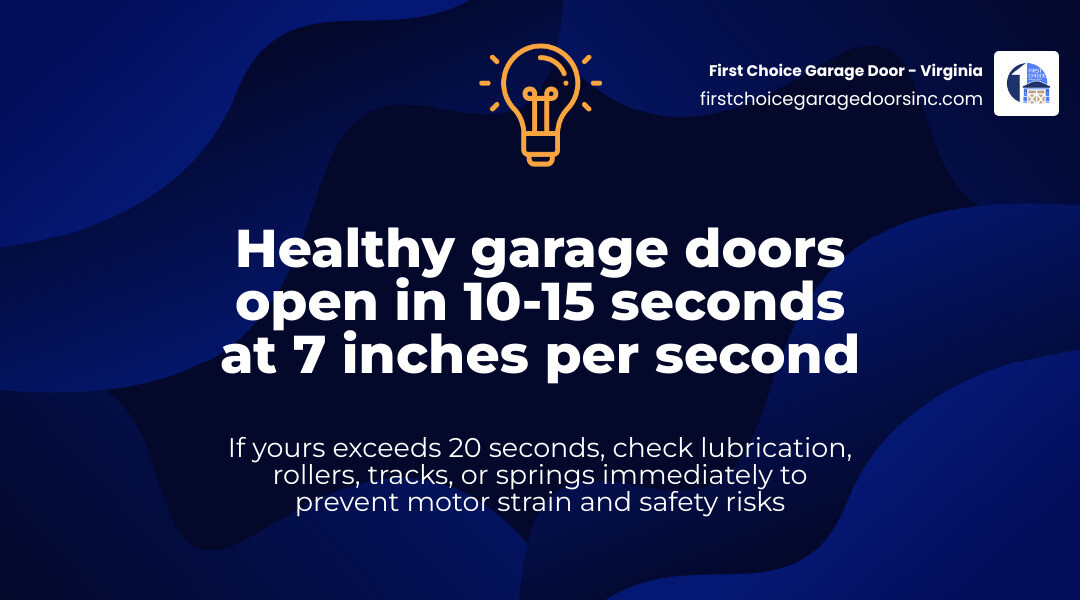
A healthy garage door should fully open or close in 10 to 15 seconds, moving at roughly 7 inches per second. If yours is creeping past the 20-second mark, something is slowing it down — and it’s worth finding out what.
Most of the time, it’s not a dramatic failure. About 90% of slow garage door issues come down to a handful of common culprits: dry or dirty components, worn hardware, sensor issues, or an opener that’s working harder than it should. But ignoring a slow door can lead to bigger problems — worn springs, a strained motor, or even a door that fails mid-cycle.
As of April 2026, garage doors in Northern Virginia face extra wear from seasonal temperature swings, humidity, and regular daily use. That combination makes routine awareness even more important for local homeowners.
Whether your door has been gradually slowing down or suddenly started dragging, this guide walks you through exactly what to check — and what to leave to the professionals.
Common Garage Door Moving Slowly Causes and Solutions
When your garage door starts behaving like it’s moving through molasses, the first place we look is the physical hardware. A garage door is a heavy piece of machinery, often weighing several hundred pounds. It relies on a system of tracks, rollers, and hinges to glide smoothly. If any of these components face resistance, the door slows down.
Lack of Lubrication This is the single most common cause of a sluggish door. Over time, the factory grease on your rollers and hinges dries out or becomes clogged with dust and pet hair. This creates friction, which forces your opener to work twice as hard to move the door at half the speed. In some cases, simply applying the right lubricant can improve opening times by as much as 40%.
Worn Rollers Rollers don’t last forever. If you have older metal rollers, they can rust or develop flat spots. Even modern nylon rollers eventually wear down. When a roller isn’t perfectly round, it doesn’t “roll” so much as “slide” through the track, creating significant drag. There are more reasons a garage door will not function properly, but worn rollers are a top contender for speed issues.
Misaligned Tracks Your tracks need to be perfectly parallel and plumb. Even a tiny misalignment — as small as 1/8 of an inch — can cause the door to bind or rub against the track. This friction acts like a brake. If you notice your door jerking or pausing at a specific height, a bent or shifted track is likely the culprit. For more depth on why your system might be struggling, check out these reasons your garage door isn’t opening correctly.
Troubleshooting Lack of Lubrication and Friction
If friction is the enemy, lubrication is your best friend. However, not all lubricants are created equal. We strongly advise against using WD-40 on your garage door. While it’s a great degreaser, it actually strips away existing grease and attracts dirt, which will make your door move even slower in the long run.
Instead, use a high-quality silicone spray or white lithium grease. These are designed to stay “wet” and provide a slippery surface without attracting debris. Focus your efforts on:
- The Rollers: Spray the bearings (the center part) of the rollers.
- Hinges: Apply a small amount to the pivot points where the door panels bend.
- Springs: A light coating on the torsion springs helps reduce the “clinking” sound and friction between the coils.
Learning how to keep your Manassas garage door moving quietly often goes hand-in-hand with keeping it moving quickly. A quiet door is a fast door because it means there is minimal friction.
Identifying Garage Door Moving Slowly Causes and Solutions for Worn Hardware
Sometimes, cleaning and greasing aren’t enough. If your hardware has reached the end of its lifespan, it needs replacement to restore speed.
Look for these signs you need a garage door repair:
- Nylon Rollers: Look for cracks in the plastic or rollers that feel “wobbly” on their stems. Upgrading to high-quality nylon rollers with ball bearings can make a world of difference in speed and noise reduction.
- Track Alignment: Use a level to check your vertical tracks. If they are leaning inward or outward, the door panels will bind.
- Hardware Tightening: Over time, the vibrations of the door can loosen the bolts on the hinges and brackets. A loose hinge can cause a panel to sag slightly, creating a “catch” that slows the entire cycle.
How Opener Settings and Motor Health Affect Speed
If the door moves smoothly when you lift it by hand but crawls when using the remote, the issue lies with the opener. Modern openers have sophisticated electronics that manage how much power is sent to the motor.
Force and Speed Settings Most garage door openers have “force” and “speed” adjustment dials or digital settings. These are often set to a lower level at the factory for safety. If the force setting is too low, the opener might sense the natural weight of the door as an “obstruction” and slow down to avoid damage. While you can adjust these, it must be done in tiny increments. Setting the force too high can be dangerous, as the door might not stop if it hits an actual object.
Motor Aging and Strain Like any motor, your garage door opener has a finite lifespan, typically 15 to 20 years. As the internal gears wear down or the capacitor begins to fail, the motor loses torque. You might hear a loud humming or straining sound as it struggles to pull the door up. If your motor is over two decades old, it may simply be time for an upgrade to a higher horsepower model.
Understanding the difference between a minor setting tweak and a total failure is key to determining if you have a broken garage door opener.
| Motor Strain Symptoms | Incorrect Speed Settings |
|---|---|
| Grinding or “growling” noises | Smooth but consistently slow movement |
| Motor unit feels very hot to the touch | No unusual noises from the motor |
| Lights on the unit flicker when operating | Settings have been recently changed or reset |
| Door starts fast then “gasps” and slows down | Door moves at a steady, “snail’s pace” speed |
Testing Door Balance and Spring Tension Safely
The garage door opener isn’t actually doing most of the heavy lifting — the springs are. Garage door springs act as a counterbalance. When they are tuned correctly, a 300-pound door should feel like it weighs only 5 or 10 pounds.
The Balance Test To see if your springs are the cause of your garage door moving slowly, you should perform a balance test.
- Close the door completely.
- Pull the red emergency release cord to disconnect the opener.
- Lift the door manually to about waist height and let go.
A well-balanced door will stay in place or move only a few inches. If the door slams shut or feels incredibly heavy to lift, your springs have lost their tension. If the door flies upward, the tension is too high. Both scenarios force the opener to work under extreme stress, leading to slow operation and premature motor failure.
Spring Lifespan Standard torsion springs have a lifespan of about 7 to 9 years (or roughly 10,000 cycles). As they age, the metal loses its “springiness.” If you see a visible gap in the coils, the spring is already broken, and you should not attempt to operate the door. Knowing when your garage door springs are broken is vital for safety, as these parts are under extreme tension. If you notice any signs you have damaged garage door springs, call a professional immediately. Do not attempt to adjust torsion springs yourself; the tension is high enough to cause serious injury.
Seasonal Impacts and DIY Maintenance Steps
In Northern Virginia, our garage doors have to deal with everything from humid summers to freezing winters. This takes a toll on the moving parts.
DIY Maintenance Checklist:
- Debris Removal: Every few months, take a damp rag and wipe out the inside of your tracks. Dust, spider webs, and dried grease can create a “gunk” that slows down the rollers.
- Sensor Alignment: If your door starts to close, stops, and then reverses slowly, your safety sensors might be dirty or misaligned. Wipe the lenses with a soft cloth and ensure the small LED lights on both sides are glowing steadily.
- Hardware Check: Use a socket wrench to ensure all bolts on the tracks and hinges are snug.
Following basic garage maintenance tips can prevent a minor slowdown from turning into an expensive repair. For a more comprehensive look at keeping your system in top shape, review these six preventive residential garage door maintenance tips.
Resolving Garage Door Moving Slowly Causes and Solutions in Northern Virginia Winters
Winter is particularly tough on garage doors. When the temperature drops in Manassas or Northern Virginia, several things happen:
- Metal Contraction: The metal tracks and rollers contract slightly, which can increase friction.
- Hardened Grease: Standard grease can become thick and “tacky” in the cold, acting more like glue than a lubricant.
- Increased Resistance: This extra resistance can trigger the opener’s safety sensors to slow the door down.
To combat this, we recommend using a low-temperature silicone lubricant before the first frost hits. Keeping the garage slightly warmer or ensuring the weather stripping is intact can also help. For those in our neighboring areas, our garage door maintenance guide for Annapolis, MD offers similar regional advice for coastal humidity and cold.
Frequently Asked Questions about Slow Garage Doors
What is the normal time for a garage door to open?
A standard residential garage door should take between 10 and 15 seconds to fully open or close. This equates to a speed of roughly 7 inches per second. If your door consistently takes 20 seconds or longer, it is a sign that the system is struggling with friction, balance issues, or a failing motor.
Is a slow garage door dangerous?
Yes, it can be. While a slow door is often just an annoyance, it is usually a “warning light” for a deeper problem. A slow door often indicates that the springs or cables are nearing the end of their life. If a cable frays or a spring snaps while the door is moving slowly, the door could fall unexpectedly. Furthermore, a slow-moving door can be a security risk, leaving your home vulnerable for longer periods as you wait for it to close.
Can I adjust the speed of my garage door opener myself?
You can usually adjust the settings found in your owner’s manual, but we advise extreme caution. Most openers have limit and force settings. If you increase the force too much to “force” a slow door to move faster, you are simply masking a mechanical problem (like a broken spring) and putting dangerous levels of strain on the motor. Always address the mechanical cause of the slowness (lubrication, balance, rollers) before touching the electronic settings.
Conclusion
A slow garage door is your home’s way of asking for a little attention. Whether it’s a simple matter of cleaning the tracks and applying some silicone spray or a more complex issue like losing spring tension, addressing the problem early will save you time and money.
At First Choice Garage Doors, we specialize in helping Northern Virginia homeowners keep their doors moving safely and efficiently. From Manassas to the surrounding areas, our team provides the expert tune-ups and safety inspections needed to ensure your door doesn’t just move — it glides. Don’t let a “slow-motion” door disrupt your day or put your family at risk.
If you’ve tried the DIY fixes and your door is still dragging, it’s time for a professional evaluation. We can help you speed up your door with expert repair in Columbia, MD and throughout our Virginia service areas. Contact us today to schedule your maintenance and get your garage door back up to speed!