
Why Your Garage Door Is One of the Biggest Energy Wasters in Your Home
Understanding how garage door insulation affects energy efficiency starts with one simple fact: your garage door is the largest moving opening in your home. When it lacks proper insulation, heat and cold move right through it — and if your garage is attached to your living space, that energy loss directly affects your comfort and your utility bills.
Here’s a quick breakdown of how insulation makes a difference:
- Reduces heat transfer through the door panels by slowing conduction, convection, and radiant heat flow
- Creates a thermal buffer zone between the outdoors and your conditioned living spaces
- Lowers HVAC workload by keeping adjacent rooms from losing heat in winter or gaining heat in summer
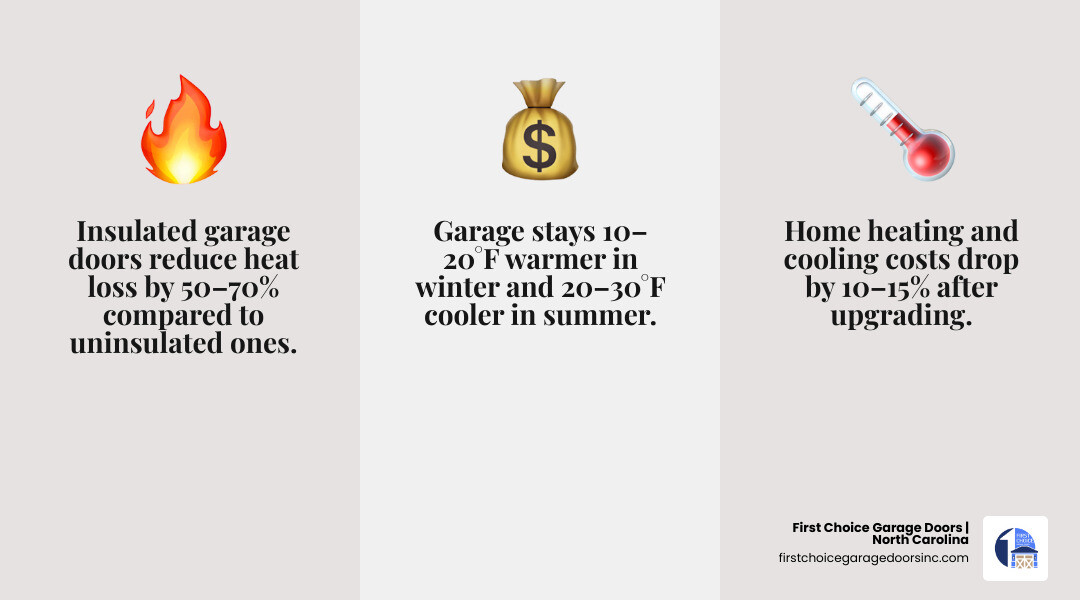
- Can reduce garage heat loss by 50–70% in attached garages compared to a non-insulated door
- Cuts home heating and cooling costs by 10–15% for homeowners who upgrade from a leaky, uninsulated door
The effect is felt year-round. In freezing winters, an insulated door can keep your garage 10–20°F warmer than outside temperatures. In peak summer heat, it can drop interior garage temperatures by as much as 20–30°F compared to a hollow steel door with no insulation core.
I’m Tony Aguilar, founder of First Choice Garage Doors with over 30 years of hands-on experience — and understanding how garage door insulation affects energy efficiency has been central to helping homeowners make smarter, longer-lasting door decisions. In the sections ahead, I’ll walk you through everything you need to know to make the right call for your home.
How Garage Door Insulation Affects Energy Efficiency
A garage door does more than open and close. It acts like a giant wall that moves several times a day. If that wall is thin, hollow, and full of air leaks, your garage becomes a temperature roller coaster. If it is insulated and sealed well, it helps stabilize the space and reduces the amount of outdoor heat or cold pushing into your home.
That matters most in attached garages, where the garage shares walls, ceilings, and sometimes doors with bedrooms, laundry rooms, mudrooms, or bonus rooms. Even if the garage itself is not heated or cooled, it still affects the spaces next to it.

What garage door insulation is and how it works
Garage door insulation is a layer of material built into the door, or added to it, to slow heat transfer. Most insulated doors use foam-based materials inside the door sections. In a quality insulated door, that insulation sits between outer and inner layers, often steel skins, creating a stronger multi-layer panel.
Heat moves in three main ways:
- Conduction: heat passing through the door material itself
- Convection: air movement carrying heat through gaps and cavities
- Radiant heat: heat energy from the sun or warm surfaces
Insulation helps reduce all three. The foam core slows conductive heat flow. A well-built multi-layer door reduces air pockets and thermal weak points. Proper seals around the perimeter reduce convection from outdoor air sneaking in.
That is why an insulated door feels different from a hollow pan door. A non-insulated steel door is a bit like a metal baking sheet facing the weather. It heats up fast, cools down fast, and passes that temperature change right into the garage.
Why attached garages feel the biggest difference in energy performance
Attached garages usually show the clearest energy payoff because they sit right against conditioned parts of the home. If the garage is very hot in July or very cold in January, that temperature pushes through shared walls and ceilings.
Common trouble spots include:
- Bedrooms above the garage
- Bonus rooms beside the garage
- Entry doors from the garage into the house
- Shared ductwork or air leaks around framing penetrations
An insulated garage door does not turn the garage into a fully conditioned room by itself, but it does create a buffer zone. That buffer reduces the strain on your heating and cooling system and can help adjoining rooms stay more comfortable.
How garage door insulation affects energy efficiency in summer and winter
In winter, insulation helps hold onto the milder air inside the garage and slows cold outdoor temperatures from taking over. In summer, it slows solar heat gain and reduces those oven-like afternoon spikes. That can make a huge difference if you use the garage as a workspace, home gym, storage area, or hobby space.
In real-world terms:
- Cold-weather homeowners often notice the garage stays 10 to 20 degrees warmer than the outdoor air on very cold days
- In hot conditions, insulated polyurethane doors can reduce peak garage temperatures by 20 to 30 degrees compared to hollow doors
- Homes with attached garages may reduce heating and cooling use by up to 10 to 15 percent after replacing a leaky, uninsulated door
For more seasonal guidance, see why garage door insulation is beneficial during winter and importance of garage door insulation during summer.
R-Value, Insulation Types, and Door Construction Explained
When homeowners shop for insulated garage doors, they quickly run into terms like R-value, U-factor, polystyrene, polyurethane, and thermal break. They sound technical, but the basic idea is simple: some doors resist heat flow much better than others.
What R-value means for garage doors and why it matters
R-value measures resistance to heat flow. Higher R-values mean better insulating ability. For garage doors, insulated models commonly range from about R-9 to R-18 at the panel center, while many non-insulated doors are below R-1.
A few important notes:
- Higher R-value is better, but it is not the whole story
- Panel-center R-value does not account for every edge, joint, and frame detail
- U-factor is the opposite style of measurement: lower U-factor means less heat loss
- Air sealing matters almost as much as panel insulation
For attached garages, many homeowners should aim for a well-built insulated door with solid overall construction rather than chasing the biggest number on a brochure. A door with decent R-value, good seals, and a thermal break often performs better in real life than a poorly sealed door with a flashy rating.
Polystyrene vs polyurethane: key material differences
The two most common garage door insulation materials are polystyrene and polyurethane.
| Feature | Polystyrene | Polyurethane |
|---|---|---|
| Form | Rigid foam board or panels | Foam injected as liquid, then expands |
| Typical performance | Moderate insulation | Higher insulation per inch |
| R-value per inch | Around 3.8 to 4.0 | Around 6.0 to 7.0 |
| Fit inside door | Inserted into sections | Fills crevices and bonds to skins |
| Strength | Good | Better structural rigidity |
| Noise control | Helpful | Usually better |
Polystyrene is common in mid-range insulated doors and retrofit kits. It improves performance noticeably over a hollow door, but it usually does not fill every void.
Polyurethane expands to fill the door cavity and bonds to the inner surfaces. That gives it two major advantages:
- Higher thermal performance in a similar thickness
- Better rigidity, which can reduce panel flexing, vibration, and that wavy “oil-canning” look some steel doors develop
Why factory-insulated doors usually outperform DIY kits
DIY insulation kits can help, especially when added to an older but otherwise solid door. They are better than doing nothing. But they usually do not match the performance of a factory-insulated door.
Why? Because factory-insulated doors are designed as complete systems:
- Insulation is bonded into the panel
- Inner and outer layers work together structurally
- Fit and coverage are more consistent
- Seals and panel design are matched to the insulation package
DIY kits can leave gaps, add uneven weight, and still allow thermal bridging through metal sections. Many basic kits also top out at lower R-values, often under 6.
If you want to learn more about retrofit options, visit types of garage door insulation you can install.
Real Benefits Homeowners Notice After Insulating a Garage Door
Energy savings are the headline benefit, but they are not the only one. Most homeowners notice a bundle of improvements all at once: the garage feels less drafty, the door sounds less rattly, and nearby rooms become easier to keep comfortable.
How insulated doors lower utility use and what savings are realistic
A better-insulated garage door reduces heat loss in winter and heat gain in summer. That means your home HVAC system does not have to work as hard to defend rooms next to or above the garage.
Realistic outcomes include:
- Garage heat loss reductions of 50 to 70 percent in attached garages when upgrading from an old uninsulated door
- Whole-home heating and cooling savings of about 10 to 15 percent in favorable layouts
- Annual savings that are most noticeable in homes with attached garages, finished rooms nearby, or strong seasonal temperature swings
The exact result depends on your climate, garage layout, air sealing, and how often the door opens. A detached garage usually sees smaller bill savings, but comfort and storage protection can still improve a lot.
Insulated vs non-insulated garage doors: what changes day to day
On paper, insulation is about numbers. In daily life, it is about feel.
With an insulated door, homeowners often notice:
- Fewer drafts
- Smaller temperature swings
- Less radiating heat from sun-baked metal
- Less cold soaking through the panels
- Quieter operation
- Better comfort in rooms above or beside the garage
A non-insulated door tends to sound more hollow and react faster to outdoor conditions. It is the difference between standing near a thin metal panel and standing near a better-built barrier. One feels like a drum. The other feels solid.
For a side-by-side look, read comparing insulated vs uninsulated garage doors.
Extra benefits beyond efficiency: quieter, stronger, more comfortable
This is where insulated doors often surprise people.
Because the insulation core dampens vibration, insulated doors are usually quieter during operation and better at reducing outside noise. That matters if you live near traffic, have a bedroom over the garage, or simply do not want the door sounding like a cymbal crash at 6:30 a.m.
Other benefits include:
- Better sound control, with some insulated doors offering much stronger sound reduction than non-insulated models
- Improved panel strength and rigidity
- Reduced vibration and rattling
- Less risk of warping or flexing from temperature swings
- Better protection for stored items from extreme heat and cold
In short, insulation helps the door perform better as a door, not just as a thermal barrier. For more examples, see problems that an insulated garage door can solve.
How to Maximize How Garage Door Insulation Affects Energy Efficiency
Even the best insulated door can underperform if air is leaking around the edges. Think of insulation and sealing as a team. If one does all the work while the other takes the day off, results suffer.
Why sealing gaps matters almost as much as insulating the panels
Air leakage can quietly erase a lot of your gains. If you can see daylight around the sides or bottom of the door, outside air is moving in and indoor air is moving out.
Check these areas:
- Side weatherstripping
- Top seal
- Bottom seal and retainer
- Corners where the seal meets the frame
- The floor under the bottom seal
A perfectly insulated panel with worn perimeter seals is like wearing a winter coat unzipped. Helpful, yes. Optimal, no.
Good weatherproofing improves comfort, reduces drafts, and helps your door’s insulation perform as intended. Learn more at weatherproofing tips that can help keep your garage door insulated.
How windows and glass affect insulated garage door performance
Windows look great, bring in daylight, and can improve curb appeal. But glass is usually a weaker thermal performer than an insulated steel panel.
That does not mean you must avoid windows. It means you should choose them carefully.
For better efficiency:
- Choose insulated glass when available
- Limit oversized glass areas if energy performance is the top priority
- Consider window placement to balance daylight and heat gain
- Use privacy glass where appropriate
- West-facing windows can increase afternoon heat buildup
If your garage gets intense sun exposure, the size and location of door windows can make a noticeable difference in summer comfort.
Maintenance steps that keep an insulated door energy-efficient
An insulated garage door still needs routine care. Good maintenance protects both efficiency and safety.
We recommend:
- Inspecting weather seals at least twice a year for cracks, gaps, or brittleness
- Cleaning tracks with a dry cloth or vacuum to remove debris
- Lubricating rollers, hinges, and other moving metal parts with a garage-door-safe lubricant
- Testing door balance by disconnecting the opener and lifting the door halfway; it should stay in place
- Watching for noisy operation, loose hardware, or rattling panels
- Having spring tension and opener settings checked after adding insulation or replacing the door
If the door is out of balance, the opener works harder and wear increases. If seals are damaged, energy performance drops. If the springs are wrong for the door weight, the system can become unsafe.
For professional upkeep, visit garage door maintenance.
Is Garage Door Insulation Worth It for Your Home?
In many homes, yes. But the value depends on how your garage connects to the house and how you use the space.
When a garage door upgrade makes the most sense
An insulated garage door is especially worthwhile when:
- The garage is attached to the home
- There is a bedroom or living space above the garage
- You use the garage as a workshop, gym, hobby space, or office
- You store temperature-sensitive items
- The existing door is old, drafty, noisy, or single-layer steel
- You want better year-round comfort, not just lower energy use
For many homeowners in Fayetteville and other areas we serve, the question is not just energy savings. It is comfort, quieter operation, and protecting the parts of the home connected to the garage.
For more guidance, see why you need garage door insulation and reasons your garage door might need insulation.
DIY insulation vs replacing the door: how to choose the right path
DIY insulation can be effective in limited situations, but it is not always the best long-term solution. Here is a simple way to think about it:
- Choose DIY if the door is in good condition, structurally sound, and you only want a modest improvement
- Consider replacement if the door is old, noisy, poorly sealed, dented, or already due for an upgrade
- Lean toward replacement if you want better durability, higher R-value, and cleaner long-term performance
- Be cautious if adding insulation will increase door weight beyond what your springs or opener are set for
- Never ignore balance or spring issues after adding weight to a door
In many cases, factory-insulated replacement is the smarter option because it improves efficiency, durability, and operation all at once.
Signs your current door is holding back energy efficiency
Your garage door may be the weak link if you notice:
- A single-layer steel or hollow-backed door
- Daylight visible around the edges
- Strong drafts near the door
- Condensation on interior surfaces
- Garage temperatures that closely match outdoor temperatures
- Loud rattling, banging, or excessive vibration
- Rooms above or beside the garage that are hard to keep comfortable
If those signs sound familiar, it may be time to look at an upgrade. This resource on why you want to have an insulated garage door may help you decide.
Frequently Asked Questions about How Garage Door Insulation Affects Energy Efficiency
Can an insulated garage door really make the garage warmer or cooler?
Yes, within realistic limits. Insulation does not actively heat or cool the space, but it slows how quickly outdoor temperatures take over. In cold weather, garages with insulated doors can stay 10 to 20 degrees warmer than the outdoor air. In hot weather, they can be 20 to 30 degrees cooler than they would be with a hollow uninsulated door, especially when the door faces direct sun.
Do insulated garage doors need different springs or opener settings?
Often, yes. Insulated doors are usually heavier than non-insulated doors, and adding aftermarket insulation also increases weight. That may require spring adjustment, opener force setting changes, or in some cases opener evaluation for lift capacity. This is one reason we recommend professional installation and adjustment. Garage door springs are not a DIY experiment anybody should try on a weekend between coffee and yard work.
Is garage door insulation worth it for a detached garage?
Sometimes, but the reasons are a little different. A detached garage usually has less direct impact on whole-home energy bills because it does not share as much living-space boundary. Still, insulation can absolutely be worth it if you use the garage as a workshop, exercise room, hobby space, pet area, or storage zone. It also helps with noise reduction, comfort, and protecting belongings from extreme temperatures.
Conclusion
If you have been wondering how garage door insulation affects energy efficiency, the short answer is this: it reduces heat transfer, lowers air leakage when paired with good seals, protects nearby living spaces, and makes your garage more comfortable in every season.
For attached garages, the impact can be substantial. For detached garages, the value often shows up in comfort, quieter operation, and better protection for what you store inside. Either way, the best results come from looking at the whole system: insulation, door construction, sealing, balance, and safe installation.
At First Choice Garage Doors, we help homeowners make energy-smart upgrades that also improve durability, performance, and day-to-day comfort. If you are ready to replace an outdated door or want expert guidance on the best insulated option for your home, learn more about our garage door installation services.