
Why Choosing the Right Garage Door Material Is One of the Most Important Home Decisions You’ll Make
Choosing the right garage door material shapes how your home looks, how secure it feels, and how much you spend on energy bills every single month.
Here’s a quick breakdown to help you decide:
| Material | Best For | Maintenance | Insulation |
|---|---|---|---|
| Steel | Most climates, budget-conscious buyers | Low | Excellent (up to R-18) |
| Wood | Curb appeal, mild climates | High | Good (R-6 to R-10) |
| Aluminum/Glass | Modern look, coastal or humid areas | Low | Moderate |
| Vinyl | Active families, coastal regions | Very Low | Good |
| Fiberglass | Humid or wet climates | Low | Moderate |
| Wood Composite | Wood look without the upkeep | Low | Good |
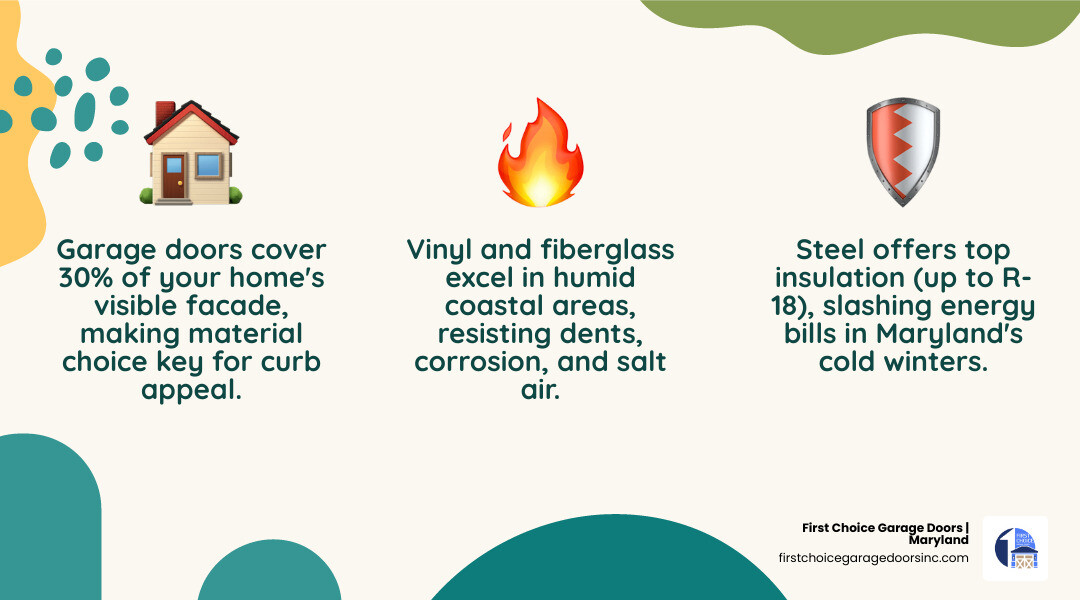
Your garage door covers roughly 30% of your home’s visible facade. That’s not a small detail — it’s one of the first things people see. Beyond looks, the material you choose affects how well your garage holds heat in winter, resists dents from everyday life, and holds up against Maryland’s mix of humid summers, cold winters, and everything in between.
The good news? There’s a solid match for every home, budget, and climate. This guide walks you through each material clearly and honestly, so you can make a confident call.
Why Material Selection Matters for Maryland Homes
In Maryland, our homes have to be tough. We deal with everything from the humid breezes of the Chesapeake Bay to the freezing snows of Frederick. Because your garage door accounts for 30% of your home’s visible facade, it is the single largest architectural element on your exterior. Choosing the wrong material isn’t just a style “oops”—it can lead to warped panels, skyrocketing energy bills, and compromised security.
Thermal performance is a huge factor here. If your garage is attached to your home, a thin, uninsulated door acts like a giant hole in your wall, letting heat escape all winter long. Security is equally vital; different materials offer varying levels of impact resistance and structural integrity. Whether you are in Columbia or Easton, selecting the best garage door material for where you live means looking at the current April 2026 home value trends. Today’s buyers want efficiency and low maintenance. Proper weather sealing and high-quality materials ensure that your “portal” remains a functional, beautiful asset rather than a maintenance headache.
Comparing Common Garage Door Materials: Pros and Cons
There is no “perfect” material, but there is definitely a “perfect for you” material. We often see homeowners get overwhelmed by the options, but some of the more common garage door materials have very distinct personalities.
| Feature | Steel | Wood | Aluminum | Vinyl | Fiberglass |
|---|---|---|---|---|---|
| Durability | High | Moderate | Moderate | High | Moderate |
| Maintenance | Low | High | Low | Very Low | Low |
| Insulation | Excellent | Good | Poor | Good | Moderate |
| Coastal Use | Moderate | Poor | Excellent | Excellent | Excellent |
When we look at long-term value, we consider how much you’ll spend on upkeep over the next 15 to 20 years. A material that is cheaper today might cost you double in paint and repairs down the line.
Steel: The most popular choice for choosing the right garage door material

Steel is the undisputed heavyweight champion of the industry. It is the most popular choice for choosing the right garage door material because it strikes a fantastic balance between price, strength, and style. Modern steel doors aren’t just flat metal sheets; they can be embossed with wood grain textures that look incredibly realistic.
One of the main reasons to install a steel garage door is the insulation potential. By using polyurethane insulation sandwiched between steel layers, these doors can achieve R-values as high as 18.03. This is a game-changer for energy efficiency. While steel is durable, it can be prone to rust if the surface is scratched and left untreated. Knowing how to clean your steel garage door with mild soap and water twice a year is the best way to keep it looking new and prevent corrosion.
Natural Wood: Timeless beauty and insulation
For many Marylanders, nothing beats the warm, rustic look of real wood. It offers a classic appearance that complements traditional, craftsman, or colonial architecture. When looking at wood garage door pros and cons, the biggest “pro” is curb appeal. Wood is also a natural insulator, meaning it does a decent job of keeping temperatures stable on its own.
However, wood is the highest-maintenance option. Without regular care, it can swell, warp, or rot. Protecting your wood garage door against rot requires a commitment to staining or repainting every 1–2 years. If you’re willing to put in the work, we can help you learn how to maintain the finish on your wood garage door so it stays a stunning centerpiece for your home.
Aluminum and Glass: Modern aesthetics for Maryland
If you have a modern or contemporary home, aluminum and glass doors are the way to go. These doors are famous for their corrosion resistance, making them a top choice for coastal areas where salt air eats away at other metals.
The benefits of an aluminum garage door go beyond just rust resistance. Aluminum is much lighter than steel or wood, which puts less strain on your garage door opener and makes manual operation a breeze. However, there is a trade-off. When weighing the good and bad of an aluminum garage door, aluminum is a softer metal. It dents more easily than steel, and because it conducts heat well, it generally has a lower R-value unless you opt for specially insulated frames.
Vinyl and Fiberglass: Low-maintenance alternatives
For homeowners who want to “set it and forget it,” vinyl and fiberglass are excellent contenders. Vinyl is often called “kid-proof” because it is incredibly dent-resistant. If a stray basketball hits a vinyl door, it usually just bounces off without leaving a mark. There are at least 4 advantages of vinyl garage doors, including their immunity to rust, rot, and sand.
Fiberglass is another great choice, especially if you want the look of wood without the sanding and staining. It doesn’t shrink or warp in humid weather. When deciding should you choose a fiberglass or vinyl garage door, consider your local wind patterns. Fiberglass can become brittle in extreme cold and may not be the best choice for very high-wind areas, whereas vinyl stays flexible and tough.
Factors to consider when choosing the right garage door material for your climate
Maryland’s weather is notoriously fickle. We have high humidity in the summer and freeze-thaw cycles in the winter that can wreak havoc on certain materials. Selecting a garage door material for the weather is the most practical step you can take.
If you live near the water in Easton, rust-resistant aluminum or vinyl should be at the top of your list. If you are in the colder regions like Frederick, you need a material that won’t crack when the mercury drops. There are many garage door materials to consider when replacing your door, but always prioritize how that material reacts to moisture and temperature swings.
Insulation and R-value requirements
If your garage is attached to your home, insulation isn’t a luxury—it’s a necessity. An uninsulated door can make the room above the garage feel like an icebox. We recommend aiming for an R-value of 10 or higher for attached garages to see a real difference in your energy bills.
When deciding how many layers should your steel garage door have, a “triple-layer” door (steel + insulation + steel) provides the best thermal performance and the quietest operation. Investing in high R-value materials can save you hundreds of dollars a year in climate control costs.
Balancing aesthetics and function when choosing the right garage door material
You shouldn’t have to sacrifice beauty for brawn. Your home has a specific architectural style—whether it’s a modern townhouse in Columbia or a historic estate in Annapolis. Steel, wood, or overhead choosing your custom garage door in Annapolis involves matching color palettes and window designs to your home’s existing look.
Think about your lifestyle, too. If you have active kids playing in the driveway, a delicate glass door might be a stressor. If you travel often and want zero maintenance, steel or vinyl wins. Balancing these personal preferences with practical street appeal is how you find the “just right” door.
Frequently Asked Questions about Garage Door Materials
What is the most durable garage door material for Maryland weather?
Steel and vinyl are generally the most durable for our region. Steel provides the structural strength to handle wind and snow, while vinyl resists the humidity and salt air that can cause other materials to degrade.
Which material offers the best energy efficiency for attached garages?
Steel doors with polyurethane foam insulation offer the highest R-values (up to 18+). This makes them the champion of energy efficiency, keeping your garage—and the rooms next to it—comfortable year-round.
How often do different garage door materials require maintenance?
- Wood: Every 1–2 years (staining/painting).
- Steel: Twice a year (cleaning and lubricating hinges/rollers).
- Vinyl/Fiberglass: Once a year (simple wash with a hose).
- Aluminum: Once a year (cleaning).
Conclusion: Partnering with Maryland Experts for Your Installation
Choosing the right garage door material is a big step, but you don’t have to take it alone. At First Choice Garage Doors, we’ve spent years helping homeowners across Columbia, MD, Easton, and Frederick find the perfect match for their homes. Our experienced professionals understand the local climate and the unique needs of Maryland houses.
From the initial selection to the final safety check, we provide expert installation and quality assurance that you can trust. Whether you’re looking for the strength of steel, the beauty of wood, or the modern edge of glass, we are here to ensure your new door is safe, efficient, and stunning. Ready to upgrade your home’s biggest portal? Explore our options for Residential Garage Doors and let us help you make the right choice today.