
Why Your Garage Door Material Choice Matters More Than You Think
A steel vs wood vs vinyl garage door comparison is one of the most important decisions Maryland homeowners face when replacing or upgrading their garage door. Your choice affects curb appeal, energy bills, maintenance time, and how well the door holds up against Maryland’s humid summers, cold winters, and salty coastal air.
Here’s a quick breakdown to help you decide:
| Material | Durability | Maintenance | Best For |
|---|---|---|---|
| Steel | Up to 30 years | Low | Most climates, budget-conscious buyers |
| Wood | ~20 years | High | Traditional homes, mild/dry climates |
| Vinyl | 20-30+ years | Very low | Coastal areas, high-humidity regions |
- Steel is the most popular choice — affordable, strong, and available with insulation options. Main drawback: it can dent and rust if the finish is damaged.
- Wood offers unmatched curb appeal and natural insulation, but requires consistent upkeep including annual sanding, staining, and sealing.
- Vinyl resists dents, rust, and moisture with minimal upkeep, making it a strong fit for Maryland’s climate — though color options are more limited.
Garage door replacement is consistently ranked among the top home improvements for return on investment. So getting the material right matters — not just for looks, but for your home’s long-term value.
Below, we break down each material across the factors that matter most: durability, maintenance, energy efficiency, aesthetics, and security.
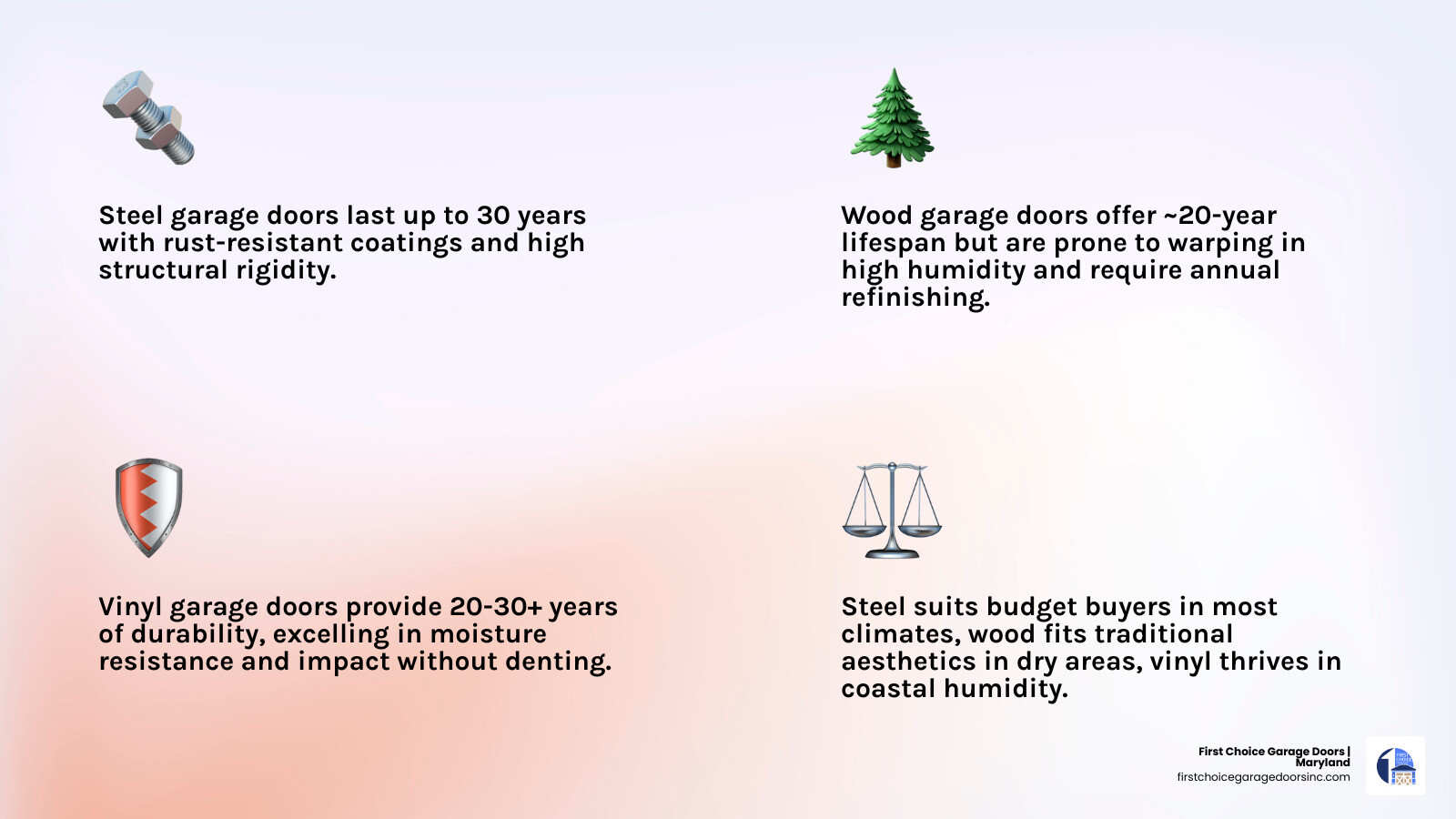
Durability and Lifespan: A Steel vs Wood vs Vinyl Garage Door Comparison
When we look ahead to 2026, the standards for garage door longevity have never been higher. Homeowners in Columbia or Frederick want a door that doesn’t just look good on day one, but still functions perfectly in year twenty. Each material brings a different “survival strategy” to your driveway.
The 30-Year Stalwart: Steel
Steel is often considered the “superhero” of the garage door world. Its primary strength lies in its structural rigidity. When properly maintained, a high-quality steel door can last up to 30 years. However, its greatest enemy is oxidation. In Maryland, where humidity and salt air from the Chesapeake can be factors, the Why Get a Steel Garage Door question often comes down to the protective coatings. Modern steel doors utilize hot-dipped galvanized layers and baked-on primers to fight off rust.
The Timeless but Temperamental: Wood
Natural wood is undeniably strong, but it is an organic material. Without strict care, it faces risks like warping, rotting, or splitting due to moisture absorption. A well-cared-for wood door typically lasts about 20 years, though premium species like cedar or redwood can push that further if they are protected from Maryland’s frequent rain.
The Modern Resilient: Vinyl
Vinyl (PVC) is the “quiet overachiever” in this steel vs wood vs vinyl garage door comparison. It is essentially immune to the problems that plague the others: it cannot rust and it will never rot. Vinyl is incredibly impact-resistant; while a stray basketball might leave a permanent dent in a thin steel door, vinyl has a “memory” that allows it to flex and return to its original shape. This makes it a fantastic long-term investment for active families.
| Feature | Steel | Wood | Vinyl |
|---|---|---|---|
| Expected Lifespan | 25-30 Years | 15-20 Years | 20-30+ Years |
| Rust Resistance | Low to Moderate | N/A | High |
| Rot/Pest Resistance | High | Low | High |
| Dent Resistance | Low | High | Very High |
Maintenance and Long-Term Care Requirements
Maintenance is where the “hidden cost” of a garage door lives. We always tell our neighbors in Easton and beyond to be honest about how much time they want to spend with a paintbrush in their hand.
The High-Touch Beauty of Wood
If you choose wood, you are signing up for a relationship. To prevent the Wood Garage Door Pros and Cons from leaning toward the “con” side, you must commit to annual inspections. This involves sanding down rough spots and restaining or resealing the surface to provide UV protection. If the sealant fails, moisture creeps in, leading to heavy, warped panels that can eventually burn out your garage door opener.
The Low-Maintenance Ease of Steel and Vinyl
Steel and vinyl are much more “set it and forget it.” For steel, maintenance usually involves a simple seasonal wash and a quick check for paint chips. If you see a scratch, touching it up immediately is vital to prevent rust from taking hold.
Vinyl takes the prize for the easiest upkeep. As we’ve noted in our guide on the Pros and Cons of Vinyl Garage Doors, these doors usually just require a quick spray with a garden hose to look brand new. Because the color goes all the way through the PVC material, scratches are almost invisible, and you’ll never have to worry about the “sanding and staining” cycle.
Energy Efficiency and Maryland Climate Suitability
Maryland weather is famously unpredictable. From the humid summers in Columbia to the snowy winters in Frederick, your garage door acts as a giant thermal bridge. Choosing the right material can significantly impact your home’s energy bills.
Steel vs wood vs vinyl garage door comparison for insulation
- Steel: On its own, steel is a poor insulator. However, most modern steel doors are “sandwich” style, featuring a core of polystyrene or polyurethane foam between two steel skins. Using Intellicore technology, these doors can reach R-values as high as 18.4, providing incredible temperature regulation.
- Wood: Wood has natural insulating properties because of its density. While a solid wood door provides a decent thermal barrier, it often lacks the airtight seals found on modern manufactured doors.
- Vinyl: Vinyl doors are almost always insulated with thick polyurethane cores. Because vinyl doesn’t conduct heat or cold as readily as metal, it is exceptionally good at keeping your garage comfortable.
When Selecting a Garage Door Material for the Weather, we look for IECC compliance. This ensures the door limits air infiltration, which is crucial for attached garages where the temperature of the garage directly affects the room above it.
Aesthetics, Customization, and Security Features
Your garage door can represent up to 40% of your home’s facade. It needs to look the part while keeping your family safe.
Visual options in a steel vs wood vs vinyl garage door comparison
- Wood: When it comes to beauty, wood is the gold standard. From custom carvings to unique window shapes, the Installing a Wooden Garage Door Pros and Cons often start and end with its stunning natural grain. It fits perfectly with traditional Colonial or rustic farmhouse styles.
- Steel: Steel is the most versatile. You can get sleek, flush panels for a modern look or raised panels for a traditional feel. Many homeowners love “faux-wood” overlays—steel doors with a composite skin that mimics the look of real wood without the maintenance. This is one of the Main Reasons to Install a Steel Garage Door for those who want the look of timber on a budget.
- Vinyl: Vinyl is slightly more limited in color because dark colors can absorb too much heat and cause the PVC to warp. However, as explained in Why You Should Get a Vinyl Garage Door, the factory finishes are incredibly durable and elegant, often coming in classic whites, beiges, and wood-grain textures.
Security and Strength
Security depends heavily on the “gauge” or thickness of the material. A lower gauge number means thicker steel, which is harder for an intruder to breach. Steel and vinyl doors often feature robust locking mechanisms and are compatible with the latest smart security sensors. While wood is heavy and solid, it can be more vulnerable to forced entry if the panels are thin or if the wood has begun to soften due to rot.
Frequently Asked Questions about Garage Door Materials
Which material is best for Maryland’s high humidity?
Vinyl is the champion for high humidity. Unlike wood, it won’t swell or rot, and unlike steel, it has zero risk of rusting. If you live near the coast or in a particularly damp area of Maryland, vinyl offers the best peace of mind.
Can vinyl garage doors withstand freezing winter temperatures?
Yes. While older or cheap plastics could become brittle, modern high-quality vinyl garage doors are engineered with additives that allow them to remain flexible even in sub-zero temperatures. They won’t crack or shatter during a Maryland cold snap.
How often does a wooden garage door require professional refinishing?
Generally, a wood door should be inspected every year and typically requires a fresh coat of sealant or stain every 2 to 3 years, depending on how much direct sunlight and rain it hits. If you notice the finish looking dull or water no longer “beading” on the surface, it’s time for maintenance.
Conclusion
Choosing the right material is a balance of your home’s architectural style, your local Maryland climate, and how much work you want to do on the weekends. Whether you are drawn to the rugged durability of steel, the timeless elegance of wood, or the “set-it-and-forget-it” resilience of vinyl, the right choice is the one that fits your lifestyle.
At First Choice Garage Doors, we pride ourselves on our Maryland expertise. From our Columbia location, our experienced technicians serve Easton, Frederick, and the surrounding areas with the highest safety standards and prompt, friendly service. We don’t just install doors; we help you make an investment in your home’s future.
Ready to upgrade? Find the perfect residential garage door for your Maryland home today and let us help you turn that “dinosaur gargling rocks” sound into a smooth, silent operation.